
 11
11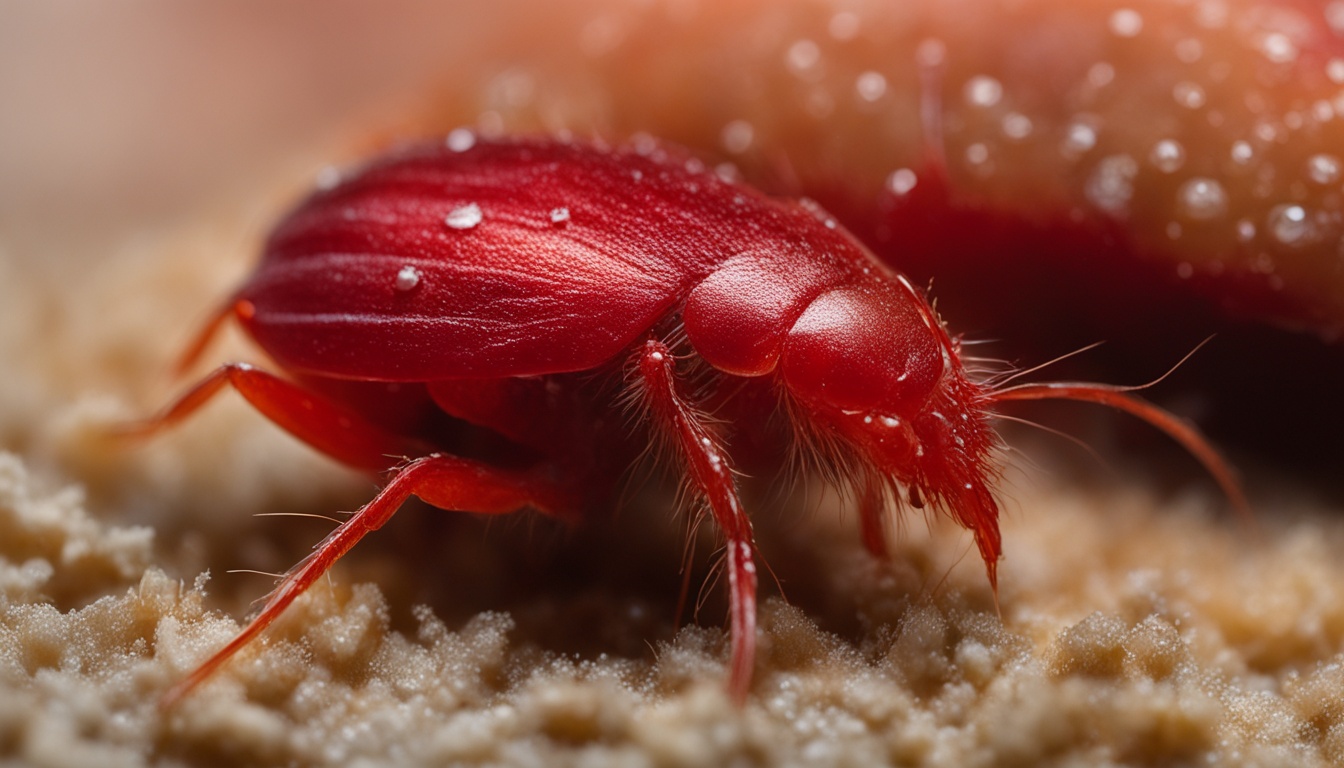

Yes, humans can catch mites from cats. This is a kind of zoonotic disease. People with weak immune systems are at a higher risk. Direct contact with kittens, cat fleas, or poop can expose people to many germs.
These germs can be bacterial, parasitic, fungal, or protozoal. Some diseases you can get are Cat Scratch Disease and Salmonellosis. Mite bites can make both humans and cats itch and swell.
Zoonotic diseases come from cats and can spread to humans. Mites, tiny arachnids, often cause this problem. Knowing about these diseases and how mites spread is key for pet owners and animal lovers.
Getting mites from cats is usually rare. But people with weak immune systems need to be careful. Mites lead to skin issues that might need a doctor’s care. Keeping mites away from cats is vital to avoid these diseases.
Let’s look at important points about mites and diseases from cats:
Understanding these details helps us protect the wellbeing of both cats and humans around them.
Cats can get different kinds of mites, causing issues like Otodectic mange (Ear mites), Notoedric mange (Feline Scabies), Cheyletiellosis (Walking Dandruff), and Trombiculosis. These mites can attack a cat’s skin or fur. They cause itching, hair loss, and red skin.
Otodectic mange, or ear mites, target the cat’s ear canal. This creates irritation and dark, crumbly earwax. Ear mites spread easily among cats. They cause a lot of scratching and can lead to more infections.
Notoedric mange, also known as feline scabies, comes from Notoedres cati mites. It causes severe scratching, crusty skin, and losing fur mainly on the head and neck. The infected cat feels a lot of discomfort. Quick treatment is needed.
Cheyletiellosis is also called walking dandruff. Cheyletiella mites cause it. It looks like big dandruff flakes that move as mites walk on the cat. The cat might scratch a bit and lose some fur.
Trombiculosis happens because of Trombiculid mites, known as chiggers or harvest mites. These mites stick to the cat’s skin, around the ears and legs. They make red, itchy spots. This irritation gets worse in the warm seasons.
Touching the skin or fur of an infected cat often leads to mites moving to humans. These mites can’t live on humans for long. But they still can cause temporary skin irritation. It’s important to act fast to stop any issues.
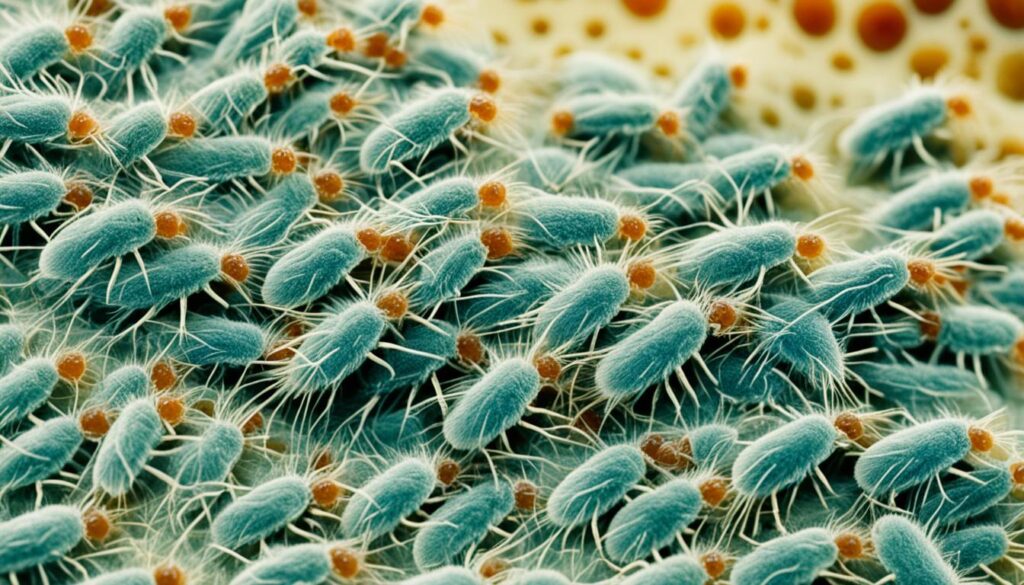
To lessen the risk, it’s critical to follow good pet care practices. This means keeping your pet clean and visiting the vet regularly. Knowing how mites move from cats to people helps us stop it early on.
Mite infestations in humans show signs that are important to spot early. Knowing these mite infestation symptoms helps in controlling mites early. This can stop bigger discomfort or health problems.
Intense itching and irritation are common signs of mite problems. This discomfort usually starts where the mite enters or digs into the skin. It can get quite bad.
Redness and rashes are also common. These rashes might look like mosquito bites. They can spread from the first spot of irritation. It’s important to watch and treat them quickly.
In severe cases, signs may include skin lesions and bumps. These are often from scratching a lot. They could lead to infections if not taken care of properly.
It’s key to start controlling mites right when these signs show up. This stops more problems and ensures fast relief.
Mites can pose real health risks, especially for people with weaker immune systems. Mite infections from cats can lead to more than just skin issues. They can cause serious health problems if not treated right.
Mite infestations can be severe, affecting skin, eyes, and the brain. These diseases from cats can become chronic without treatment. Early signs might be itching and redness. But, the long-term health risks are significant.
Below is a detailed table outlining potential health risks and complications arising from mite infections:
| Health Risk | Description | At-Risk Groups |
|---|---|---|
| Skin Infections | Prolonged itching, redness, and inflammation can lead to bacterial skin infections. | Individuals with preexisting skin conditions |
| Ocular Complications | Mite infestations can cause conjunctivitis and other eye-related issues. | People with eye conditions or contact lens users |
| Neurological Issues | In rare cases, mites can migrate to the brain, causing severe neurological symptoms. | Individuals with weakened immune systems or neurological disorders |
| Systemic Infections | Prolonged infestation may lead to systemic infections affecting overall health. | Elderly and immunocompromised individuals |
It’s vital to know about these health risks from cat mites. Keeping clean and quickly dealing with mite problems helps lessen these risks.
Diagnosing mite infections starts with a full check-up. The first step often looks closely at the skin. Doctors look for key signs that mites might be there.
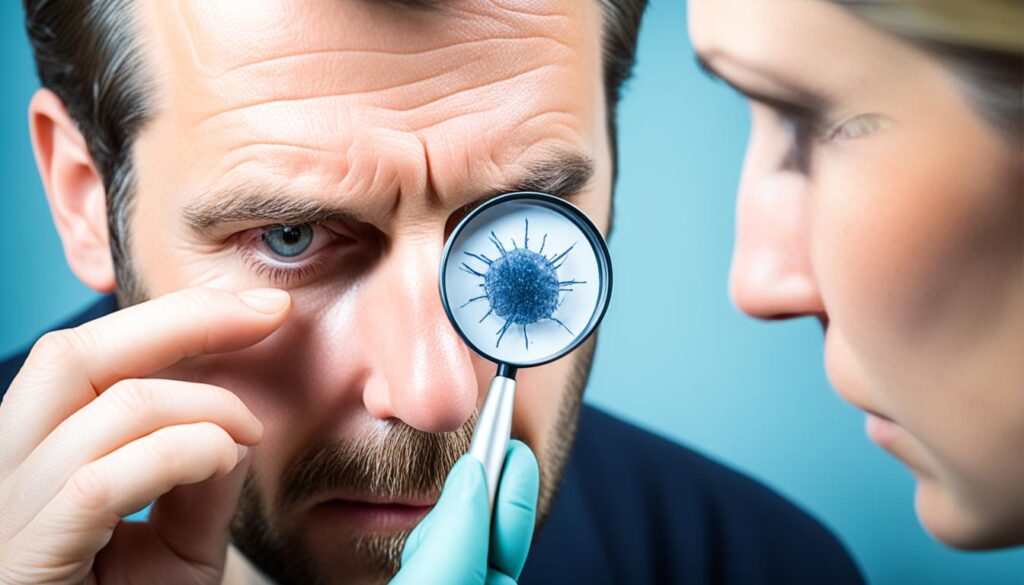
Doctors collect skin samples from spots that might be infected. These samples are checked under a microscope. This helps confirm if mites are really there.
Chemical and skin treatments are key in fighting mites. They treat the infection and show how skin reacts. Using the right chemicals is crucial in beating mites.
It’s vital to act fast when dealing with mite infestations. This helps reduce discomfort and stops them from spreading more. Here are some mite treatment options that work well:
Medicines are just one part of getting rid of mites. Good cleanliness habits are also key. Make sure to wash bedding, clothes, and anything else that might be contaminated. Using calming creams or drugs for allergies can also ease itching and irritation.
It’s also important that anyone who might be exposed gets treated at the same time. This helps stop mites from spreading and stops outbreaks.
Preventing mites is key for keeping humans and pets healthy. Regular vet visits are a must. They ensure pets do not have mites. Early check-ups spot and treat mites quickly. Using flea control helps a lot too.
Keeping your home clean is important. This means vacuuming and washing pet beds often. It also means less dust and dirt. This stops mites from living there. Washing your hands after touching pets is crucial. Try not to get too close to animals with mites.
Here are some top ways to control mites:
By following these steps, you can cut down on mites. This makes a home healthier for everyone.
Knowing how mites move from cats to humans is key. It starts with spotting signs like itching, irritation, and red skin. These signs call for quick action to avoid worse health issues, especially for those with weak immune systems.
Treatment for mites includes ointments, medications, and clean habits. Early diagnosis and the right medical care are vital. Keeping your space clean helps in fighting off mites.
To keep humans and pets safe, we must prevent mites from spreading. This means regular vet visits, fighting fleas, and keeping your home clean. Doing these things and treating mites fast can make living with pets safer and healthier.
Yes, cats can pass mites to humans, especially if you touch an infected animal. Most cat mites cannot live on humans for long. They cause short-term itching.
Zoonotic diseases are infections passed between animals and people. Cat mites can transfer these diseases to humans. This can lead to symptoms like itching and swelling. In people with weak immune systems, the risks are higher.
Cats can get several types of mites. These include ear mites, feline scabies, walking dandruff, and trombiculosis. These mites make cats itchy, lose fur, and swell.
Touching an infected cat can pass mites to people. While mites don’t usually live on humans, the touch can still irritate. It’s best to handle it quickly to avoid more issues.
When mites infest humans, they can itch a lot and feel irritated. You might see redness or rashes. Skin bumps that look like mosquito bites might form where mites enter.
Mites can cause skin issues, including swelling and rashes. For people with weak immune systems, the impact is worse. If not treated, mites can harm the skin, eyes, and even the brain.
Doctors diagnose mite infections by looking at the skin and taking samples. Medicines on the skin or inside the body can help figure it out and treat it.
To treat mite bites, you can use creams, prescribed medications, or pills. Itching can be eased with special creams or allergy medicines. Keeping clean and treating all exposed areas are key to stopping the spread.
Stop mite transmission by taking your cat to the vet regularly and using flea control. Cleaning your home and staying clean yourself helps too. Be careful when around animals with mites to stay safe.