
 11
11

Dental diseases often hit cats older than four. Studies show many of these cats face such issues. Taking care of their teeth early can stop more serious health problems. Dental problems can hurt, change how cats eat, and lead to other big health issues.
Look out for signs of bad dental health in cats, like gingivitis. It’s important to brush their teeth regularly. This stops diseases from getting worse. Not doing so can lead to periodontitis. This is more serious and can make them lose teeth. They’d then need a vet’s help.
Cat mouths are full of different bacteria. These germs are vital for keeping their mouths healthy. But too many can cause dental problems. It’s important to know about these germs to prevent tooth issues in cats.
The feline oral microbiome is a community of germs inside a cat’s mouth. These germs can be good or bad for health. Good germs stop bad ones from growing, which keeps teeth diseases away.
Cat mouth bacteria are important for healthy teeth. Good bacteria keep the mouth balanced. But, too much bacteria causes plaque and can hurt the gums. Cleaning away plaque helps keep a cat’s mouth healthy.
Healthy and sick cat mouths have different germs. A healthy mouth has good bacteria that fight off plaque. But, a sick mouth has bad germs that cause tooth problems. These bad germs can lead to serious dental diseases.
To understand better, look at this comparison:
| Aspect | Healthy Oral Microbiome | Unhealthy Oral Microbiome |
|---|---|---|
| Bacterial Composition | Predominantly beneficial bacteria | Increase in pathogenic species |
| Oral Health Impact | Protects against disease | Facilitates disease progression |
| Plaque Formation | Minimal plaque buildup | Significant plaque and tartar buildup |
| Inflammation | Low risk of inflammation | High risk of gingivitis and periodontitis |
Cats can have dental problems because of plaque. Knowing these issues is key for good cat dental health. It makes sure cats stay healthy.
Gingivitis in cats is often seen. It makes gums sore because of plaque. If not treated, it gets worse.
If gingivitis in cats isn’t treated, it can lead to feline periodontal disease. This hurts the teeth’s support and can cause teeth to fall out. Cats feel much discomfort. Dental cleanings can stop it from getting bad and keep teeth healthy.
Tooth resorption is another big dental issue. It’s when a tooth breaks down and gets absorbed. It leads to pain and eating problems. Catching and managing tooth resorption in cats early is key for good cat dental health.
It’s critical to spot and care for these dental problems. Doing so helps keep your cat feeling good.
Dental health in cats is very important. Bacteria play a big role in causing dental diseases in them. It’s about how plaque and tartar build up and can lead to big health issues.
Bacteria in a cat’s mouth lead to plaque. Plaque is a sticky film on teeth that holds bacteria. When it turns into tartar, it gets rough and holds even more bacteria. This can make dental problems worse. Plaque and tartar are behind many dental issues in cats.
Lots of bacteria in a cat’s mouth cause the body to react. This reaction causes inflammation. If this goes on, it can turn into gingivitis. Without treatment, gingivitis may get much worse. Keeping the mouth clean helps prevent serious dental diseases.
Oral bacteria can get into the bloodstream. This can affect important organs like the kidneys and liver. For example, infections can spread from the mouth to other areas. This shows how oral health is linked to a cat’s overall health. Stopping harmful bacteria buildup is key to avoid these risks.
Keeping your cat’s teeth healthy is very important. Spotting problems early can stop bigger issues later. Taking action quickly helps keep your cat happy.
Check your cat’s mouth regularly. This helps catch feline oral health issues early. Look for these signs:

Watch how your cat acts, too. Changes in behavior can show symptoms of dental problems in cats. Notice if your cat:
Cat dental health needs regular vet visits. Checkups find problems early and keep your cat feeling good. Cat owners, make sure to schedule these regular veterinary checkups.
It’s very important to keep your cat’s mouth clean. Doing things every day and seeing a vet regularly keeps their teeth healthy. This stops dental diseases.
To lower plaque, brush your cat’s teeth every day. Use special cat toothpaste and a brush. First, let your cat try the toothpaste. Then slowly start using the toothbrush. Brush with small circles to get rid of plaque.
Eating the right foods helps keep teeth healthy. Dental chews also cut down on plaque and tartar. They make oral care fun and help with daily brushing.
Even with home care, your cat needs vet cleanings. Vets clean hard-to-reach spots, remove tartar, and check the mouth. Regular vet visits stop dental problems and keep your cat healthy.
| Key Practices | Benefits |
|---|---|
| Daily Brushing | Effective plaque removal, preventing gingivitis |
| Dental Chews | Mechanical reduction of plaque and tartar |
| Professional Cleaning | Comprehensive oral health assessment, prevention of dental diseases |
Ignoring a cat’s oral health can lead to many problems. Dental pain and the possibility of losing teeth are just the start. The real danger goes beyond just the mouth.
Poor dental care can cause big health issues for cats. If not treated, mouth bacteria can get into their blood. This can cause infections in the heart, liver, and kidneys. It’s important to take care of their teeth to stop this.
Also, oral diseases can cause symptoms that don’t seem related to the teeth. This makes it hard to figure out what’s wrong. By dealing with dental problems early, we can prevent bigger health issues.
| Oral Health Issue | Immediate Risks | Systemic Risks |
|---|---|---|
| Gingivitis | Dental discomfort, inflamed gums | Potential impact on heart and kidneys |
| Periodontitis | Tooth loss, severe pain | Infections spreading to vital organs |
| Tooth Resorption | Destruction of tooth structure | Systemic infections via bloodstream |
The table shows the risks of common dental diseases in cats. It highlights the need for good mouth care. This prevents both local and body-wide health issues.
To keep a cat’s mouth healthy, you need to use good feline dental products. You should get cat toothbrushes made for cats. They help remove plaque well.
Cat toothpaste is also key. It should be enzymatic to break down plaque and stop tartar. Using these products often can help avoid dental diseases in cats.
| Product | Benefits |
|---|---|
| Cat Toothbrushes | Designed to fit a cat’s mouth, making it easier to brush teeth efficiently. |
| Cat Toothpaste | Enzymatic formulas help break down plaque and prevent tartar buildup. |
| Dental Chews | Provide a mechanical cleaning action, reducing plaque and tartar. |
Using oral health products for cats daily is good. Items like dental chews clean their teeth while they chew. Keeping up with dental care is key for a cat’s health and happiness.
It’s very important to take care of your cat’s teeth. This keeps them healthy and can stop major dental problems.
Choosing the right tools is your first step in how to brush cat’s teeth. A soft-bristled toothbrush is gentle on your cat’s gums. Look for a toothbrush with an angled handle. This makes reaching all teeth areas easier. Always use feline toothpaste. It has safe ingredients and tasty flavors for cats.
Here’s a step-by-step guide to brush your cat’s teeth the right way:
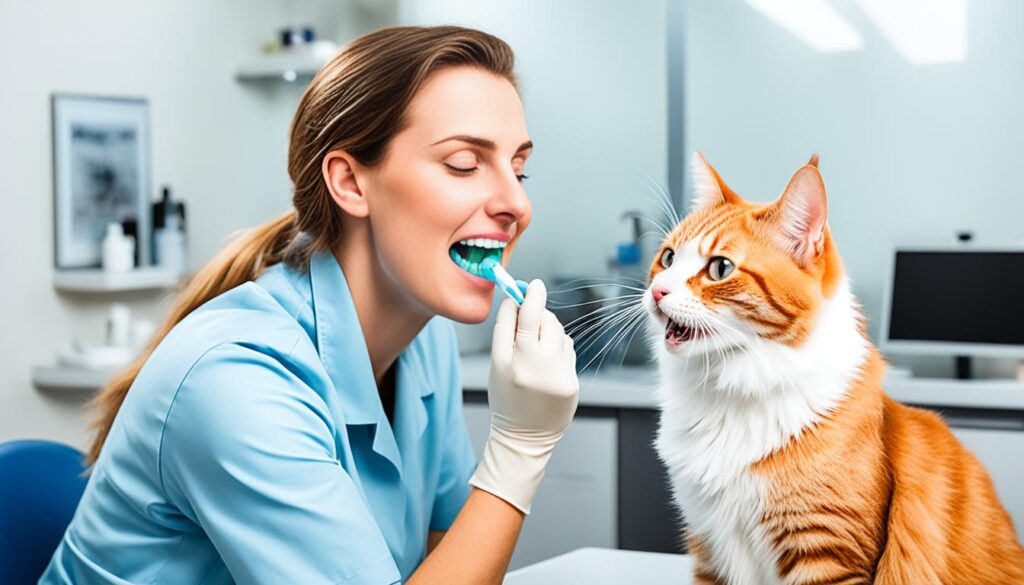
Teaching your cat to accept brushing takes patience and treats:
To succeed, make sure the brushing is stress-free for your cat. With patience and care, brushing your cat’s teeth will be easy and normal.
Maintaining cat oral and overall health is crucial for pets. Mouth problems can lead to bigger health issues. It’s vital for pet owners to know how oral health affects their cat’s overall well-being.
Poor oral health affects digestive health in cats. It makes it hard for them to chew their food. This is the start of digestion. If they can’t chew well, it harms digestion and nutrient absorption.
The bacteria from a cat’s mouth can hurt internal organs. It can cause kidney disease from oral bacteria and liver conditions related to dental health. If oral bacteria get into the blood, it can infect organs. This can lead to serious health problems needing medical care.
Unchecked oral bacteria can lead to systemic infections. These occur when bacteria enter the bloodstream. It shows that good oral hygiene is key. It prevents health issues in a cat’s body.
Tooth resorption in cats is very common. It’s hard to spot early on. This condition shows as pink spots at the tooth-gum line. It then leads to big damage. Cats may hurt, eat differently, and get cranky. They need a vet fast.
Knowing about tooth resorption helps keep cats’ mouths healthy. Catching it early at checkups helps a lot. This can control pain and stop it from getting worse. Saving the tooth is the goal. If ignored, the cat might need teeth pulled to get comfy and stop other issues.
Vets have ways to fix tooth resorption and other teeth problems in cats. Here are some treatments:
| Treatment | Description | Purpose |
|---|---|---|
| Tooth Extraction | Removing the affected tooth | Alleviate pain and prevent further damage |
| Pain Management | Use of medications and supportive care | Enhance comfort and quality of life |
Cats with advanced dental diseases need careful treatment. These conditions hurt and can affect their overall well-being. So, it’s vital to have a detailed care plan.
Cats with serious dental problems might need various treatments. Sometimes, antibiotics are used to fight infections. For worse cases, dentists may remove tartar or even pull out teeth. This helps the cat feel better and be healthier.
It’s important to manage pain in cats with dental diseases. Vets often give medicine to reduce pain and swelling. This makes the recovery process easier for them.
After treatment, caring for your cat is crucial. It helps them heal and prevents more problems. Visiting the vet often and taking good care of their teeth at home are key. This includes brushing their teeth and feeding them well. Such care keeps their teeth healthy in the long run.
Taking care of a cat’s teeth is key for any cat owner. It’s very important to know about the bacteria in cats’ mouths and the risks. Keeping up with dental care is crucial for a cat’s overall health.
Being consistent with oral hygiene is very important. Daily tooth brushing and using the right dental products help prevent dental diseases.
Final thoughts: Early care for cat teeth is crucial. Catching and treating problems early stops severe dental diseases. Regular vet checkups are a must. They give a professional look and treatments you can’t do at home.
In summary, good dental care for cats is super important. Routine cleaning, using the right products, and professional vet help keep cats healthy. These steps help cats live happier, healthier lives without dental disease problems.
The feline oral microbiome is all the bacteria in a cat’s mouth. These bacteria are important for oral health.
Bacteria in a cat’s mouth can lead to dental plaque. If not cleaned, this can turn into tartar and cause gum disease.
A healthy oral microbiome has good bacteria that fight plaque. An unhealthy one has bad bacteria that cause diseases.
Cats can get gingivitis, periodontitis, and tooth resorption. These can hurt and even make them lose teeth if not treated.
Plaque happens when bacteria stick to teeth. If not cleaned, it becomes tartar. Tartar makes more bacteria stick, causing inflammation.
Oral bacteria can travel and infect organs. This can lead to systemic infections and diseases in kidneys and liver.
Signs include gum redness, swelling, and bad teeth. Cats may chew oddly or drool too much if they have oral problems.
Regular vet visits help catch and treat dental diseases early. They keep a cat’s mouth and whole body healthy.
Use a soft toothbrush and special toothpaste for cats. Get your cat used to brushing slowly with care and treats.
Special diets and chews clean cat teeth and cut down plaque. This helps keep their mouth clean and healthy.
Vets need to do dental cleanings to get rid of tartar. This checks and keeps a cat’s oral health on track.
Ignoring oral health can cause pain, tooth loss, and serious diseases. Quick dental care reduces these dangers.
Good dental products include cat toothbrushes, enzymatic toothpaste, and chews. Using these regularly prevents dental problems.
Training takes the right tools and gentle steps. Use treats and patience to get your cat used to brushing.
Bad oral health makes chewing and digestion tough. This can harm a cat’s digestion and overall health.
Bacteria from the mouth can infect the kidneys and liver. This causes major health issues and infections.
Tooth resorption makes a cat’s teeth break down and get absorbed back. It’s painful and seen at the gum line.
Advanced dental problems need antibiotics, tooth cleanings, and sometimes tooth removal. Care after treatment is important for healing.