
 11
11

Cats can get sick from different viruses like feline leukemia virus (FeLV), feline immunodeficiency virus (FIV), and feline infectious peritonitis (FIP). These viruses can make cats very ill and spread in many ways. This includes bite wounds, grooming, and using the same litter box. It’s crucial to know the signs of these infections and how to keep your cat safe.
Feline leukemia virus (FeLV) is a big worry for cat lovers. It affects about 2-3% of indoor cats in the U.S. Yet, cats that go outside or are at higher risk face more danger. FeLV can lead to serious issues like cat cancer and even death. Knowing how it spreads and how to prevent it is crucial for keeping your cat safe.
FeLV spreads through many body fluids like saliva, urine, blood, poop, and milk. Kittens can catch the virus before they’re born or from their mother’s milk. This makes early prevention very important. It’s highly contagious. Cats that go outside, meet infected cats, or live with many cats are more at risk.
FeLV makes a cat’s immune system weak. This means they can easily get sick with other diseases. Signs of the illness include weight loss, eating less, feeling tired, pale gums, swollen lymph nodes, and bad fur. Sadly, FeLV can cause deathly illnesses like cancer and severe anemia. This can shorten a cat’s life and lower its quality of life.
The good news is, you can do things to keep your cat safe from FeLV. Keeping them inside cuts down their chance of getting sick. Vaccines are key to preventing FeLV. Include it in your cat’s regular vaccine plan. Talk to your vet to make sure your cat is up to date on vaccines, including FeLV.
Besides vaccines, watch who your cat meets to keep them away from sick ones. If you’re getting a new cat, test them for FeLV to protect your other cats. Regular vet visits and tests can catch FeLV early. This improves the chance of treating it successfully.
Understanding FeLV and how to stop it can keep your cat safe from this dangerous illness. Remember, finding it early, vaccinating, and taking care of your cat responsibly are the best ways to make sure your cat has a long, happy life.
Feline Immunodeficiency Virus (FIV) is similar to HIV in humans. It weakens a cat’s immune system, making them prone to other illnesses. The main way FIV spreads is through bite wounds because the virus lives in the saliva.
But it’s rare for FIV to spread through grooming or sharing spaces. So, it’s low risk to hang out with FIV-infected cats in normal, everyday ways.
FIV-infected cats can safely live with non-infected ones, avoiding fights is key. They don’t spread FIV by just sharing food bowls or litter boxes. So, FIV-positive and FIV-negative cats can live together without problems.
Yet, it’s crucial to understand that FIV cats might catch other diseases easier, like FeLV. Having both FIV and FeLV can really harm their immune system. That’s why testing cats for both viruses is important before they meet other household cats.
“FIV-positive cats can live happily with FIV-negative cats, as long as there are no fighting or aggressive behaviors. It is important to test cats for both FIV and FeLV to ensure their overall health and well-being.”
If you think your cat might have FIV, see a vet right away. They can do a blood test to check for FIV.
The best way to keep your cat safe from FIV is to keep them inside, away from possibly infected cats. Also, getting them vaccinated against FeLV is a good idea since it can help prevent FIV.
Feline Infectious Peritonitis (FIP) is a serious disease that threatens cats. It happens when a typical cat virus changes, causing a widespread infection. Not all cats show symptoms, but when they do, it can be deadly very fast.
This disease spreads easily among cats. They can catch it through close contact. It’s in their waste and spit. This makes it hard to avoid, especially where many cats live together.
Cat owners should know what signs to look for. Early action can make a big difference. The symptoms to watch out for include:
Diagnosing FIP is tough since there’s no clear test for it. Vets have to look at different signs, do lab tests, and maybe even imaging. They might also need to check tissue samples.
Right now, there’s no cure for FIP, and the ways to help are few. Cats may receive supportive treatments like fluids or medicines for symptoms. Sadly, many cats do not survive.
Preventing FIP means lowering the chance of getting the virus. There is a vaccine, but it doesn’t stop all cases. It’s wise to talk to a vet about the best way to protect your cat. This depends on their age, how they live, and their exposure risk.
Understanding FIP is important for cat owners. Knowing the risks, spotting the early signs, and getting vet help quickly can help less the disease’s effects. This can lead to a better life for your cat.
It’s vital to catch a feline viral infection early for your cat’s well-being. These infections can show up in different ways. But certain signs are common and should alert you.
Weight loss can be an early clue of a viral infection. If your cat is getting thinner without any diet or activity changes, it’s worrying.
Is your cat not interested in food anymore? A decrease in appetite is another warning sign. This leads to them eating less.
Feeling down can also signal a feline viral infection. Your cat might act tired, avoid company, or behave differently.
Looking at your cat’s fur can also give you hints. Viral infections might make their fur look dull, messy, or rough.
Swollen lymph nodes could mean your cat’s body is fighting an infection. With viral infections, these nodes can be easy to see and sensitive.
Look out for pale gums too. They could mean your cat is anemic. Anemia can cause weakness and tiredness among other things.
Moreover, these infections can leave cats open to other troubles. Problems like seizures, changes in how they act, diarrhea, throwing up, peeing issues, or skin problems can all pop up.
Seeing any of these signs means you should take your cat to the vet quickly. The vet can run tests to figure out what’s wrong and how to help your cat get better.
“Recognizing the signs of feline viral infection early on can help ensure that your cat receives timely care and treatment.” – Dr. Emily Wilson, DVM
| Signs of Feline Viral Infection | Description |
|---|---|
| Weight loss | Loss of body weight without dietary changes or exercise |
| Decreased appetite | Lack of interest in food, reduced caloric intake |
| Depression | Lethargy, withdrawal, changes in behavior |
| Poor hair coat | Dull, unkempt, or rough fur appearance |
| Enlarged lymph nodes | Visible swelling and tenderness of lymph nodes |
| Pale gums | Indication of anemia, weakness, and fatigue |
| Secondary infections | Seizures, behavioral changes, diarrhea, vomiting, urinary problems, or skin concerns |
Cats can catch serious viral infections. Luckily, you can do a lot to keep your cat healthy. Follow certain steps to cut down the chance of your cat getting sick from viruses.
Keeping your cat inside is a great way to protect them. This limits their contact with sick cats. Cats that roam outside face more risks. They can meet sick animals or get into situations where they could catch something. So, it’s key to make a fun and safe place for them inside.
Vaccines are very important in stopping viral infections. Talk to your vet about the best vaccine plan. This can keep your cat safe from diseases like FeLV and FIV. Even outdoor cats need yearly shots to stay protected. Vaccines are a big part of keeping your cat healthy.
It’s important to test new cats for FeLV and FIV before they meet your other cats. These tests check if a cat has these viruses. They keep healthy cats from getting sick. Testing helps you decide safely when bringing new cats home or letting them meet.
Taking these steps lowers the chance your cat will catch a viral infection. Keep your cat inside, make sure they’re vaccinated, and get them tested for FeLV and FIV. Doing this will help your cat live a long, healthy life.
Vaccines are key in keeping cats safe from infectious diseases. By getting your cat vaccinated, you help protect its health. All cats need core vaccines like rabies and FVRCP (feline distemper). These protect against serious illnesses.
Kittens start their vaccines at about 8 weeks old. They get booster shots every 3-4 weeks until around 16 weeks old. This helps kittens develop strong defense against diseases early on.
Adult cats need boosters to keep their immunity up. These are often given yearly or as the vet suggests. Keeping up with these shots helps your cat fight infections better.
Some cats may need extra vaccines depending on their lifestyle. Cats that go outside or meet other cats might need FeLV or FIV vaccines. Talk to your vet about what’s best for your cat.
| Vaccine | Description | Recommended |
|---|---|---|
| Rabies Vaccine | Protection against rabies, a deadly viral disease that can affect cats and humans. | All cats |
| FVRCP Vaccine | Combination vaccine that protects against feline viral rhinotracheitis, calicivirus, and panleukopenia. | All cats |
| Feline Leukemia Vaccine | Protection against the feline leukemia virus, primarily recommended for outdoor and at-risk cats. | Outdoor/at-risk cats |
| Feline Immunodeficiency Virus (FIV) Vaccine | Protection against feline immunodeficiency virus, recommended for cats at risk of exposure. | At-risk cats |
It’s vital to talk with your vet about vaccines and care plans. They can tailor advice to your cat’s needs. Also, regular vet check-ups keep your cat’s vaccinations current and catch other health needs.
Putting vaccines and care first gives your cat a chance for a long, healthy life.
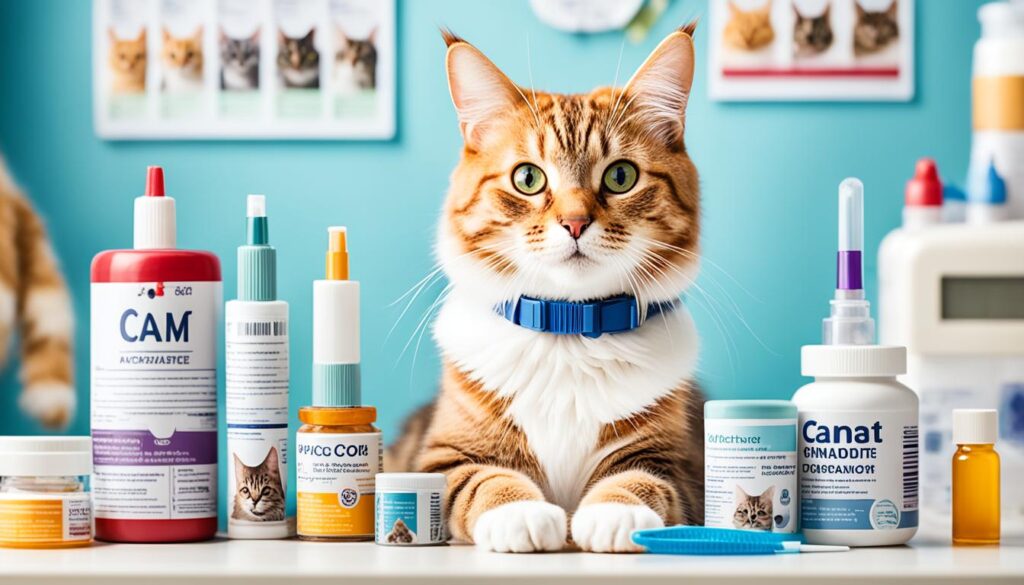
It’s key to take steps early to keep your cat healthy. This includes yearly vet visits, the right shots, dealing with parasites, and teeth cleanings. Doing this shields your cat from diseases and keeps them well.
We must work closely with a vet we trust. They give custom advice on keeping our cat healthy. This partnership is crucial.
Felines may catch infections like feline leukemia virus (FeLV), feline immunodeficiency virus (FIV), and feline infectious peritonitis (FIP).
Cats can get these viruses through bites, grooming each other, and even by using the same litter box.
Infected cats might lose weight, eat less, and seem sad. They might have a rough coat, swollen glands, or pale gums too.
Keep your cat inside, make sure they’re vaccinated, and test for FeLV and FIV. This can help keep them safe from infections.
Your cat needs core shots like for rabies and FVRCP (distemper). Depending on their life, they might need other vaccines too.
Young kittens need their first vaccines and boosters up until 16 weeks old. Grown cats need regular boosters to stay immune.
Keep your cat healthy with regular vet check-ups, fighting off parasites, and cleaning their teeth. This is key for their health.
Focus on preventive care and listen to your vet’s advice. This is how you keep your cat safe from infections and happy.