 11
11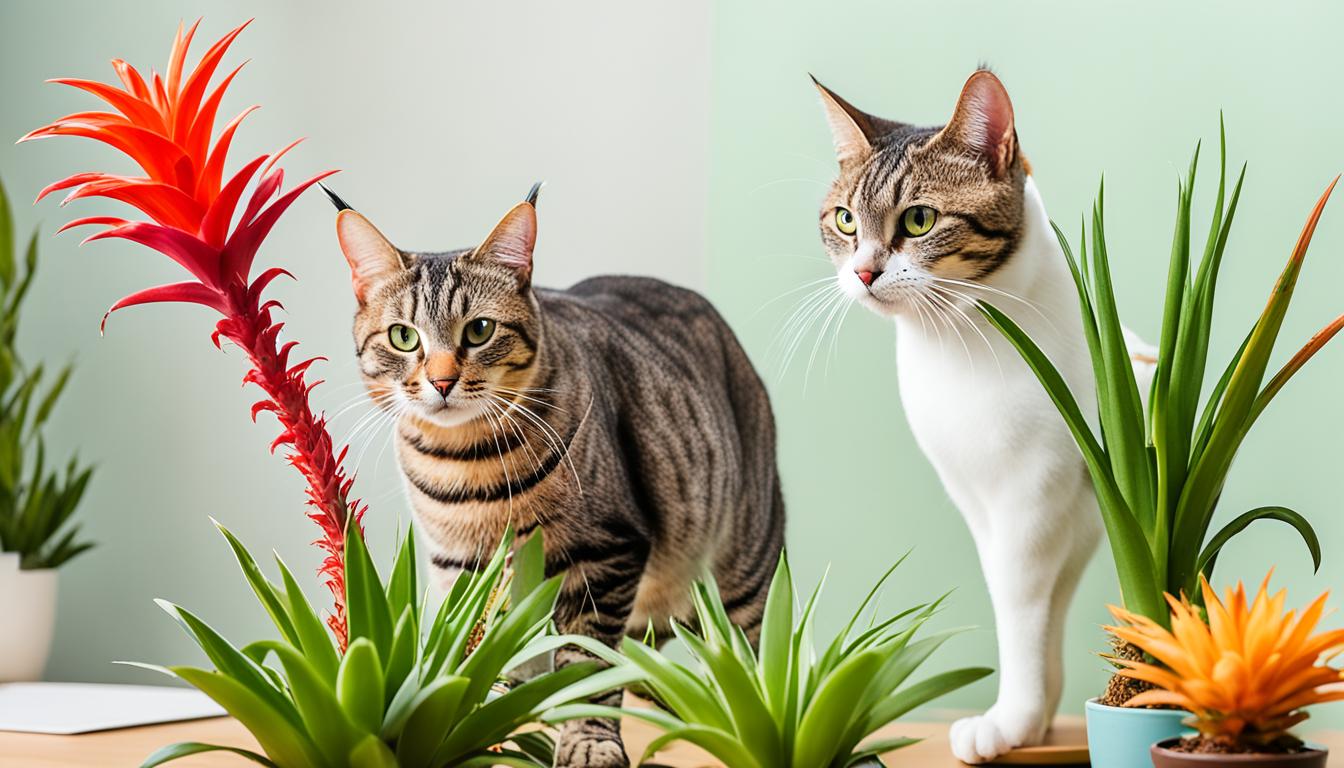

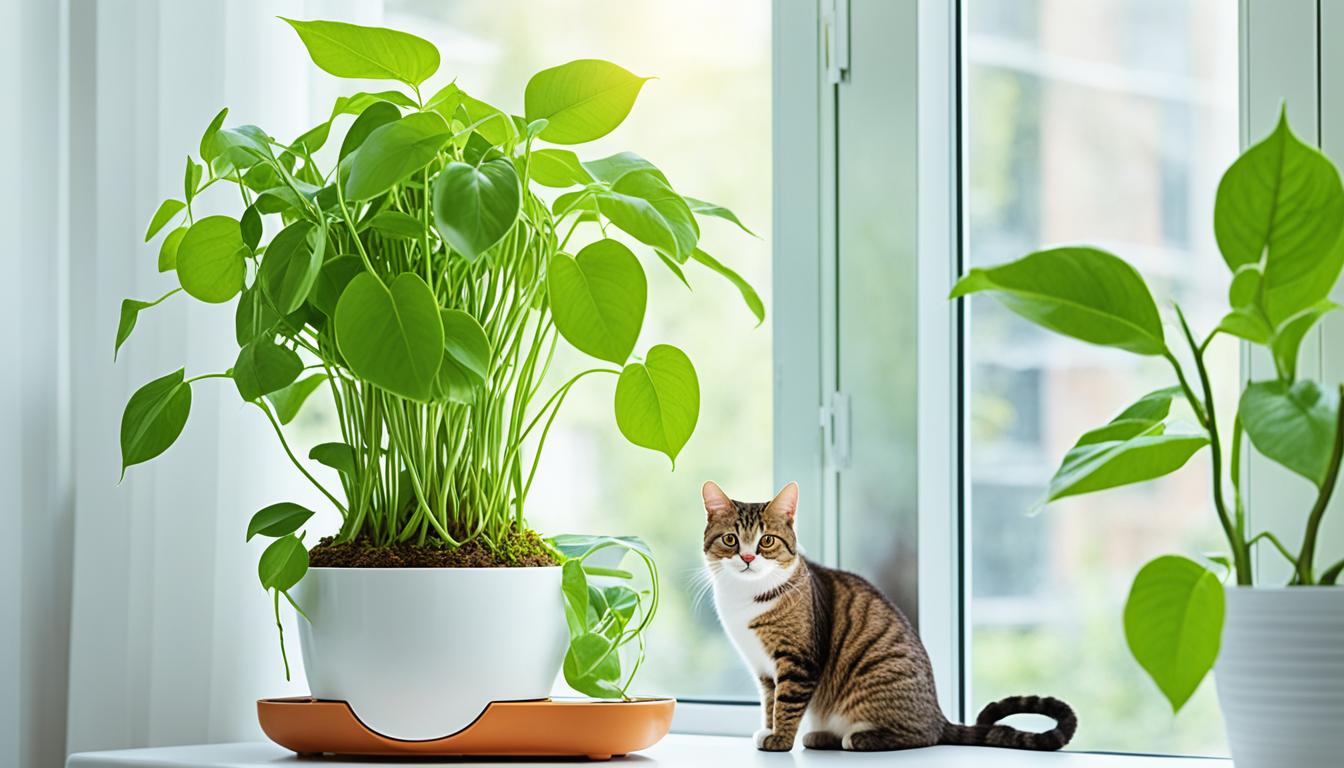
Bromeliads are popular indoor plants that are easy to care for and add a tropical touch to the home. Many pet owners wonder if these plants are safe for their cats. The good news is that bromeliads are not toxic to cats or dogs.
While bromeliads are generally safe, it is still important to prevent cats from chewing on the plants regularly. Consuming a large amount of bromeliad may cause an upset stomach in cats and potentially harm the plant itself.
To keep cats from chewing on bromeliads, there are some measures pet owners can take:
Although bromeliads are not toxic to cats, it is still important to prevent cats from chewing on them. Here are some effective measures you can take to keep your cat away from bromeliads:
By implementing these strategies, you can help prevent cats from chewing on your bromeliads and ensure the safety of both your plants and your feline companions.
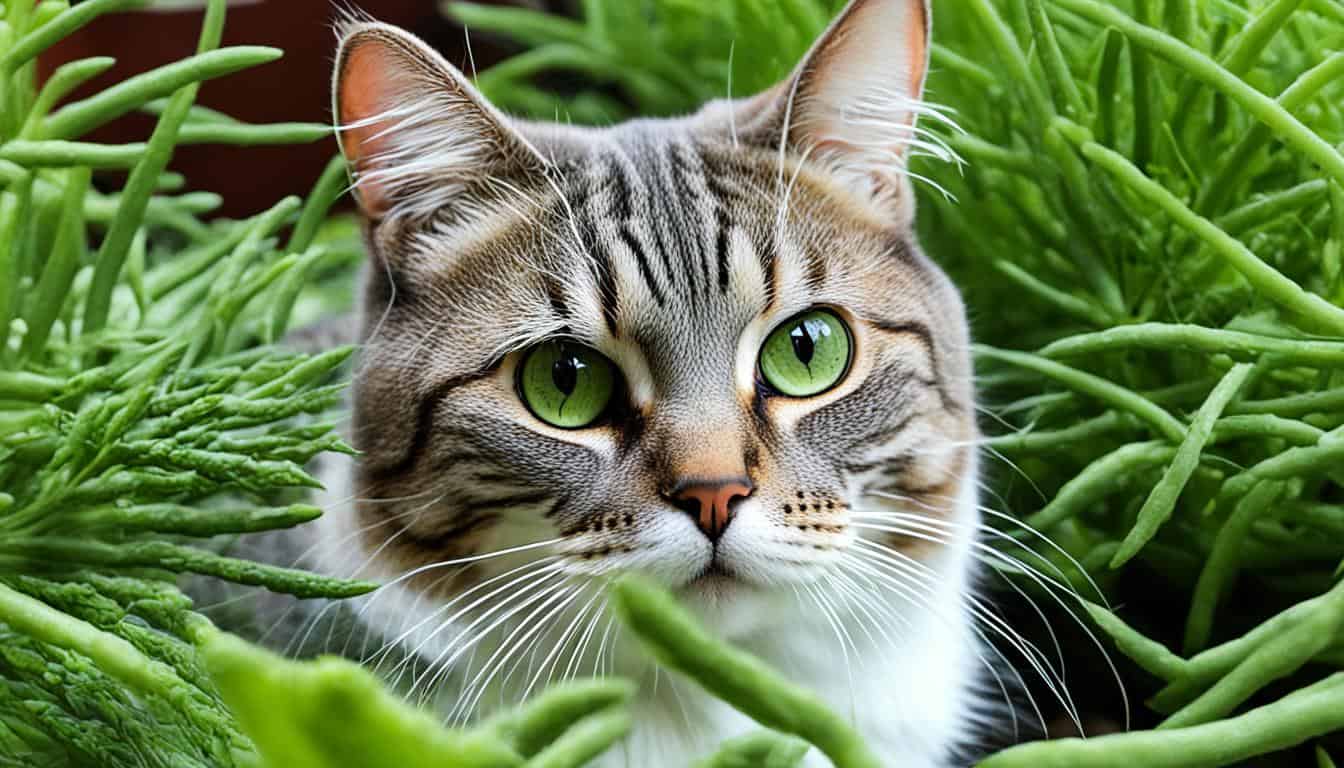
A happy cat enjoying cat grass, a safe alternative to chewing on bromeliads.
While bromeliads are safe for cats, it is important for pet owners to be aware of other plants that can be toxic to cats. Some plants can pose potential dangers and should be avoided in homes with cats. These plants include:
These plants have varying levels of toxicity and can cause a range of symptoms if ingested by cats. It is important to always check the toxicity of plants before bringing them into a home with cats to ensure their safety.
“Cat owners should be cautious and knowledgeable about the plants they bring into their homes. Some plants that may seem harmless can be extremely toxic to cats and pose serious health risks. It is always better to be safe than sorry when it comes to keeping our feline friends out of harm’s way.” – Dr. Emily Thompson, Veterinarian
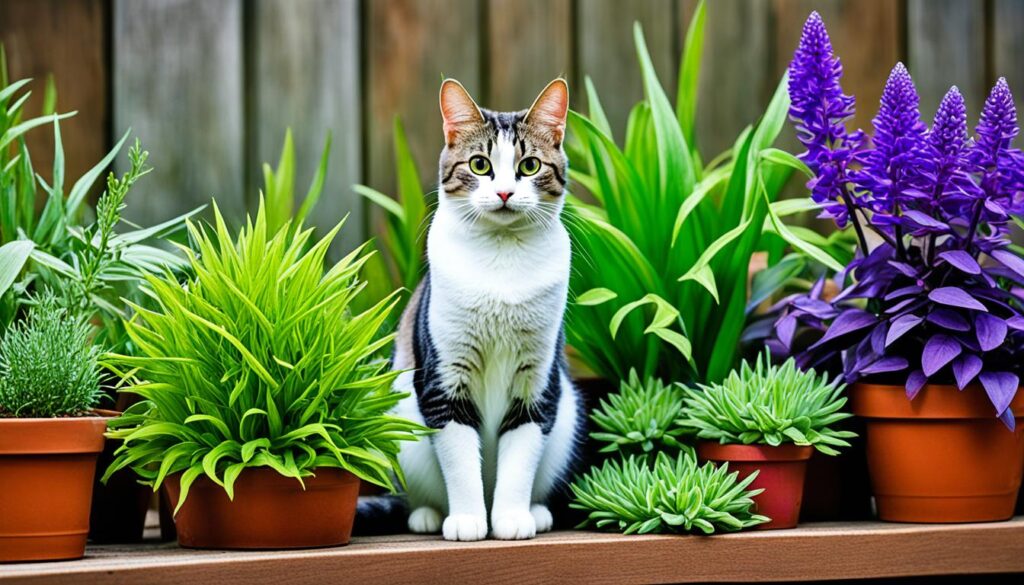
Cat owners often worry about the safety of indoor plants, especially when it comes to their feline friends. Luckily, there are many plants that are non-toxic to cats and can be safely kept in the home. Not only do these plants add beauty to your living space, but they also provide a safe environment for your furry companion to explore.
Here are some examples of non-toxic plants that you can consider adding to your indoor garden:
These plants not only provide a safe environment for your cat but also offer various benefits. For example, the spider plant is known for its air-purifying properties, while the money tree is believed to bring good luck and prosperity.
It’s important to note that while these plants are non-toxic to cats, it’s still essential to monitor your pet’s behavior around them. Some cats may still chew on plants out of curiosity, which can lead to digestive issues or plant damage. If you notice any signs of plant ingestion or unusual behavior in your cat, consult your veterinarian for further guidance.
Remember to always prioritize your cat’s safety when choosing indoor plants. By selecting non-toxic plants, you can create a cat-friendly environment that promotes both their physical and mental well-being.
While bromeliads are generally non-toxic to cats, in rare cases, ingestion of a large amount of the plant can lead to symptoms of toxicity. It is important for cat owners to be aware of these symptoms in order to provide prompt veterinary care if needed.
Signs of bromeliad poisoning in cats may include:
If you notice your cat exhibiting any of these symptoms or suspect that they have ingested a large amount of bromeliad, it is crucial to seek immediate veterinary care. Early intervention can help prevent further complications and promote a swift recovery.
“If you notice any of these symptoms or suspect bromeliad ingestion, seek immediate veterinary care to ensure your cat’s well-being.”
The treatment for bromeliad toxicity in cats will depend on the severity of the symptoms and the amount of plant ingested. Upon examination, a veterinarian may administer activated charcoal to bind the toxins, provide IV therapy to support hydration and organ function, and perform gastric lavage under general anesthesia in severe cases to remove any remaining plant material from the stomach.
The best way to prevent incidents of bromeliad toxicity in cats is to proactively ensure their safety around indoor plants. Here are some preventive measures to consider:
By implementing these preventive measures, you can create a cat-friendly environment while ensuring the well-being of your feline companion.
If a cat ingests a large amount of bromeliad or shows symptoms of toxicity, immediate veterinary care should be sought. Treatment for bromeliad toxicity in cats may include administering activated charcoal to bind the toxins, providing IV therapy for hydration and organ support, and in severe cases, gastric lavage under general anesthesia to remove any remaining plant material from the stomach. Aftercare and monitoring at the vet’s office may be necessary, and home care should involve keeping the cat’s environment calm and monitoring for any recurrence of symptoms.
In cases of bromeliad poisoning in cats, immediate veterinary intervention is crucial. The use of activated charcoal helps to bind and neutralize the toxins present in the cat’s system. This treatment is often administered orally or through a feeding tube.
In more severe cases, IV therapy is necessary to provide hydration and support the cat’s organs as they eliminate the toxins. The veterinary team will monitor the cat’s condition closely and adjust the fluids and medications as needed.
Gastric lavage, also known as stomach pumping, may be required in severe cases where there is a significant amount of ingested plant material. This procedure involves flushing the stomach with a sterile solution under general anesthesia to remove any remaining bromeliad particles.
“Immediate veterinary care is essential in cases of bromeliad poisoning in cats. The treatment aims to neutralize the toxins, provide supportive care, and ensure the cat’s recovery.”
After initial treatment, the vet may recommend continued monitoring and aftercare at their clinic. This is particularly important if the cat’s condition is severe or if there is a risk of complications.
At home, it is crucial to create a calm and stress-free environment for the recovering cat. Keep them in a quiet room away from potential stressors and monitor their behavior closely. If any symptoms recur or worsen, seek immediate veterinary attention.
| Treatment | Description |
|---|---|
| Activated Charcoal | Administered orally or through a feeding tube to bind and neutralize toxins. |
| IV Therapy | Provides hydration and organ support, helping the cat eliminate toxins. |
| Gastric Lavage | Removes remaining plant material from the stomach through a flush procedure under general anesthesia. |
Immediate veterinary care and appropriate treatment are essential for the successful management of bromeliad toxicity in cats. By recognizing the symptoms, seeking prompt veterinary intervention, and following the recommended treatment plan, pet owners can help their cats recover and minimize the potential risks associated with bromeliad poisoning.
Preventing bromeliad poisoning in cats is essential for their safety and well-being. By taking proactive measures and implementing cat-proofing strategies, pet owners can create a cat-friendly environment that minimizes the risk of plant ingestion. Here are some tips to prevent bromeliad toxicity incidents:
Implementing these preventive measures can significantly reduce the chances of bromeliad poisoning in cats. By creating a safe and cat-friendly environment, pet owners can ensure the well-being of their beloved feline companions.
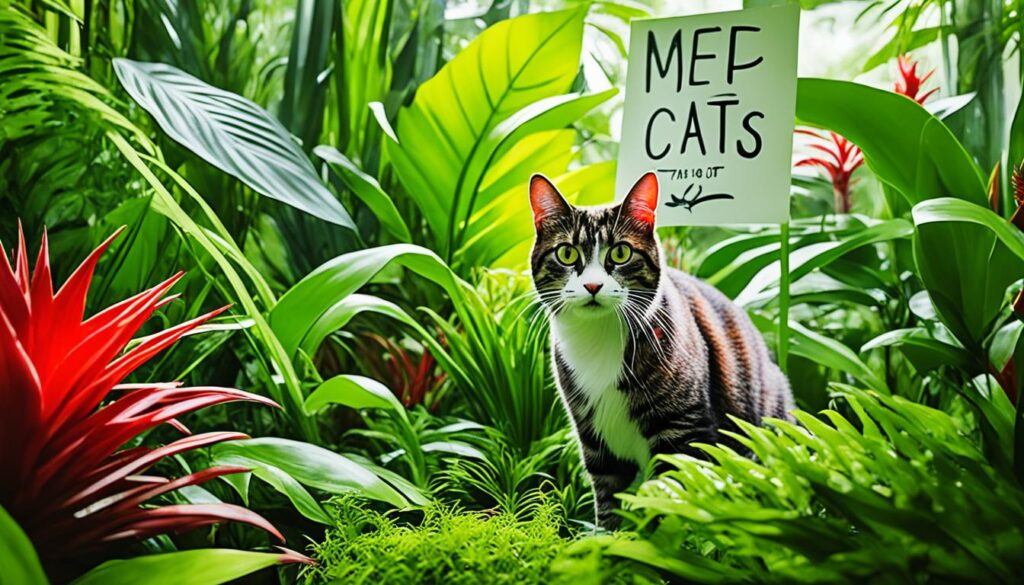
If a cat ingests a bromeliad, it is important to take immediate steps to prevent further ingestion and ensure the well-being of the cat. Here are the recommended actions to follow:
Seeking veterinary intervention is essential when a cat ingests a bromeliad. Veterinarians have the expertise to assess the situation and provide appropriate treatment. Immediate steps may include:
Prevention plays a vital role in ensuring the well-being of cats. Reassessing the houseplant collection and implementing cat-proofing measures can help avoid further incidents. It is essential to create a safe environment for cats by keeping toxic plants out of their reach and providing alternative cat-friendly plants.
Table: Steps to Take If a Cat Ingests Bromeliad
| Step | Description |
|———————————————–|—————————————————————————————————————————–|
| 1. Gently remove any remnants | Carefully check the cat’s mouth and paws to remove any plant material. |
| 2. Contact a veterinarian | Seek guidance from a veterinary professional to receive specific instructions based on the situation. |
| 3. Induce vomiting (if necessary) | The veterinarian may induce vomiting using appropriate medications or techniques. |
| 4. Administer activated charcoal | Give activated charcoal to bind any remaining toxins in the cat’s digestive system. |
| 5. Provide IV fluids | Administer IV fluids to maintain hydration and support the cat’s organs during the recovery process. |
| 6. Perform gastric lavage (if necessary) | In severe cases, perform gastric lavage under general anesthesia to physically remove any remaining plant particles. |
By following these immediate steps and seeking professional veterinary care, pet owners can address bromeliad ingestion incidents effectively and ensure the health and safety of their feline companions.
Overall, bromeliads are generally safe for cats to be around. However, it is still important for pet owners to be aware of potential risks and take preventive measures to ensure the safety of their feline companions. This includes keeping toxic plants out of the cat’s reach, providing safe alternatives, and supervising cats around plants to prevent incidents of plant ingestion.
Creating a cat-friendly environment involves knowing which plants are safe and which are toxic. By choosing cat-safe indoor plants and being mindful of the potential toxicity of certain plants, pet owners can enjoy the beauty of houseplants while keeping their cats safe and healthy.
Remember, it’s always better to be safe than sorry when it comes to cat safety and houseplants. By taking the necessary precautions and being informed about the potential risks, pet owners can provide a safe and nurturing environment for their beloved furry friends.
No, bromeliads are not toxic to cats or dogs. However, it is still important to prevent cats from regularly chewing on the plants as it can cause an upset stomach and potentially harm the plant itself.
To keep cats away from bromeliads, you can: keep the plants out of your cat’s reach, use safe repellent sprays, sprinkle coffee grounds at the base of the plant, provide your cat with their own safe plant, and consider planting bromeliads outdoors.
Some plants that are toxic to cats include: Aloe, Lilies, Corn plant, Daisy, Daffodil, English ivy, Jade plant, Tulip, Snake plant, Sago palm, and Dumbcane. It’s important to always check the toxicity of plants before bringing them into a home with cats.
Some examples of non-toxic plants for cats include: African daisy, African violet, American rubber plant, Spider plant, True palms, Swedish ivy, Peacock plant, Areca palm, Money tree, Ponytail palm, Lady palm, and Bird’s nest palm. These plants can add beauty to the home while ensuring the safety of cats.
Symptoms of bromeliad toxicity in cats may include vomiting, diarrhea, excessive drooling, difficulty breathing, altered behavior (lethargy or agitation), pawing at the face, and watery eyes.
Treatment for bromeliad toxicity in cats may include administering activated charcoal to bind the toxins, providing IV therapy for hydration and organ support. In severe cases, gastric lavage under general anesthesia may be performed to remove any remaining plant material from the stomach.
To prevent bromeliad poisoning in cats, you can: keep toxic plants out of the cat’s reach, use plant placement and strategic planters to prevent access, monitor cats’ behavior around plants, consider non-toxic plant alternatives, use artificial plants if necessary, and supervise outdoor cats to prevent plant ingestion.
If a cat ingests a bromeliad, you should immediately remove any plant remnants from the cat’s mouth and paws, and contact a veterinarian for guidance. Veterinary intervention is crucial in cases of bromeliad ingestion, and they may induce vomiting, administer activated charcoal, provide IV fluids, and in severe cases, perform gastric lavage.
While bromeliads are generally safe for cats, it is important for pet owners to be aware of potential risks and take preventive measures to ensure the safety of their feline companions. By keeping toxic plants out of reach, providing safe alternatives, and supervising cats around plants, you can create a cat-friendly environment and keep your cats safe and healthy.