
 11
11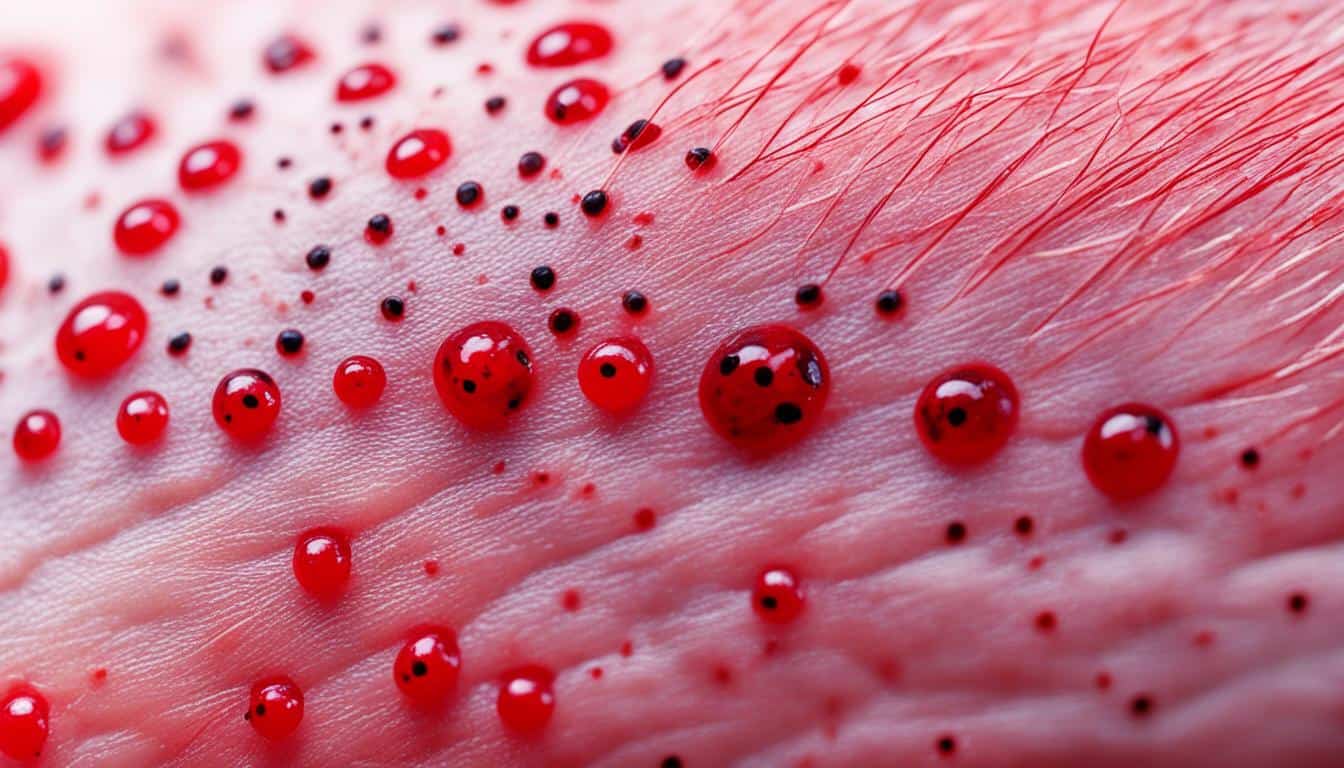

Fleas are more than just annoying. They can be dangerous to people. They carry diseases like the plague and cat scratch fever. When they bite, they leave small, itchy bumps, usually on your feet, ankles, or other bare skin.
If a flea bite causes an allergic reaction or disease symptoms, get medical help right away. Getting treated quickly is important for your health. There are also treatments you can buy without a prescription to ease the itchiness from flea bites.
Fleas are vectors that move diseases from animals to humans. They do this by biting and transmitting infections. These bites can cause more than just itching and discomfort. They can also bring a bigger health risk by sending parasites to people. Though most bites just irritate the skin, in rare cases fleas can pass on tapeworms and other harmful parasites.
It’s vital to remember that young kids are more at risk of getting parasites from fleas. They play closer to the ground, where fleas live in carpets and cracks. Without the right prevention and care, fleas can be a serious threat to both animals and humans.
“Fleas are not only annoying but also spread diseases. Knowing how they spread illness is key to protecting both you and your pets.”
Fleas can carry diseases that might infect humans. These include the plague, endemic murine typhus, and cat scratch disease. It’s crucial to know the risks of flea bites and take steps to protect yourself.
The plague is rare but mainly found in the Western U.S. It comes from the bacterium Yersinia pestis through flea bites. Symptoms include fever, chills, and body aches. In serious cases, it can damage organs and lower blood pressure.
Endemic murine typhus occurs in warm coastal areas, spread by fleas. It’s caused by the bacterium Rickettsia typhi. Symptoms include headache, fever, and joint pain. It’s vital to get medical help if you have these symptoms after a flea bite.
Cat scratch disease can also come from flea bites. It’s caused by Bartonella henselae, carried by cat fleas. Symptoms are swollen lymph nodes, fever, and weight loss. Seek medical help if you experience these symptoms post-flea bite.
“Flea bites can potentially transmit diseases such as the plague, endemic murine typhus, and cat scratch disease. It is crucial to recognize the symptoms and seek appropriate medical care.”
To avoid these diseases, use flea control for pets and keep your place clean. Stay away from stray animals. See a doctor if you have flea bite symptoms for diagnosis and treatment.
Next, we’ll look at symptoms of flea bites on humans. We’ll also explore treatments to ease discomfort and prevent more issues.
Flea bites can make your skin itch and hurt. They look like small, discolored bumps. They have a red center on light skin. On dark skin, they might be dark brown spots or blend in.
These bites usually come in groups or lines. This shows where the flea went as it fed on you. Scratching these bites can make things worse by causing more itching. It can also lead to infections.
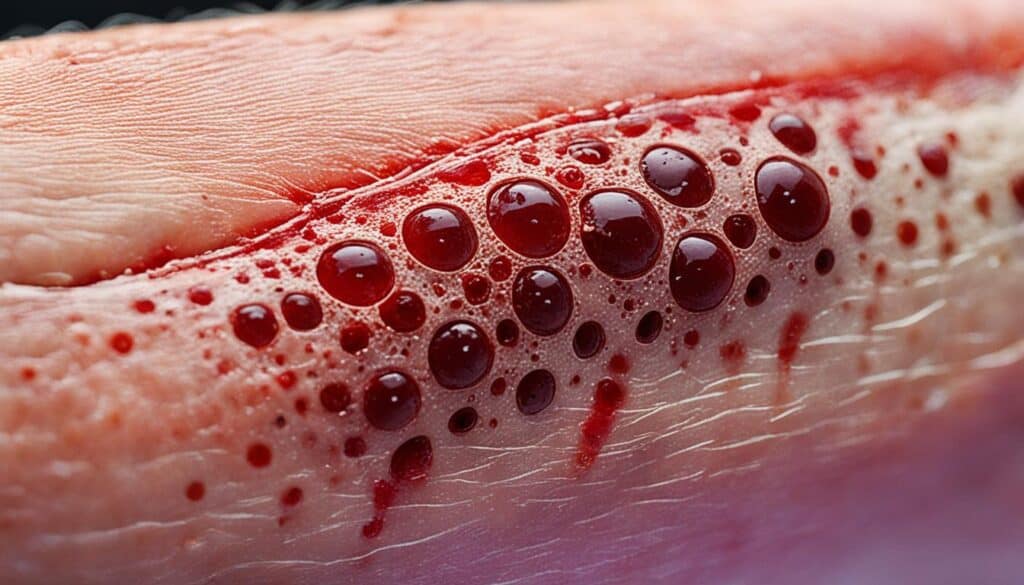
If you scratch the bites, you might get more swelling, redness, and pus. It’s very important not to scratch them.
Some people might not notice the bites because they are small. But those allergic to flea bites may have worse symptoms. These can include hives or, in rare cases, a dangerous reaction called anaphylaxis.
Some fleas can spread diseases to people, which is a health concern. It’s important to know about these diseases to stop them from spreading.
Flea-borne typhus is a disease found mainly in Hawaii, California, and Texas. It happens when humans are bitten by fleas carrying Rickettsia typhi bacteria. People with flea-borne typhus may have fever, headache, muscle aches, and a rash.
Getting diagnosed and treated early with antibiotics is key to beating this disease.
Flea-borne spotted fever is a problem worldwide. It’s caused by Rickettsia felis bacteria in fleas. These fleas can infect humans with their bites.
Symptoms include fever, headache, rash, and muscle aches. It’s very important to see a doctor quickly for treatment with antibiotics.
The plague reminds people of past pandemics. Yersinia pestis bacteria cause it, and fleas spread it through bites. Though rare, plague cases still happen today.
Symptoms are fever, chills, weakness, and swollen lymph nodes. Fast treatment with antibiotics is crucial for this serious disease.
Cat scratch disease (CSD) is passed on by fleas. It happens when fleas infected with Bartonella henselae bacteria bite and then scratch humans. Symptoms include swollen lymph nodes, fever, and fatigue.
Most CSD cases are mild and get better on their own. But serious cases might need doctor’s care to avoid complications.
Preventing flea infestations is key to avoid these diseases. Keep pets on flea control and clean your home well. These steps can lower the risk of getting fleas and their diseases.
To treat fleabites well, dealing with itchiness and infection risks is key. Here are some steps to help:
Start by washing the bite gently with mild soap and water. This cleans off any dirt or germs that got in from scratching.
To lessen the itchiness, you have a few choices. Try using a cold pack or ice wrapped in cloth to cool the area. Or, calamine lotion can also cut down on the itch.
Try not to scratch the bites. Scratching can make things worse by breaking the skin and letting germs in. This raises the chance of getting an infection.
If the bites look infected, like they’re redder or swollen, or if there’s pus, see a doctor. They might give you antibiotics to stop the infection from getting worse.
Sometimes, people might have bad itchiness or allergic reactions. Taking antihistamines by mouth can help with allergies. Also, putting topical corticosteroids on the skin can help lower swelling and itchiness.
By doing these things, you can handle fleabites better, feel less itchy, and avoid infections. If things don’t get better or get worse, it’s important to see a doctor for their advice and treatment.

If your pet has fleas, getting help from a vet is vital. The vet can offer the best solution for flea removal. They might suggest creams, pills, or shots based on your pet’s needs and the infestation level.
It’s also crucial to check your pets for worms since fleas can carry worm eggs. A vet can guide you and give treatments to prevent worms. Handling fleas means also combating worms for your pet’s health.
To stop fleas from coming back, focus on the flea source like rats or mice. These animals can bring fleas into your home. Control these pests by setting traps, blocking their entry, and keeping your yard tidy. These actions will lessen the flea problem and help keep your pets safe.
Keeping your pet and home free from fleas is important for everyone’s health. Get professional help, tackle the flea source, and ensure a clean environment. Doing these steps will make your living space safer for you and your pets.
| Treatment Options | Benefits |
|---|---|
| Top ical treatments | Easy to apply and effective |
| Tablets | Convenient administration and long-lasting effects |
| Injections | Suitable for pets with difficulty taking medication orally |
This image shows an owner treating their pet for fleas. It’s a reminder of the care pets need to stay healthy and happy.
To get rid of fleas in your home, cleaning well is very important. Follow these steps to make your home free from fleas:
With flea foggers, open windows and doors for good air flow. Also, protect or move fish tanks, delicate plants, and food before using.
| Treatment Method | Effectiveness | Advantages | Disadvantages |
|---|---|---|---|
| Laundering | Highly effective at killing fleas, larvae, and eggs | Safe for fabrics and bedding | Time-consuming |
| Vacuuming | Removes adult fleas, eggs, and larvae | Reduces allergens and dust | May require multiple passes |
| Flea Foggers | Targets fleas and eggs in infested rooms | Provides a thorough treatment | Requires temporary evacuation |
By carefully following these steps for removing fleas and taking steps to prevent them, you and your pets can enjoy a flea-free home.
If you have persistent or severe fleabites, it is advisable to seek medical attention. You may need medical evaluation if you have swollen glands, fever, chills, headache, and muscle aches. Also, see a veterinarian or exterminator if you have a continuous flea problem or notice signs of infestation in pets.
Some individuals may get severe reactions to flea bites, like an allergic reaction or infection. Allergic reactions can lead to hives, intense itching, and difficulty in breathing. For signs of an allergic reaction or painful, infected flea bites, it’s crucial to seek medical attention quickly.
Fleas can transmit diseases. If you have symptoms like persistent fever, extreme fatigue, or a spreading rash, get medical help right away. These could show you have a flea-borne disease, like the plague or endemic murine typhus.
Watch for signs of flea infestation in your pets, such as excessive scratching, hair loss, or visible fleas. A vet visit can protect your pets and prevent fleas from reaching humans in your home.
Always seek professional help if you have ongoing issues with fleas or if flea bites cause concerning symptoms. Timely action can reduce the risks from flea infestations and keep your living space safe and comfortable for you and your family.
Flea bites can make people feel really itchy, but they’re usually not dangerous. It’s important to treat and stop fleas on both humans and pets quickly. This helps avoid any problems and stops diseases from spreading.
Start by washing the bite area with soap and water. Applying creams can also reduce the itch. Keep your home clean and vacuum often to get rid of fleas.
For keeping fleas away in the future, treat your pets regularly. You might also need a pro to help get rid of fleas for good. By doing these things, the trouble caused by flea bites can be greatly reduced.
Flea bites on people can show up as tiny, itchy bumps. You’ll often find them on your ankles or feet. They look like small, red or discolored lumps. And they can be really itchy, sometimes showing up in groups or lines.
Fleas can pass diseases from animals to people. They do this through their bites. Diseases they spread include the plague and cat scratch disease. They can even spread tapeworms in some cases.
Flea bites can spread serious illnesses like the plague and cat scratch disease. The plague can cause flu-like symptoms and harm organs. Endemic murine typhus brings on headaches and fever. Cat scratch disease can make lymph nodes swell and cause fever and weight loss.
Wash flea bites with soap and water to treat them. Use cold packs or calamine lotion to ease itching. Don’t scratch the bites to avoid infections. If there’s redness or swelling, you might need antibiotics. Antihistamines or creams can help with severe itchiness.
Some fleas carry diseases like flea-borne typhus and spotted fever. Typhus happens when infected fleas bite people. It’s common in places like Hawaii and California. Spotted fever and plague can happen anywhere. And fleas can also spread cat scratch disease, causing fever and swollen nodes.
If your pets have fleas, see a vet for advice. They might suggest creams, pills, or shots. Also, treat your pets for worms since fleas can carry worm eggs. To stop fleas coming back, deal with rats around your home. Keep the grass short and block their entry points.
To get rid of fleas in the house, clean thoroughly. Wash all fabrics and pet stuff in hot water. Sweep and vacuum regularly to catch fleas and their eggs. And throw away the vacuum dust bag. Using flea bombs in bad infestations can also help. Keep treating your pets to avoid more fleas.
Seek medical help for bad or long-lasting flea bites. If you have symptoms like swollen glands or fever, see a doctor. Also, if your pets keep getting fleas, ask a vet or exterminator for help. They can keep you and your pets healthy and flea-free.
Flea bites can be itchy and annoying but are usually not dangerous. It’s important to treat them and keep fleas away from you and your pets. Washing bites, using remedies, and getting rid of fleas at home are key steps. Sometimes, you might need help from professionals to clear out fleas.