 11
11

Fleas are small parasites that love to live on pets. But they can also bite us and bring health problems. They might not hurt much, but they carry nasty germs. These germs can make people sick with diseases like the plague, murine typhus, cat-scratch disease, and tapeworm infections.
It’s key to know about these dangers. Taking steps to avoid flea problems is essential. Keep your living space clean and your pets treated to stay safe.
Fleas usually feed on animals, not humans. But if many fleas are around and animals are scarce, they might bite us too. These bites can make our skin itchy, irritated, and uncomfortable. If someone is allergic to flea saliva, it can cause more serious skin problems.
Fleas can also spread diseases to humans through their bites. These include murine typhus, cat-scratch disease, and even the plague. Though it’s rare to get seriously ill from flea bites, we still need to be careful and prevent flea infestations.
Flea bites can make our skin red, itchy, and irritated. They look like small, red bumps. We often find them in groups or lines, especially around the ankles, feet, waist, or under tight clothes.
“Flea bites are very itchy and annoying. It’s important not to scratch them, as this can cause more problems. Instead, we should do our best to soothe the itch without scratching.”
Fleas can sometimes spread serious diseases to people. Some of these diseases cause symptoms like the flu, swollen lymph nodes, and even more dangerous complications. Though getting sick from fleas is quite rare, we should not ignore the risk.
It’s crucial to know that fleas can be dangerous, even if it’s not very common. We must take steps to avoid flea infestations to protect our health.
To keep fleas away, we need to be proactive:
By taking these steps, you can reduce the chances of flea problems. This makes your home safer and more comfortable for you and your pets.
Fleas find many ways into our homes, posing risks. They mostly hitch rides on pets like cats and dogs. When pets go outside, they can pick up fleas and bring them inside.
But pets aren’t the only way fleas come inside. Wild animals like bears, foxes, and squirrels can also bring them in. If these animals enter a home, they might bring fleas with them.
To stop fleas, knowing these entry points helps. We must treat pets for fleas and keep wildlife away from our homes.
Pets are often how fleas get into houses. Using flea prevention on them helps a lot. A vet can recommend the best flea control for your pets.
It’s vital to keep wildlife away to prevent fleas. Here are some strategies:
With these steps, you can lessen the likelihood of fleas entering your home. Safe-guarding your home against fleas is about prevention and action.
Fleas are not just annoying. They carry bacteria and diseases that can harm humans. Fleas spread diseases like plague, murine typhus, and cat-scratch disease through their bites. They can also give people and pets tapeworm infections, which are risky.
If there are lots of fleas, they can make babies and young kids anemic. This means not enough blood flows to their organs. It makes them tired and weak. That’s why it’s key to deal with fleas right away.
Let’s talk about how serious diseases from fleas can be:
| Disease | Symptoms | Treatment |
|---|---|---|
| Plague | Bubonic plague: fever, chills, swollen lymph nodes | Antibiotics |
| Murine typhus | Fever, headache, rash, body aches | Antibiotics |
| Cat-scratch disease | Fever, swollen lymph nodes, fatigue | Supportive care, antibiotics if necessary |
| Tapeworm infections | Abdominal pain, nausea, weight loss | Antiparasitic medication |
Fleas that have diseases can easily pass them to humans. This can happen a lot if fleas are not stopped. To keep safe, stop fleas before they start and fix any flea problems fast.
“Remember, fleas are more than just annoying. They bring diseases. To keep safe, stop fleas early and handle any flea issues quickly.” – Dr. Anna Roberts, Infectious Disease Specialist
To stop fleas from invading your home, you need to do several things. Here are some tips that really work:
Note: Stopping fleas before they start is essential. These steps can greatly lower the chance of a flea problem at home. This keeps everyone, including your pets, healthy and happy.
| Prevention Tips | Description |
|---|---|
| Regularly treat your pets | Using veterinarian-recommended flea control products on your pets. |
| Maintain a clean home environment | Vacuuming regularly and washing pet bedding. |
| Keep your yard tidy | Trimming grass and removing debris. |
| Prevent wildlife infestations | Sealing openings and cracks to keep wildlife out. |
| Use preventive treatments | Using flea prevention products in your home. |
| Consult a professional | Seeking assistance from a pest control service, if needed. |

Yes, fleas can spread diseases to people when they bite. These bugs can carry plague, murine typhus, cat-scratch disease, and tapeworm infections. Because they are vectors, fleas can hold and pass on harmful organisms to humans through bites. Though the chance of getting sick from fleas is low, it’s still important to avoid fleas and stay safe.
Fleas generally target animals, not people. Pets like cats and dogs are often their hosts. But if there are lots of fleas and no pets around, people can get bitten too. Flea bites aren’t usually harmful by themselves, but the illnesses fleas carry can be.
Let’s talk about some diseases fleas can give to humans:
While fleas can bring diseases to people, getting sick from them isn’t very common. Not all fleas are infected, and how many there are varies by place and other things. But, preventing flea infestations is key to keeping people and pets safe.
Preventing flea-related diseases starts with controlling flea populations. By reducing flea infestations, we cut down on the chance of diseases spreading.
Flea bites show up as small, red, raised bumps. They often have a punctured center. The area around them may be swollen or inflamed. What really stands out is how itchy they can be. This itchiness can make people want to scratch.
Flea bites often occur in clusters or lines. This happens because fleas bite multiple times in one spot. You’ll mostly find these bites on parts of the body like ankles, feet, and waist. They are places fleas can easily reach.
It’s vital to tell flea bites apart from other insect bites or skin issues. Flea bites could be confused with those from mosquitoes or bed bugs. Mosquito bites are more scattered. Bed bug bites usually line up in a pattern of three.
It is important not to scratch flea bites. Scratching can lead to more problems, like infections. It makes a way for bacteria to get in.
If you think fleas have bitten you or someone else, pay close attention to the bites. Look out for allergic reactions or if symptoms get worse. It might be time to get medical help if needed.
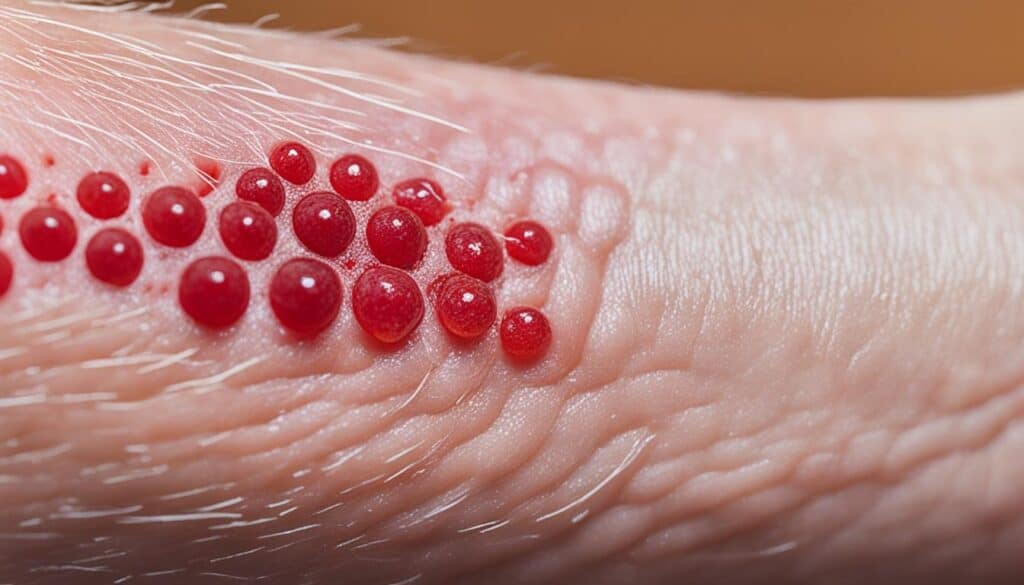
To know if bites are from fleas, remember these points:
By recognizing these signs, you can better identify flea bites. This helps decide what steps to take next, like getting medical advice or taking preventive actions.
If you’ve been bitten by fleas, acting fast to treat the bites is key. Don’t scratch them, even if it’s tempting. Scratching can make things worse, causing more irritation or even an infection.
Using anti-itch creams or ointments can really help with flea bites. They ease the itching, swelling, and discomfort. Just apply a little cream on the bite and rub it in. This helps your skin heal and feel better.
Taking antihistamines is another good idea. They lessen the itch and any allergic reaction to the bites. They block histamines, which your body makes in response to allergens like flea bites. Always follow the dose advice and talk to a doctor if unsure.
Cold compresses are great for relief too. The cold can numb the bite area, reducing the itch. Wrap some ice in a towel and hold it on the bites for a few minutes. Do this a few times each day as needed.
A cool bath can also soothe your flea bites. Just fill the tub with cool water and soak for 10-15 minutes. It’s a great way to ease the itch and feel better temporarily.
If your symptoms are severe or if you think there’s a flea infestation, see a doctor. They can give more advice and stronger treatments if needed.
It’s important to deal with the fleas themselves, not just the bites. Treat your pets for fleas, clean your home well, and take steps to prevent more fleas. This way, you can stop the bites and keep your home safe from fleas.
Getting rid of fleas at home can be tough, but it’s needed for a clean, pest-free space. Follow these steps to remove fleas:
Treat your pets for fleas first since they often bring fleas home. Talk to your vet for the best flea treatment options. Use flea combs to get rid of any fleas or eggs on your pets.
Vacuum everywhere, especially where your pets hang out. This means carpets, rugs, and where pets sleep. Always empty the vacuum outside right away to keep fleas from coming back.
Wash all bedding in hot water to kill fleas. This includes your bedding and your pets’. Dry everything on high heat to make sure all fleas are gone.
Use flea treatments made for homes, like sprays or powders. Carefully follow the directions. Treat your whole home to kill fleas and stop eggs from hatching.
Keep your home clean to prevent fleas. Vacuum often and keep your yard clean. This reduces places for fleas to live and grow.
If you still have fleas, call a pro. Pest control experts use special products to get rid of fleas for good.
By doing these things, you can beat fleas in your home. This makes a safer, happier place for you and your pets.
Fleas can be harmful because they can spread diseases when they bite. It’s rare, but it’s better to be safe. So, it’s a good idea to keep fleas away to stay healthy.
Making sure your pets are treated for fleas is a big step in keeping your home safe. Also, keeping your living space clean where your pets hang out is smart. This helps keep fleas away.
To further lower the chance of fleas, vacuum often and wash your pet’s bedding a lot. Try to keep pets out of places where there are fleas. If fleas do get in your house, act fast by getting help from pros or using flea control products. This stops the problem and keeps everyone safe from bites.
Always be on the lookout and act early to prevent fleas. It’s the best way to make sure you and your family stay healthy and away from fleas. Prevention is the most important step for a home without fleas.
Yes, fleas can bite humans. They might transmit diseases, creating health risks.
Fleas can irritate the skin and make you itch. They may also spread diseases with their bites.
Fleas find their way into homes via pets and wild animals. Creatures like cats, dogs, bears, foxes, and rodents bring them in.
Fleas can spread diseases like plague and typhus. They can cause tapeworm infections. Serious infestations may lead to anemia in kids.
Prevent fleas by treating pets and cleaning regularly. Use flea repellent and vacuum often to stop them from entering your home.
Indeed, fleas can spread serious diseases to humans. They transmit infections including plague and tapeworm through their bites.
Flea bites appear as itchy, red bumps. They often cluster on the skin.
To manage flea bites, don’t scratch. Use anti-itch creams and cold compresses for relief.
Eliminate fleas by treating pets and cleaning thoroughly. Use vacuuming, wash fabrics, apply flea sprays, and consider professional pest control if needed.
Fleas present health dangers through bites and disease. It’s critical to prevent and quickly tackle infestations to reduce health risks.