 11
11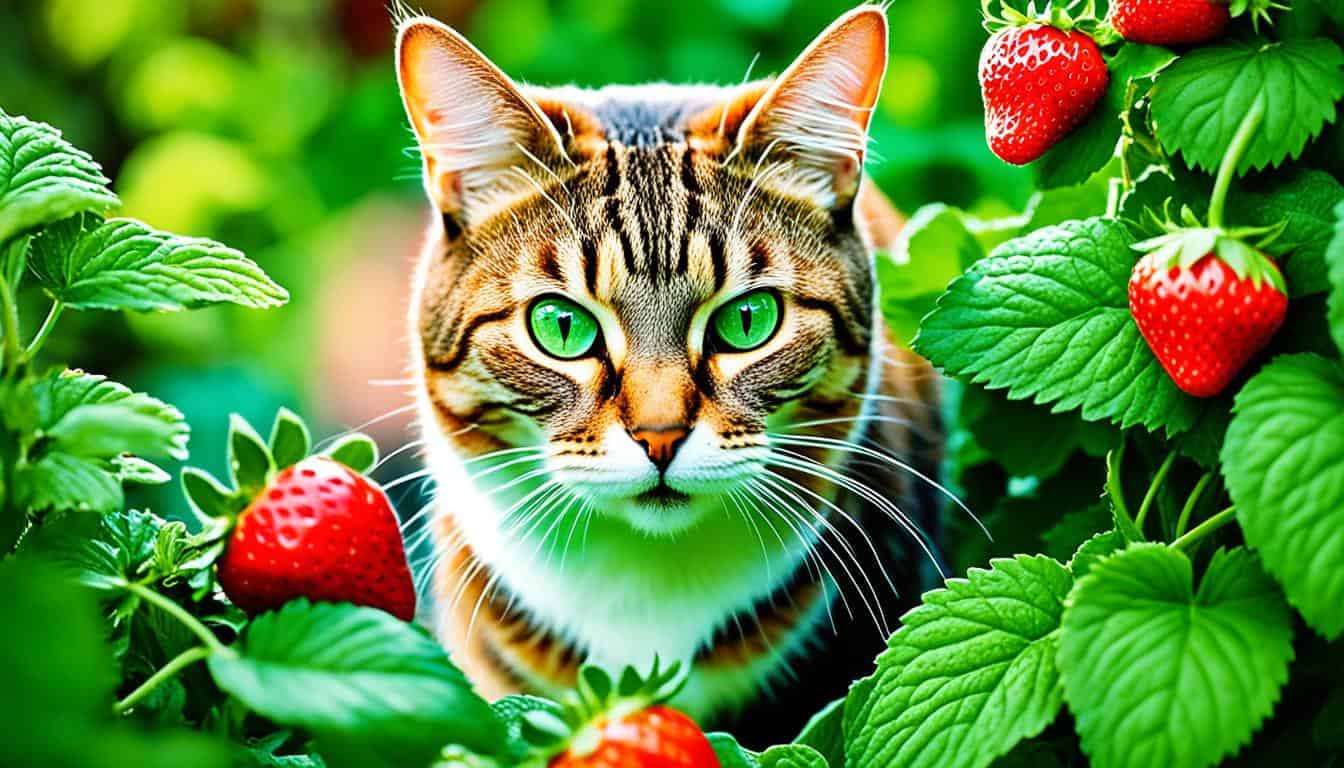

Strawberry plants, scientifically known as Fragaria spp., belong to the Rosaceae family. They are non-toxic to dogs, cats, and horses. While strawberry plants are generally safe for cats, it’s important to understand the potential risks and take necessary precautions when feeding them to your feline friends.
Cats have specific dietary needs, and while strawberries are safe in moderation, they are not necessarily the best choice for all cats. Strawberries are packed with fiber, vitamin C, potassium, and antioxidants, making them a nutrient-rich snack. However, their high sugar and carbohydrate content can be difficult for cats to digest, especially if they are diabetic or overweight. Ingesting large amounts of strawberries can cause gastrointestinal upset, and there is a potential risk of choking if cats are not able to properly chew the fruit. Additionally, some cats may develop allergies or intolerances to strawberries, resulting in various symptoms.
If your cat enjoys strawberries and you decide to feed them this fruit, it’s important to do so in moderation. Cats should not eat strawberries frequently due to their high sugar content. The amount of strawberries a cat can safely consume depends on their size, medical history, and food preferences. Generally, it is recommended to limit the intake to half of a strawberry per day. It is crucial to remove the stems and leaves before offering strawberries to your cat, as these parts can be difficult to digest and may cause gastrointestinal obstruction.
While allergies to strawberries are uncommon in cats, it is still possible for them to develop allergic reactions or intolerances. Symptoms of a strawberry allergy in cats include runny nose, diarrhea, swollen eyes, itchy skin, coughing, wheezing, and vomiting. Some cats may experience intolerance to strawberries, resulting in vomiting or diarrhea regardless of previous exposure.
In addition to strawberries, there are other fruits that can be safe for cats when given in moderation. Watermelon, apples, avocados, blueberries, pumpkin, and bananas are some examples of fruits that can be offered to cats as treats. However, some fruits, such as cherries, grapes, raisins, and citrus fruits, can be toxic to cats and may cause kidney damage or upset their stomach.
While strawberries can be enjoyed by cats as an occasional treat, they are not essential to their diet. Cats require a balanced, high-quality cat food that meets their nutritional needs. It is important to provide a diet that is approved by AAFCO (Association of American Feed Control Officials) and specifically formulated for cats. Consult with a veterinarian for guidance on the best diet for your cat.
When giving strawberries to your cat, it is important to follow safe practices. Wash the strawberries thoroughly to remove any dirt or residual chemicals. Remove the stems and leaves, as they can be difficult to digest. It is recommended to cut the strawberries into small, bite-sized pieces to prevent a potential choking hazard. Additionally, offer fresh strawberries rather than canned berries or jams, which may contain excess calories and added sugars.
Some strawberry-flavored products, such as pastries or drinks, may contain the sweetener xylitol. While xylitol toxicity is well-documented in dogs, there is limited information on its effects in cats. To be on the safe side, avoid giving cats anything strawberry-flavored that is sweetened with xylitol, as it can be potentially harmful. Always check the ingredients of any strawberry-flavored products before offering them to your cat.
Strawberries are packed with fiber, vitamin C, potassium, and antioxidants, making them a nutrient-rich snack. However, cats have specific dietary needs, and while strawberries are safe in moderation, they are not necessarily the best choice for all cats.
Strawberries can have both positive and negative effects on cats. Let’s explore the potential health benefits and risks associated with feeding strawberries to our feline friends:
It’s important to note that each cat is unique, and their tolerance to strawberries may vary. If you’re considering introducing strawberries into your cat’s diet, it’s best to consult with your veterinarian to ensure it aligns with their specific dietary needs and health conditions.
“While strawberries can offer some nutritional benefits, it is crucial to remember that cats have specific dietary needs and may not tolerate strawberries well in large quantities.”
By understanding the potential benefits and risks associated with strawberries, you can make informed decisions about incorporating them into your cat’s diet. Always introduce new foods gradually and monitor your cat’s response, taking note of any changes in behavior or health.
Before continuing, let’s take a closer look at the safe practices for offering strawberries to cats in Section 7. But first, let’s enjoy an enticing image of a strawberry:
If your cat enjoys strawberries and you decide to feed them this fruit, it’s important to do so in moderation. Cats should not eat strawberries frequently due to their high sugar content. The amount of strawberries a cat can safely consume depends on their size, medical history, and food preferences. Generally, it is recommended to limit the intake to half of a strawberry per day. It is crucial to remove the stems and leaves before offering strawberries to your cat, as these parts can be difficult to digest and may cause gastrointestinal obstruction.
Cats are curious creatures, and they may show interest in nibbling on the green parts of strawberries. However, it’s best to keep them away from strawberry stems and leaves. While they are not toxic to cats, they can be challenging for their digestive system to process. To avoid any potential issues, ensure that the strawberries you offer to your cat are free of stems and leaves.
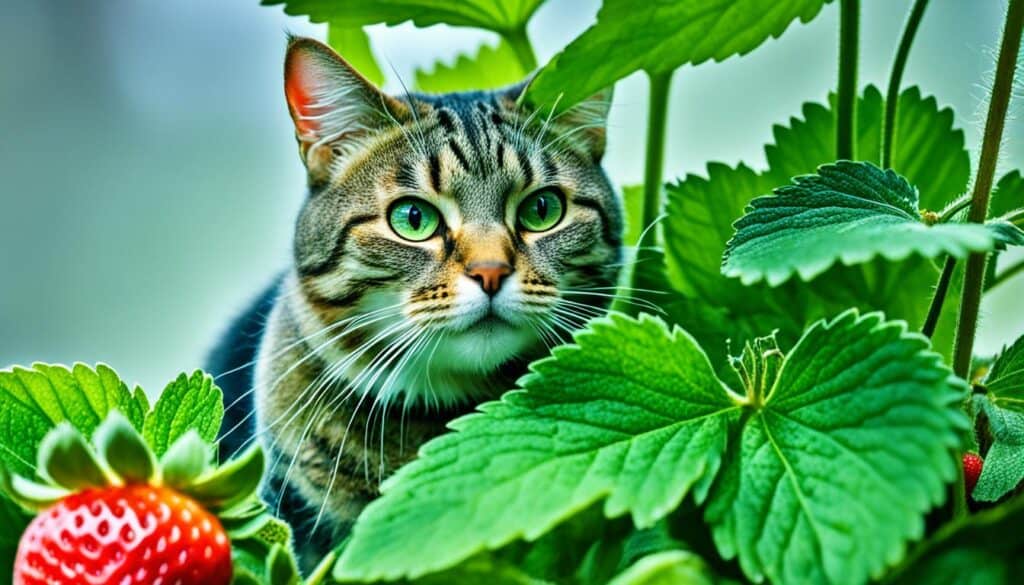
When feeding strawberries to your cat, always prioritize their safety and well-being. It’s essential to observe your cat’s reaction after consuming strawberries for the first time. Some cats may have allergies or intolerances to strawberries, leading to symptoms such as vomiting, diarrhea, or even difficulty breathing. If you notice any of these signs, discontinue feeding strawberries to your cat and consult a veterinarian.
In addition to the potential risks associated with strawberries, it’s important to remember that a cat’s diet should primarily consist of nutritionally balanced cat food. Strawberries are a treat that should not replace their regular meals. Be mindful of your cat’s overall diet and consult with a veterinarian to ensure that their nutritional needs are met.
| Cat Weight | Safe Quantity of Strawberries |
|---|---|
| Under 5 lbs (2.3 kg) | Quarter of a strawberry |
| 5-10 lbs (2.3-4.5 kg) | Half of a strawberry |
| Above 10 lbs (4.5 kg) | One whole strawberry |
Remember, every cat is unique, and their dietary needs may vary. It’s always best to consult with a veterinarian before introducing new foods to your cat’s diet, including strawberries. They can provide personalized advice based on your cat’s specific health requirements.
While allergies to strawberries are uncommon in cats, it is still possible for them to develop allergic reactions or intolerances. Cats usually develop allergies after repeated exposure to a particular food. Symptoms of a strawberry allergy in cats include runny nose, diarrhea, swollen eyes, itchy skin, coughing, wheezing, and vomiting. Some cats may experience intolerance to strawberries, resulting in vomiting or diarrhea regardless of previous exposure.
In addition to strawberries, there are other fruits that can be safe for cats when given in moderation. It’s always important to provide a varied diet for your feline friends, and offering different fruits as occasional treats can be a fun way to do so. Here are some fruits that are generally safe for cats:
While these fruits can be enjoyed by cats, it’s important to remember that every cat is unique, and some may have specific dietary restrictions or intolerances. Always introduce new fruits slowly and monitor your cat for any signs of gastrointestinal upset or allergies.
While there are many fruits that are safe for cats, there are also some fruits that should be avoided due to their potential toxicity. Here are a few fruits that can be harmful to cats:
It’s important to keep these fruits out of your cat’s reach to prevent any accidental ingestion.
In addition to strawberries, there are other fruits that can be safe for cats when given in moderation. Here are some examples:
| Fruit | Safety for Cats |
|---|---|
| Watermelon | Safe, remove seeds and rind |
| Apples | Safe, remove core and seeds |
| Avocados | Safe (flesh only), avoid skin, pit, and guacamole with onion or garlic |
| Blueberries | Safe, offer in moderation |
| Pumpkin | Safe (cooked), avoid raw pumpkin and pumpkin pie filling |
| Bananas | Safe, offer in small slices or mashed |
While these fruits can be enjoyed by cats, it’s important to remember that every cat is unique, and some may have specific dietary restrictions or intolerances. Always introduce new fruits slowly and monitor your cat for any signs of gastrointestinal upset or allergies.
While there are many fruits that are safe for cats, there are also some fruits that should be avoided due to their potential toxicity. Here are a few fruits to keep away from your feline friend:
It’s important to keep these fruits out of your cat’s reach to prevent any accidental ingestion.
While strawberries can be enjoyed by cats as an occasional treat, they are not an essential part of their diet. Cats require a balanced, high-quality cat food that meets their nutritional needs. It is important to provide a diet that is approved by AAFCO (Association of American Feed Control Officials) and specifically formulated for cats. Consult with a veterinarian for guidance on the best diet for your cat.
Cats are obligate carnivores, which means their bodies are designed to thrive on a meat-based diet. They require essential nutrients such as animal protein, fats, vitamins, and minerals to maintain optimal health. These nutrients are naturally found in commercial cat foods that are formulated to meet the specific nutritional needs of cats.
A balanced diet for cats should consist of high-quality protein from sources like chicken, fish, or turkey. Fats provide necessary energy and help with the absorption of fat-soluble vitamins. Cats also require certain vitamins and minerals, including vitamin A, vitamin D, calcium, and taurine, which are crucial for their overall well-being.
Although strawberries contain some beneficial nutrients, they are not a necessary addition to a cat’s diet. Cats have different dietary requirements compared to humans and other animals. Strawberries are high in sugar and carbohydrates, which can be challenging for cats to digest. Diabetic cats and those with weight issues should avoid consuming large amounts of strawberries to prevent further complications.
While it may be tempting to share your love for strawberries with your feline companion, it is important to prioritize their nutritional needs and provide them with a balanced diet that supports their overall health.
To ensure that your cat is receiving the proper nutrition, it is always best to consult with a veterinarian. They can provide personalized dietary guidance based on the cat’s age, weight, breed, and any individual health concerns.
A veterinarian can recommend a high-quality cat food that meets AAFCO standards and is suitable for your cat’s specific needs. They may also suggest any necessary supplements to bridge nutritional gaps and optimize your cat’s well-being.
| Component | Role | Sources |
|---|---|---|
| Animal Protein | Builds and repairs tissue, supports immune system | Chicken, fish, turkey |
| Fats | Provides energy, aids in vitamin absorption | Salmon oil, chicken fat |
| Vitamins | Supports overall health and metabolism | Vitamin A, vitamin D |
| Minerals | Aids in bone and teeth health, enzyme function | Taurine, calcium |
When giving strawberries to your cat, it is important to follow safe practices. By taking a few simple steps, you can ensure that your cat can enjoy this delicious fruit without any potential harm or discomfort.
“Feeding strawberries to your cat can be a delightful experience, but it’s important to prioritize their safety and well-being. By following these safe practices, you can include strawberries as an occasional treat in your cat’s diet.”
If you’re unsure about your cat’s tolerance to strawberries or have any concerns about their diet, consult with your veterinarian for personalized advice. They can provide guidance based on your cat’s specific needs and ensure a balanced and nutritious diet.
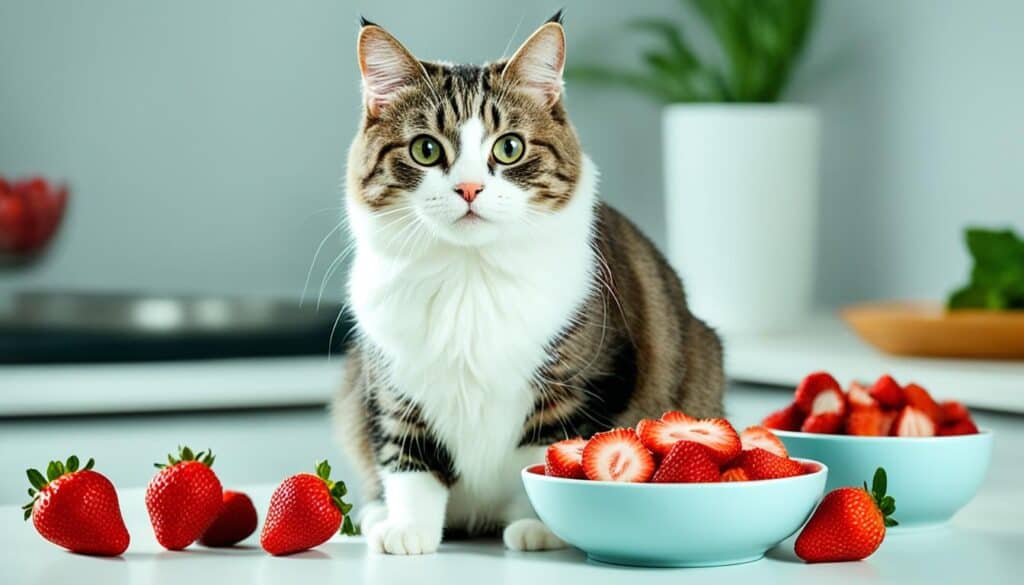
While strawberries themselves are generally safe for cats, it’s important to be cautious when it comes to strawberry-flavored products. Some of these products, such as pastries or drinks, may contain the sweetener xylitol.
Xylitol toxicity is well-documented in dogs, but there is limited information on its effects in cats. To ensure the safety of your feline friend, it’s advisable to avoid giving them anything strawberry-flavored that is sweetened with xylitol.
Always check the ingredients of any strawberry-flavored products before offering them to your cat. Be aware that xylitol can be potentially harmful to cats if ingested.
Xylitol is a sugar substitute that is safe for human consumption, but it can be toxic to cats. When cats ingest xylitol, it can lead to a rapid release of insulin in their bodies, causing a dangerous drop in blood sugar levels, known as hypoglycemia. Symptoms of xylitol toxicity in cats may include vomiting, lethargy, loss of coordination, seizures, and even liver failure.
| Xylitol Toxicity in Cats | Symptoms |
|---|---|
| Hypoglycemia | Low blood sugar levels, weakness, collapse |
| Neurological Symptoms | Disorientation, seizures, loss of coordination |
| Liver Failure | Jaundice, vomiting, abdominal pain |
Cats are more sensitive to xylitol than dogs, and even small amounts can be harmful. Therefore, it is crucial to keep all xylitol-containing products out of reach of your cat and to seek immediate veterinary care if you suspect your cat has ingested any xylitol.
In conclusion, strawberry plants are generally non-toxic to cats, but it is important to exercise caution when feeding your feline friends strawberries. While strawberries can offer some nutritional benefits, it is crucial to remember that cats have specific dietary needs and may not tolerate strawberries well in large quantities.
Always monitor your cat for any signs of gastrointestinal upset, allergies, or intolerances when introducing new foods, including strawberries, to their diet. Cats may experience symptoms such as diarrhea, vomiting, or allergic reactions if they have an adverse reaction to strawberries.
To ensure the safety and well-being of your cat, it is recommended to consult with a veterinarian for personalized advice on feeding fruits to your cat. They can provide guidance on the appropriate portion sizes and frequency of feeding strawberries to your cat based on their individual needs and health conditions.
Remember, while strawberries can be a tasty and occasional treat for cats, they should not replace a balanced and nutritionally complete diet specifically formulated for feline health.
No, strawberry plants are non-toxic to cats. However, precautions should be taken when feeding strawberries to cats.
Strawberries are nutrient-rich and contain fiber, vitamin C, potassium, and antioxidants. However, cats may have difficulty digesting the sugar and carbohydrates in strawberries, and ingesting large amounts can cause gastrointestinal upset and potential choking hazards.
Yes, cats can eat strawberries in moderation. It is important to remove the stems and leaves and limit the intake to half a strawberry per day.
While allergies to strawberries are uncommon in cats, some cats may develop allergies or intolerances to strawberries, resulting in symptoms such as runny nose, diarrhea, swollen eyes, itchy skin, coughing, wheezing, and vomiting.
Watermelon, apples, avocados, blueberries, pumpkin, and bananas are some examples of fruits that can be offered to cats as treats. However, there are certain fruits that cats should avoid, such as cherries, grapes, raisins, and citrus fruits.
Strawberries are not an essential part of a cat’s diet. Cats require a balanced, high-quality cat food that meets their nutritional needs. Consult with a veterinarian for guidance on the best diet for your cat.
Wash strawberries thoroughly, remove the stems and leaves, and cut them into small, bite-sized pieces to prevent choking hazards. It is also best to offer fresh strawberries rather than canned berries or jams. Always check the ingredients of any strawberry-flavored products before offering them to your cat.
Some strawberry-flavored products may contain the sweetener xylitol, which can be potentially harmful to cats. It is advisable to avoid giving cats anything strawberry-flavored that is sweetened with xylitol. Always check the ingredients of any strawberry-flavored products before offering them to your cat.
Strawberry plants are generally non-toxic to cats, but it is important to exercise caution when feeding your feline friends strawberries. While strawberries can offer some nutritional benefits, it is crucial to remember that cats have specific dietary needs and may not tolerate strawberries well in large quantities. Always monitor your cat for any signs of gastrointestinal upset, allergies, or intolerances when introducing new foods, including strawberries, to their diet. Consult with a veterinarian for personalized advice on feeding fruits to your cat.