 11
11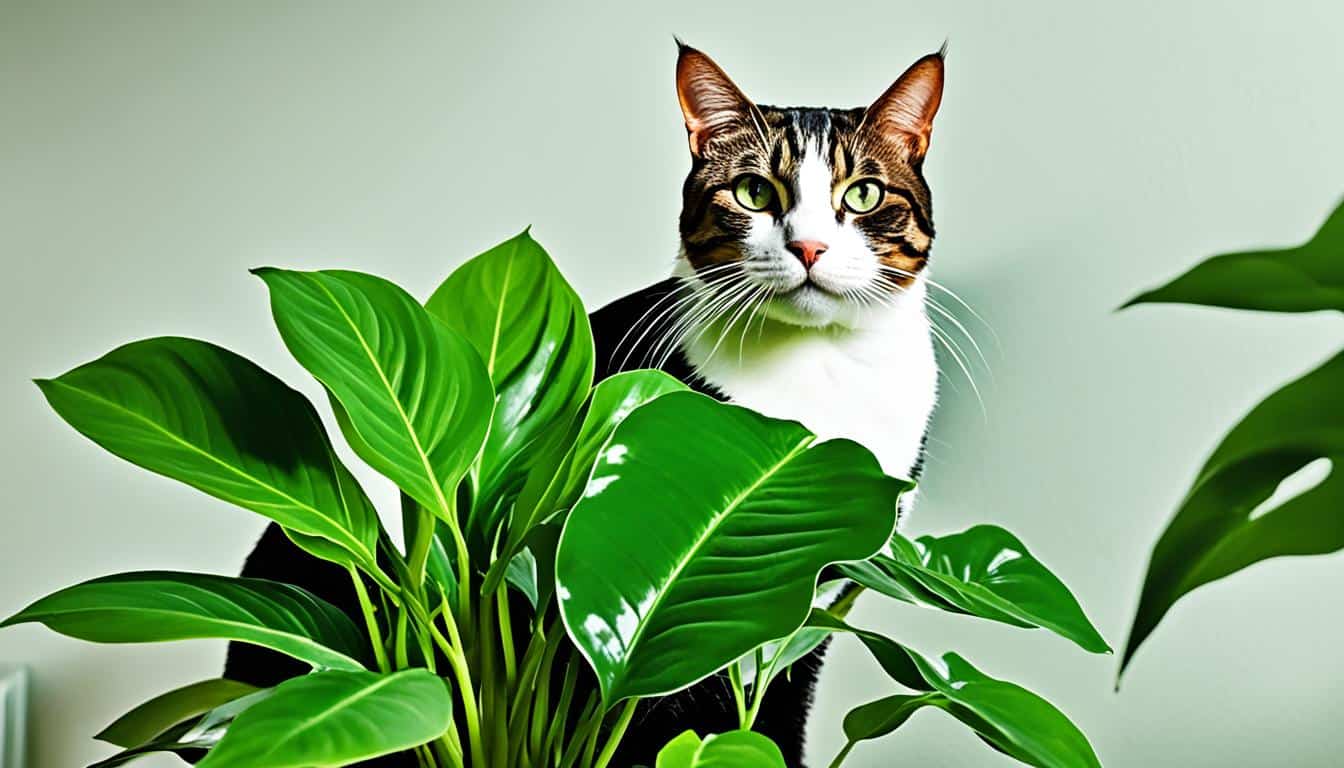

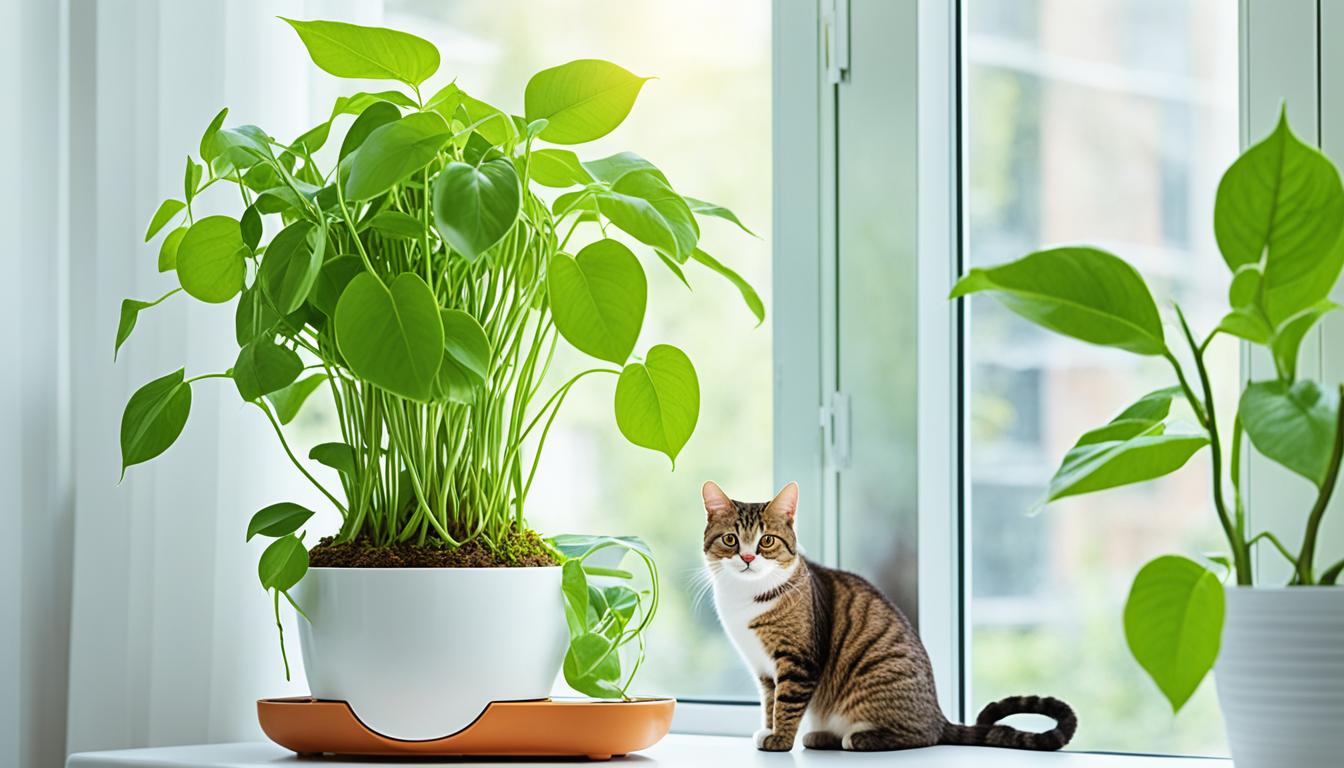
Philodendron plants are a common household plant known for their attractive foliage. However, when it comes to the safety of our furry friends, particularly cats, it’s important to understand the potential hazards these plants may pose.
So, are philodendron toxic to cats? The answer is yes. Philodendron plants are considered moderately toxic to cats and dogs. The toxicity is primarily due to the presence of insoluble calcium oxalates in their leaves. If a cat ingests any part of the plant, it can cause oral irritation, swelling of the mouth, excess drooling, difficulty swallowing, vomiting, and diarrhea. The severity of symptoms can vary depending on the amount ingested and the individual cat’s sensitivity.
While philodendron poisoning in cats is typically not life-threatening, it’s essential to prioritize your pet’s safety by preventing any potential health issues. This includes understanding the symptoms of philodendron poisoning, identifying cat-friendly houseplants, and taking appropriate measures to protect your feline companion.
Philodendron plants are a popular choice for indoor gardening due to their attractive foliage and low maintenance. However, these plants can pose a threat to the health of cats if ingested. Philodendrons contain insoluble calcium oxalates that can cause various health problems in feline companions.
The sharp crystals found in philodendron plants can cause oral irritation and swelling of the mouth in cats. When a cat chews or bites into a philodendron leaf, the calcium oxalates are released, leading to discomfort and pain. Cats may exhibit signs of oral discomfort, such as excessive drooling and difficulty swallowing.
Ingesting philodendron plants can result in gastrointestinal problems in cats. The insoluble calcium oxalates can irritate the lining of the stomach and intestines, leading to vomiting and diarrhea. These symptoms can range from mild to severe, depending on the amount of plant material ingested and the individual cat’s sensitivity.
In rare cases, exposure to philodendron plants can cause eye irritation in cats. Direct contact with the sap or plant juices may lead to redness, itching, and discomfort in the cat’s eyes. It is important to keep cats away from philodendron plants to prevent any potential eye-related issues.
Although uncommon, inhalation of philodendron plant particles or dust may cause respiratory problems in cats. Cats with pre-existing respiratory conditions may be more susceptible to irritation or inflammation of the airways when exposed to philodendron plants. Any signs of difficulty breathing or abnormal respiratory sounds should be promptly addressed by a veterinarian.
Cat owners should be vigilant in keeping philodendron plants out of their feline’s reach to prevent potential health issues. If you suspect your cat has ingested philodendron or is showing any symptoms of philodendron poisoning, seek immediate veterinary care. It is always better to prioritize the safety and well-being of your furry friend.
In addition to philodendron plants, cat owners should be aware of other houseplants that can pose a threat to their feline companions. These plants should be kept out of reach to prevent any potential health issues. The following are six plants that are toxic to cats:
By being aware of these plants and taking precautions to prevent cats from accessing them, pet owners can create a safer environment for their feline companions.
Easter lilies are beautiful flowers that are commonly associated with the Easter holiday. However, these lovely blossoms can pose a serious threat to our feline friends. It’s important for cat owners to be aware of the dangers and symptoms of Easter lily toxicity in cats.
Toxicity of Easter Lilies in Cats
Easter lilies (Lilium longiflorum) contain substances that are highly toxic to cats. Even a small amount of lily ingestion can have severe consequences for our furry companions. The entire plant, including the flower, leaves, stems, and pollen, is toxic to cats.
Symptoms of Easter Lily Toxicity in Cats
When a cat ingests any part of an Easter lily, they may experience a range of symptoms, including:
If left untreated, Easter lily toxicity can lead to more serious health issues, such as:
It is crucial to recognize the symptoms of Easter lily toxicity and seek immediate veterinary care if you suspect your cat has ingested any part of the plant.

Fun Fact: Did you know that there are other lily varieties, such as tiger lilies and daylilies, that are also toxic to cats? It’s important to keep all lily plants out of your cat’s reach to prevent any accidental ingestion.
Ivy plants, including English ivy, can be toxic to cats. Ingesting ivy leaves or other plant parts can lead to various symptoms of ivy poisoning in cats. It’s important for cat owners to be aware of the potential toxicity of ivy and take necessary precautions to keep their feline friends safe.
When a cat consumes ivy, it can result in gastrointestinal distress. Common symptoms of ivy poisoning in cats include vomiting, abdominal pain, and diarrhea. These symptoms may be accompanied by other signs of discomfort, such as excessive drooling or loss of appetite.
The toxicity of ivy in cats is attributed to a group of chemical compounds called triterpenoid saponins. These compounds can irritate the gastrointestinal tract and disrupt normal digestive processes when ingested by cats.
To prevent ivy poisoning in cats, it is recommended to keep ivy plants out of their reach. This includes ensuring that the plants are securely positioned or using deterrents such as plant barriers or elevated shelves. Additionally, it’s crucial to promptly remove any fallen ivy leaves or trimmings from the environment where the cat resides.
If a cat displays any of these symptoms after ingesting ivy, it is highly recommended to seek veterinary care immediately. A veterinarian will be able to provide proper diagnosis, treatment, and supportive care based on the specific situation.
Remember, the well-being of our feline companions should always be a top priority, and being informed about the potential dangers of ivy toxicity plays a significant role in keeping them safe.
Pothos plants, also known as Devil’s Ivy, are a common houseplant that adds a touch of greenery to any space. However, it’s important for cat owners to be aware that pothos is toxic to cats.
Similar to philodendrons, pothos plants contain insoluble calcium oxalates, which can be harmful if ingested by cats. These oxalates can cause a range of symptoms in cats, including drooling, vomiting, and difficulty swallowing. It’s essential to keep pothos plants out of reach of cats to avoid any potential poisoning.
If you suspect your cat has ingested pothos or is showing symptoms of pothos poisoning, it’s crucial to seek veterinary attention immediately. Prompt medical care can help prevent further complications and ensure your cat’s well-being.
Remember, prevention is key when it comes to keeping your cat safe from pothos toxicity. Make sure to place pothos plants in areas where your cat cannot access them, or consider choosing cat-friendly houseplants as an alternative.
It’s important for cat owners to be familiar with the symptoms of pothos poisoning in cats. These may include:
If your cat displays any of these symptoms after ingesting pothos, it’s crucial to seek immediate veterinary attention to ensure proper diagnosis and treatment.
Cannabis can pose a danger to cats if they are exposed to it in various ways, such as inhaling second-hand smoke, consuming edibles, or directly ingesting cannabis. The effects of cannabis intoxication in cats can manifest in changes to their heart rate, breathing rate, and blood pressure. To ensure the safety of your feline companion, it is crucial to keep all cannabis products securely out of their reach, preventing any accidental ingestion.
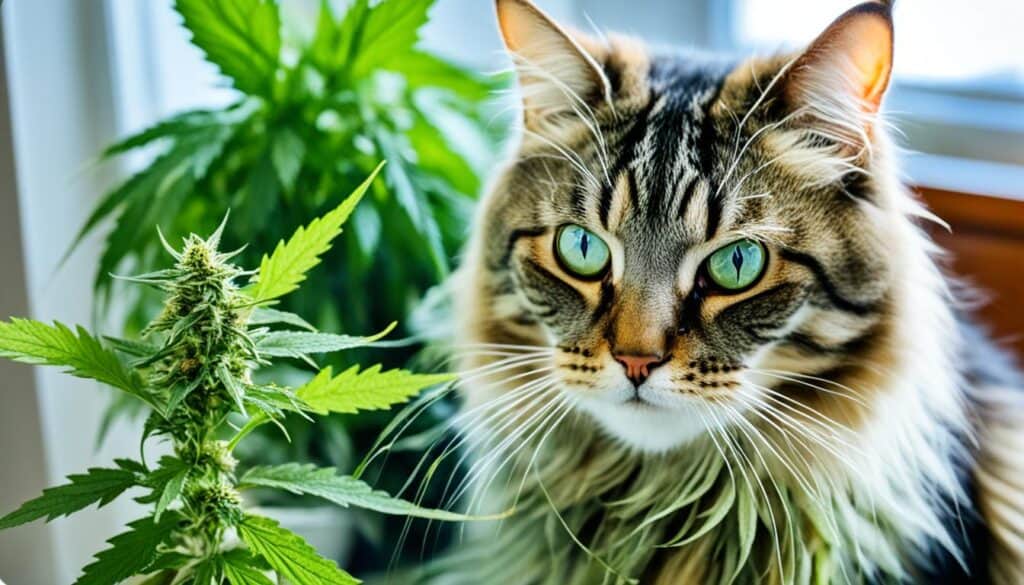
“Exposure to cannabis can have adverse effects on cats, ranging from mild to severe.”
“Cannabis intoxication in cats can cause changes in heart rate, blood pressure, and breathing rate. It is important to prioritize the safety of your furry friend by preventing their exposure to cannabis products.”
When cats are exposed to cannabis, they may exhibit various symptoms of intoxication. These can include:
It’s important to observe your cat closely if you suspect they have been exposed to cannabis. If you notice any unusual behavior or symptoms, contact your veterinarian for guidance and assistance.
| Symptoms of Cannabis Intoxication in Cats | Description |
|---|---|
| Impaired coordination | Cats may have difficulty walking or moving normally. |
| Depression or sedation | Cats may appear lethargic or exhibit a decrease in activity levels. |
| Dilated pupils | The cat’s pupils may appear larger than usual. |
| Increased vocalization | Cats may meow excessively or display heightened vocalization. |
If you suspect that your cat has ingested cannabis or is experiencing intoxication symptoms, it is important to seek immediate veterinary care. Prompt treatment can help mitigate any potential complications and ensure the well-being of your feline companion.
Sago palms are highly toxic to cats. All parts of the plant, especially the seeds, contain cycasin, which can cause liver damage in cats. Ingesting sago palms can result in dark stool, lack of energy, increased thirst, vomiting, and diarrhea. Immediate veterinary help should be sought if a cat ingests any part of a sago palm.
The sago palm (Cycas revoluta) is a popular ornamental plant in many households. However, pet owners must be aware of its potential dangers to cats.
When a cat ingests any part of a sago palm, it can lead to sago palm poisoning, a serious condition that requires immediate medical attention. The symptoms of sago palm poisoning may include:
These symptoms may vary in severity, but any suspicion of sago palm poisoning should not be taken lightly.
“Sago palms are highly toxic to cats. All parts of the plant contain cycasin, a potent toxin that can cause liver damage. If you suspect your cat has ingested a sago palm, seek veterinary help immediately.”
The severity of sago palm toxicity in cats can range from mild gastrointestinal upset to life-threatening liver damage. Without prompt medical intervention, sago palm poisoning can be fatal to cats.
| Plant Part | Toxicity Level |
|---|---|
| Seeds | Highly toxic |
| Leaves | Moderately toxic |
| Stem | Moderately toxic |
It’s important to remember that sago palms can be found both indoors and outdoors, so extra caution should be taken to prevent cats from accessing these plants.
While aloe vera gel is safe for cats, it’s important to be aware that other parts of the aloe vera plant can be toxic to them. Ingesting these parts can cause various symptoms and discomfort in cats.
The most common symptoms of aloe vera poisoning in cats include:
If you suspect that your cat has ingested aloe vera or is experiencing any of these symptoms, it is recommended to seek veterinary care immediately. A veterinarian will be able to assess the situation and provide appropriate treatment if necessary.
To prevent any potential incidents, it is crucial to keep cats away from aloe vera plants and ensure they are not exposed to any parts of the plant that may be harmful to them.
Aloe vera plants contain various compounds, such as anthraquinones, saponins, and glycosides, which can be toxic to cats if ingested. These components can disrupt the digestive system and lead to gastrointestinal discomfort and other related symptoms.
To create a cat-friendly environment and ensure your furry friend’s well-being, consider the following tips:
By taking appropriate precautions and staying vigilant, you can help ensure a safe and cat-friendly environment for your beloved feline companion.
While philodendrons are known to be moderately toxic to cats, it is crucial to take precautions and keep them away from our feline companions to ensure their safety. Philodendrons contain insoluble calcium oxalates that can cause oral irritation, swelling of the mouth, excessive drooling, difficulty swallowing, and gastrointestinal issues like vomiting and diarrhea in cats. Even though the severity of symptoms can vary, it is always better to err on the side of caution.
In addition to philodendrons, there are several other plants that are toxic to cats, including Easter Lilies, Ivy, Pothos, Cannabis, Sago Palm, and Aloe Vera. It is essential to research and choose cat-friendly houseplants to create a safe environment for our furry friends.
By being aware of the potential dangers and taking necessary precautions, we can ensure that our cats stay healthy and happy. Remember, prevention is always better than cure when it comes to our beloved pets.
Yes, philodendron plants are considered moderately toxic to cats. They contain insoluble calcium oxalates that can cause oral irritation, swelling of the mouth, excess drooling, difficulty swallowing, vomiting, and diarrhea in cats.
Ingesting philodendron plants can lead to oral irritation, swelling of the mouth, excess drooling, difficulty swallowing, vomiting, and diarrhea in cats. The symptoms can range from mild to severe. It’s safer to keep philodendron plants away from cats to avoid any potential health issues.
Some other toxic plants for cats include Easter Lilies, Ivy, Pothos, Cannabis, Sago Palm, and Aloe Vera. It’s important to keep all these plants away from cats to prevent any potential health issues.
Ingesting Easter lilies can cause vomiting, diarrhea, loss of appetite, and can even lead to kidney damage, organ failure, and death in severe cases. It is crucial to keep all lily varieties away from cats to ensure their safety.
Yes, ivy plants, including English ivy, are toxic to cats. Ingesting ivy can cause vomiting, abdominal pain, and diarrhea in cats. It is best to keep ivy plants away from cats to prevent any potential health issues.
Yes, pothos plants are toxic to cats. Ingesting pothos can lead to drooling, vomiting, and difficulty swallowing in cats. It’s important to keep pothos plants out of reach of cats to avoid any potential poisoning.
Yes, cannabis can be harmful to cats if they inhale second-hand smoke, eat an edible, or directly consume cannabis. Cats can experience changes in heart rate, breathing rate, and blood pressure if exposed to cannabis. It is essential to keep all cannabis products safely away from pets to prevent any accidental ingestion.
Sago palms are highly toxic to cats. All parts of the plant, especially the seeds, contain cycasin, which can cause liver damage in cats. Ingesting sago palms can result in dark stool, lack of energy, increased thirst, vomiting, and diarrhea. Immediate veterinary help should be sought if a cat ingests any part of a sago palm.
While aloe vera gel is safe for cats, other parts of the aloe vera plant can be toxic to them. Ingesting aloe vera can cause symptoms such as vomiting, diarrhea, and muscle cramping in cats. It is important to keep cats away from aloe vera plants to ensure their safety.
Yes, there are several cat-friendly houseplants that you can consider, such as spider plants, Boston ferns, and Christmas cacti. These plants are safe for cats and can be a great addition to your home.
Yes, there are cat-friendly houseplants that you can have in your home without worrying about their toxicity to cats. Some examples include spider plants, Boston ferns, and Christmas cacti. These plants are safe for cats and can be enjoyed without any health concerns.