
 11
11

Dog flu, or canine influenza, is a contagious respiratory illness in dogs. There are two influenza viruses, H3N8 and H3N2, behind it. They can infect dogs of any age, breed, or health. Dogs can catch it anytime during the year. Nearly every dog exposed to the virus will get infected.
The symptoms of dog flu resemble those of kennel cough. They include a persistent cough, nasal discharge, and fever. Dogs may also show signs of tiredness, runny eyes, and less interest in food. While most dogs get better in two to three weeks, some might get pneumonia.
The chance of a dog dying from canine influenza is pretty small, just 1-5%. This flu can also make cats sick with similar signs. If your dog seems ill, it’s crucial to see a vet right away. To stop the flu from spreading, keep ill dogs away from others.
Canine influenza, also known as dog flu, spreads among dogs through certain Type A influenza viruses. There are two main strains: H3N8 and H3N2. H3N8 first affected dogs in the U.S. in 2004, coming from horses. The H3N2 strain appeared in dogs in South Korea in 2007 and reached the U.S. in 20152. Both viruses target dogs but can also infect cats. Yet, they pose no risk to humans3.
The dog flu is different from the human seasonal flu. It spreads through the air and can hit dogs of all kinds. Dogs catch it from each other or from shared items like bowls or toys2. In the U.S., vaccines help protect dogs from both H3N8 and H3N22.
Some dogs with the flu may just get a mild cough. Others could face more serious issues like pneumonia. Most get better in two to three weeks without lasting harm. Very few, about 1-5%, might die from it21. Sick dogs should stay away from other pets to stop the virus from spreading2.
To sum up, canine influenza is a dog-specific flu caused by certain influenza viruses. It moves through the air and shared items, though not to humans. Vaccines are ready for both key strains. While recovery is common, it’s vital to control the virus to protect dogs23.
Dog flu spreads where dogs get close, like inside places. The flu goes from sick dogs to others when they cough, sneeze, or bark.2 Dogs can also catch it by touching noses or sharing stuff like bowls and toys.2 Even dogs that look fine can give the flu to others for about four weeks.1
On surfaces, the virus lives for up to two days. Yet, usual cleaners can kill it.1 Cleaning and disinfecting dog areas well cuts down on flu spread.1
Even healthy-looking dogs can spread the flu. This highlights the need for actions to stop the flu among dogs. Dog owners and workers at places like kennels and shows can keep dogs safe by following good practices.1
To summarize:
– Canine influenza spreads easily in settings with close proximity between dogs.
– Respiratory droplets produced during coughing, sneezing, and barking are the primary mode of transmission.
– Direct contact and contaminated objects can also contribute to the spread of the virus.
– Infected dogs can be contagious for up to four weeks, even if they show no symptoms.
– The virus can survive on surfaces for one to two days, but is easily killed by common disinfectants.
It is key to know the signs of canine flu for early help and the right treatment. Your dog may show many symptoms, like:
Most dogs with the flu get better in 2 to 3 weeks. But remember, some dogs might not look sick even though they have the virus. In a few cases, dogs can get pneumonia, which is more serious2.
The chance of a dog dying from the flu is low, about 1-5%. But it’s important to watch dogs closely if they show flu signs. Quick vet care can manage the illness and stop worse problems3.
Dog flu spreads very easily from dog to dog. It can travel through coughing, sneezing, and even shared toys. Keeping sick dogs away from others is key to stop the spread1.
Prevention is best, but knowing the signs of dog flu is crucial. This way, you can catch it early, treat it right, and keep it from spreading to other dogs.
To figure out if a dog has canine influenza, labs test nasal or throat swabs and blood. These tests check for the virus1. Treatment focuses on helping the dog feel better and fight off the virus1. Dogs need rest, fluids, and good food to get stronger1. If the flu causes lung problems, vet may give antibiotics1.
Keep sick dogs away from healthy ones to stop the flu from spreading. The sick dog should stay alone for four weeks after getting sick1. This keeps other dogs safe and lets the sick dog heal1.
Antibiotics don’t kill the flu virus. But they help if the dog gets a bacterial infection too1. Quick and right treatment can make sick dogs better and prevent worse problems1.
| Diagnosis of Canine Influenza | Treatment for Canine Influenza |
|---|---|
| – Specific laboratory tests | – Supportive care |
| – Nasal or pharyngeal swabs | – Rest and hydration |
| – Blood samples | – Nutritional support |
| – Antibiotics (for bacterial pneumonia) |
Spotting and treating canine flu early is key. If you think your dog might be sick, see a vet right away for help and the best treatment1.
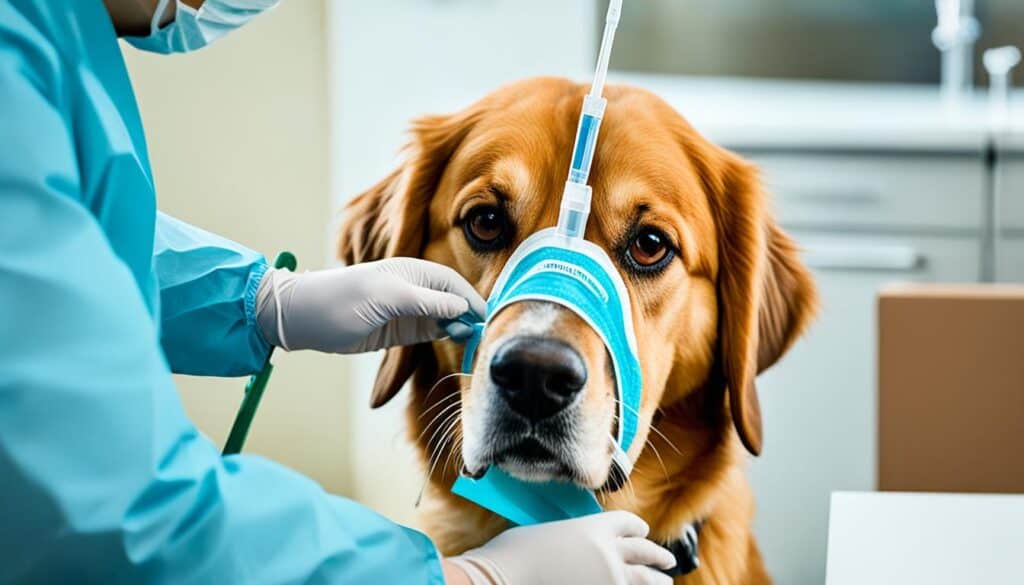
To keep dogs healthy, it’s crucial to prevent canine influenza. This is especially true for dogs in places like kennels, shelters, and dog parks. Vaccines can protect dogs, but they are usually suggested only in certain situations. Always talk to a vet to see what’s best for your dog’s health and what vaccinations they might need.1
Getting your dog vaccinated often can lower the chance of them getting and spreading canine flu. These vaccines work by getting the dog’s body to build defenses against the flu. In the U.S., there are vaccines for two types of canine flu, H3N8 and H3N2. They help keep dogs safe from these common flu strains.2
While vaccines help, they don’t guarantee your dog won’t get the flu. But, they make a big difference in protecting your dog. If your dog does get the flu, being vaccinated might make the illness milder. It’s pretty important to stick to the vaccine schedule and keep their shots up to date to keep their protection strong.2
There are more ways to fight canine flu beyond vaccines. Dog owners can do a lot to help. These steps include:
If your dog will be around many other dogs, like at a boarding place or dog show, these steps are even more important. Ask about how the place keeps dogs from getting sick and if there have been any recent outbreaks.1
Even though it’s easy for dogs to pass it around, humans can’t catch canine influenza. This flu is special to dogs and doesn’t harm people. The CDC has been watching this virus closely. They confirm no one has caught it from a dog2.
The dog flu viruses, H3N8 and H3N2, don’t typically infect humans2. These viruses came from horses and birds and later changed to infect dogs. Since the discovery of H3N2 dog flu in 2007 in South Korea, it has spread, including to the U.S. But, it has not made people sick2.
Dog flu can hit any dog, no matter their health or age. Most dogs get over it, but a few may get very sick2. Despite this, very few dogs with the flu have passed away.
Though dog flu spreads easily among dogs, humans are safe from it21. In the U.S., there are vaccines for dogs against both types of this flu. This helps keep the flu from spreading, including to people21.
Bringing a pet dog into the USA can go smoothly. But, you need to know about health risks like canine flu. Dogs from other countries might carry canine flu viruses, but rules are there to keep everyone safe2.
The CDC says dogs must be healthy to enter. They may check your dog for signs of sickness, including canine flu2. This is to protect the well-being of both the imported dogs and dogs already in the USA.
Several agencies, including the CDC and USDA APHIS VS, work together. They manage threats of new flu viruses and canine flu2. Their teamwork helps protect the country from canine flu and other diseases that can harm public health.
Canine flu doesn’t stop dogs from entering the USA. But, there are steps to follow to lower any risks2. These steps help keep imported dogs healthy and protect the country’s public health.
Planning to bring a dog to the USA? Make sure to learn about the CDC’s rules and other important needs. Following these rules helps keep your pet and the community safe.

Dog flu, also known as canine influenza, doesn’t just affect dogs. It can also spread to cats. Although dogs are the main carriers, they can pass the virus to cats. When cats catch it, they might have a runny nose, sneeze a lot, look tired, feel bad, smack their lips, or drool. But it’s rare for cats to spread the flu to other animals. To keep the flu from spreading, we should keep sick animals away from others and isolate them1.
It’s vital to watch all pets for signs of flu, not just dogs. Recognizing symptoms early and stopping the flu from spreading can keep our pets and others safe. Quick vet visits and caring for our pets responsibly are key. They help lessen the effects of dog flu and keep our pets healthy.
So far, no one has found widespread human sickness from dog flu. But, health groups like the CDC keep an eye on it.1 The CDC checks for new and common flu viruses all year. They look into any human cases of new flu viruses.1
The CDC and USDA work together to handle outbreaks of new flu viruses, including dog flu.1 They use special tools to see if dog flu could become a bigger problem.1 But for now, dog flu isn’t seen as a big threat to people.1
Canine influenza, or dog flu, worries dog owners in the U.S.2 Many states and some Canadian provinces have reported outbreaks. It’s key for dog owners to know about any local warnings or outbreaks.
Vaccines can help guard dogs against the flu. They lessen the illness’s severity and duration. Yet, vaccinating depends on the dog’s exposure risk and health. Talking to a vet helps owners decide what’s best for their dog2.
Canine influenza spreads among dogs, especially where they’re close to each other. This includes shelters and kennels2. Dogs show signs like coughing, runny nose, fever, tiredness, eye discharge, and not wanting to eat2.
Vets can test to see if a dog has the flu. Tests can detect the H3N8 and H3N2 viruses2. An early diagnosis means the right treatment can start quickly. This helps stop the flu from spreading.
Treatment focuses on keeping the dog comfortable and hydrated. Most dogs get better in 2 to 3 weeks, though some get secondary bacterial infections2. Very few dogs die from the flu2.
So far, humans haven’t caught the dog flu in the U.S. or anywhere else2. It’s a virus that only affects dogs. The CDC and USDA work together to watch and fight against new dog flu viruses2.
In summary, dog flu is a concern because of its easy spread and outbreaks. Yet, vaccines and being alert to warnings can protect dogs. Talking to a vet is important for assessing risks and deciding on vaccinations. By staying informed and proactive, dog owners can shield their pets from dog flu.
Dog flu is a contagious respiratory illness affecting dogs of any age or breed. It’s caused by influenza A viruses found in the US and Korea4. Most dogs will have mild symptoms and get better in a few weeks. Yet, some might get very sick with bacterial pneumonia4. The death rate from dog flu is low, hitting only 1-5% of sick dogs4. Vaccines and prevention steps are key to keeping this illness at bay5. Keeping things clean and controlling infections will also cut down the risk6.
If you think your dog has dog flu, talk to your vet right away. Catching it early and giving the right care can help your dog bounce back. Things like rest, drinking lots of water, and sometimes antibiotics can make a big difference5. It’s also important to keep sick dogs away from others to stop the disease from spreading, especially in places like shelters and kennels4.
Humans can’t catch dog flu, but it’s still important to stop dogs from spreading it to other animals6. Regular checks, vaccines, and being prepared can lessen the effects of dog flu. It also helps in avoiding any risks that come with this disease46.
In the end, knowing about dog flu, taking steps to prevent it, and getting the right treatment are important. By staying on top of things and working with vets, pet owners can protect their dogs. This also helps in stopping the spread of this contagious respiratory illness56.
Canine influenza is also known as dog flu. It’s a highly contagious illness that affects dogs. It can hit dogs of any breed, age, sex, or health condition. It’s caused by influenza viruses H3N8 and H3N2.
Dog flu spreads where dogs are close to each other, like indoors. It moves from one dog to another through droplets from coughing, sneezing, or barking. It can also spread through touching and infected objects.
Dogs with flu show signs like a continuous cough, nose discharge, fever, tiredness, watery eyes, and loss of appetite. Most only get mildly sick and get better in 2 to 3 weeks.
Diagnosing dog flu needs specific lab tests. Treatment mainly supports the dog’s health, with rest, fluids, and food. Severe cases might need antibiotics for lung infections.
Flu shots can protect your dog from getting sick. Keeping your dog away from sick ones, avoiding crowds of unknown dogs, and clean habits help too.
No, humans can’t catch dog flu. The virus that makes dogs sick doesn’t affect people.
Importing dogs to the U.S. is not stopped by dog flu. CDC asks for dogs to be healthy. Sick dogs might need more checks at the owner’s cost.
Dog flu can also make cats sick, with similar symptoms. But, it’s rare for cats to pass it on.
The CDC and other health bodies are ready to tackle dog flu outbreaks. They see the public health risk as low.
Dog flu has been found in most U.S. states and some parts of Canada. Outbreaks happen now and then. But, vaccines are available to help dogs get through the sickness easier.