 11
11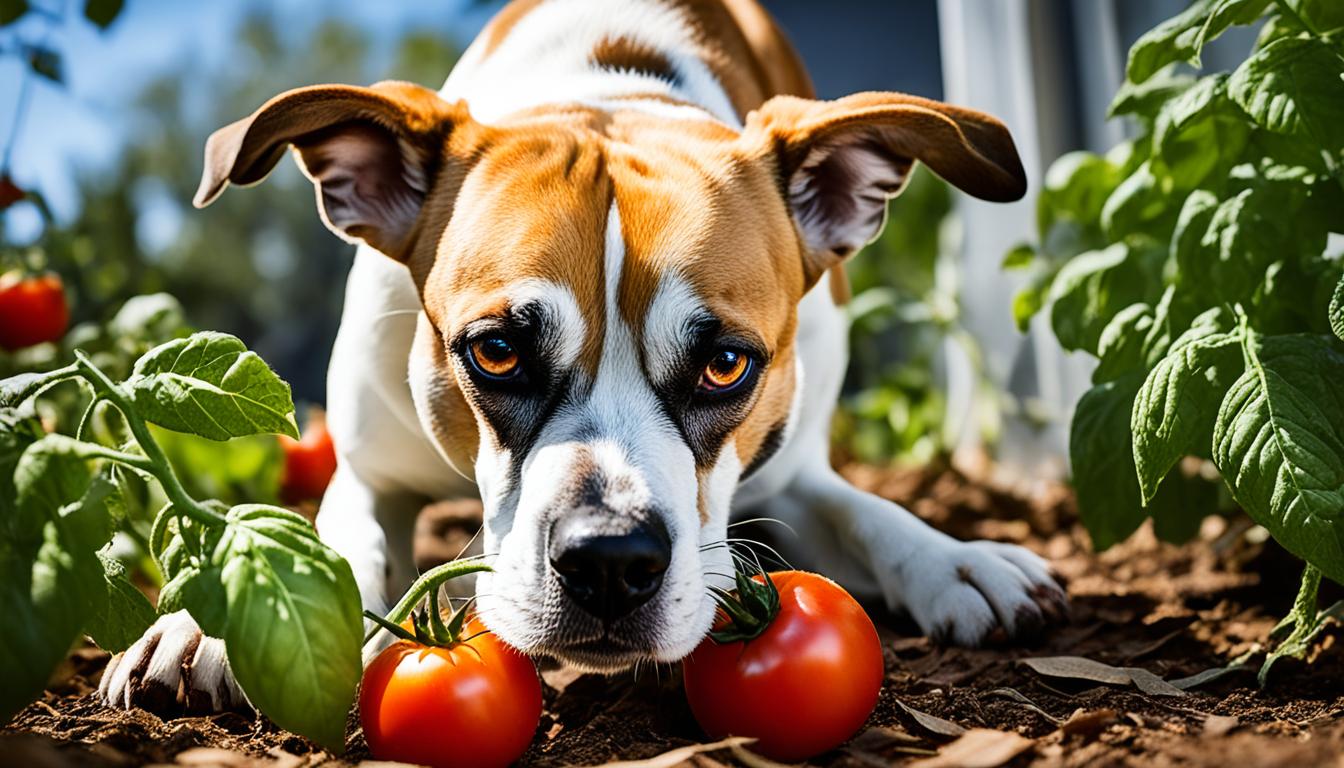

Tomato plants might be harmful to dogs, though ripe tomatoes are safe. The plant’s green parts have solanine, a bad toxin. If a dog eats these, it could get sick from tomatine poisoning. It’s key to stop dogs from eating dangerous parts of tomato plants.
If your dog eats tomato plants, they may show poisoning signs. It’s important you know these signs. This way, you can get them help fast.
Loss of Coordination: Dogs might lose their balance after eating tomato plants. They may seem unsteady.
Loss of Appetite: A common sign is not wanting to eat much.
Muscle Weakness: Your dog may seem weaker and move less.
Hypersalivation: They might drool a lot more than usual.
Dilated Pupils: The black part of their eye may get bigger.
Tremors: They could shake without being able to control it.
Seizures: Some dogs have really bad reactions and can have seizures.
Lethargy: They won’t have much energy or seem excited.
Abdominal Pain: Your dog may look uncomfortable or move like something hurts.
Cardiac Effects: Their heart may not beat right.
Gastrointestinal Upset: They could throw up or have diarrhea.
It’s really important to know these signs. You must get help from a vet right away. This helps your dog get better faster.
| Symptoms | Description |
|---|---|
| Loss of Coordination | Difficulty maintaining balance |
| Loss of Appetite | Decreased desire to eat |
| Muscle Weakness | Decreased strength and mobility |
| Hypersalivation | Excessive drooling |
| Dilated Pupils | Enlarged black part of the eye |
| Tremors | Involuntary shaking movements |
| Seizures | Uncontrolled muscle activity |
| Lethargy | Lack of energy and enthusiasm |
| Abdominal Pain | Discomfort and restlessness |
| Cardiac Effects | Irregular heart rate or rhythm |
| Gastrointestinal Upset | Diarrhea and vomiting |
If you think your dog ate tomato plants, get vet help right away. The vet will check your dog carefully. They might do more tests to learn how sick your dog is.
These tests help find out if your dog has tomato poisoning:
After knowing for sure, the treatment focuses on managing symptoms and keeping the dog stable.
Some treatments for tomato plant poisoning are:
Always do what the vet says and give your dog any medicine they need. Most dogs get better from tomato plant poisoning if they get help fast.
| Treatment | Description |
|---|---|
| Induce Vomiting | To safely make the dog vomit and get rid of tomato plant bits from its stomach. |
| IV Fluid Therapy | To keep your dog hydrated and make sure its body has the right amount of electrolytes. |
| Anti-Nausea Medication | To help your dog feel better and stop it from vomiting. |
| Supportive Care | Measures like anti-inflammatory meds and protective stomach treatments help your dog heal and feel better. |
| Monitoring and Observation | Watching your dog closely to check its health and how hydrated it is, and adjust care as needed. |
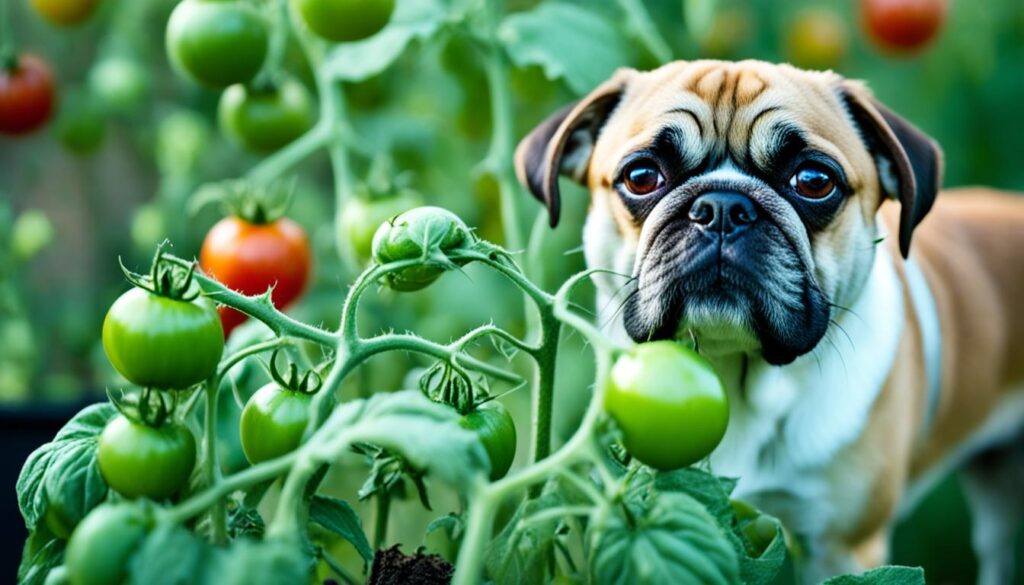
Tomato plants are mostly safe for dogs. But, small dogs and puppies could be more at risk. They can get sick because they are small.
Ripe tomatoes are okay for your dog. They can be good for them. But the green parts of the plant are not safe. These parts have a bad thing called solanine.
Keep your dogs away from tomato plants. This is to keep them safe. Make sure they don’t eat them, especially when you’re cooking.
In short, the risk from tomato plants is low. But you still need to be careful. Keeping dogs away from these plants is smart. It helps keep them happy and healthy.
| Tomato Plant Toxicity | Risk Level |
|---|---|
| Mild | Generally considered safe, but precautions should still be taken |
| Rare Severe Poisoning | Uncommon, but more likely in small breeds and puppies |
Feeding your furry friend right is key. Ripe tomatoes can be good for your dog. They offer many benefits and nutrients.
Ripe tomatoes have a lot of fiber. Fiber helps keep a dog’s digestion smooth. Adding tomatoes to their diet helps their tummy health.
Tomatoes have lots of antioxidants. These fight off free radicals. They reduce inflammation and boost the immune system.
Ripe tomatoes are packed with vitamins and minerals. They have vitamin C for the immune system and skin. There’s also vitamin K for blood and potassium for muscles. Plus, they have folate for growth and cell function.
Here’s a quick list of what tomatoes offer:
| Vitamin/Mineral | Amount per 100g of Tomatoes |
|---|---|
| Vitamin C | 13.7mg |
| Vitamin K | 7.9mcg |
| Potassium | 237mg |
| Folate (Vitamin B9) | 15mcg |
Remember to share ripe tomatoes with your dog in moderation. Too much can upset their stomach. Always talk to your vet before big diet changes.
Sharing tomatoes with your dog can be great but requires care. Ripe tomatoes are usually safe. With a few guidelines, they can be a healthy, safe snack.
Tomatoes should be an occasional treat, not a regular diet item. They have good nutrients but moderation is key.
Remove all the green parts like leaves and stems before sharing. They have solanine, which is bad for dogs. This makes tomatoes safe for them to eat.
Cut the tomato into small pieces before giving it to your dog. This makes it easier for them to chew and digest. It also helps prevent choking.
Avoid giving your dog tomato-based foods with garlic or onions. These can be toxic and upset their stomach.
To summarize:
Safe practices let you share tomatoes with your dog without worry. They can have a tasty treat that’s also good for them.
Some dogs might be allergic to tomatoes. Dogs, like people, can be sensitive to certain foods, including tomatoes. Their immune system can overreact to tomato proteins.
Symptoms of tomato allergies in dogs include:
If your dog acts oddly after eating tomatoes, see a vet. They can check your dog’s symptoms. They’ll offer advice on what to do next.
Some dogs might not tolerate tomatoes well. This is not a true allergy. It may cause stomach issues like diarrhea or vomiting, but no immune reaction.
Expert Tip: Be careful with new foods for your dog, like tomatoes. Start with small amounts. Watch how they react. Stop the tomatoes and see a vet if problems happen.
Remember, dogs don’t need tomatoes. If you’re not sure about giving your dog tomatoes, talk to a vet. They can give advice that’s right for your dog.
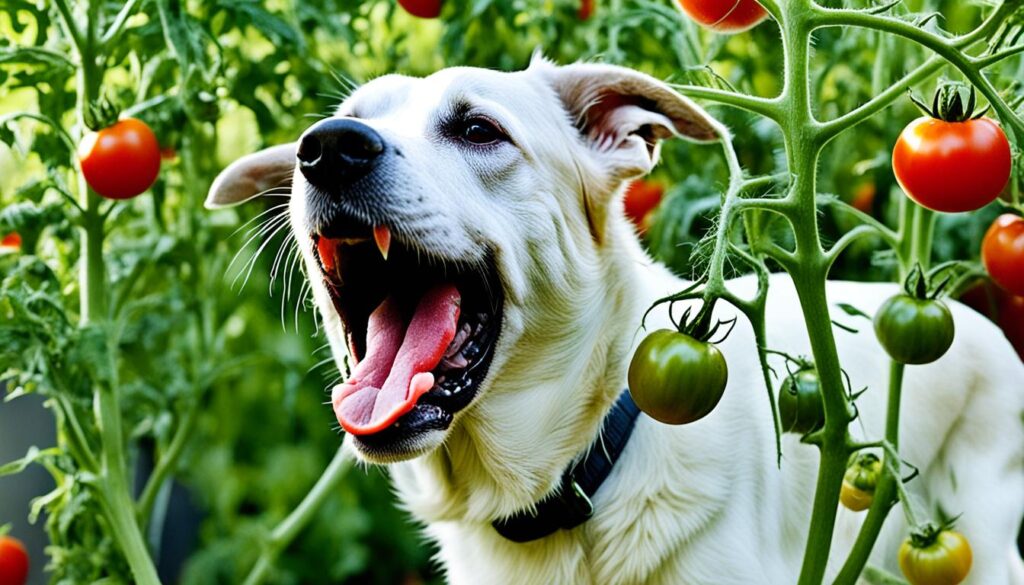
To keep dogs safe, we must keep them away from tomato plants. Simple steps can prevent them from getting poisoned. These steps are easy to follow.
Putting a fence around your garden helps keep dogs out. The fence should be high so dogs can’t jump over. This keeps your tomato plants safe from dogs.
For potted tomato plants, put them where dogs can’t get them. Use high shelves or a balcony. This stops dogs from eating them by accident.
Watch your dogs when you cook with tomatoes. Dogs might try to grab food, including tomatoes. Keep an eye out so you can stop them.
Also, clean up any tomatoes that fall. Dogs shouldn’t eat these as they might be bad or moldy.
These steps help make a safe place for dogs. They lower the chance of your dog getting sick from tomatoes. Keeping them safe is important for us.
If you think your dog ate tomato plants, call your vet right away. They will tell you what to do next. You might need to bring part of the plant to them.
If your dog eats tomato plant, you need to act fast. This helps keep your dog safe. Here are steps to follow if your dog ingests tomato plant:
Tomato plant poisoning in dogs is not very common. Most times, the symptoms are mild. Dogs usually get better fully with the right vet care.
Dogs rarely get seriously sick from tomato plants. The green parts have a substance called solanine. Eating these can cause mild poisoning in dogs. But, getting really sick from this is uncommon.
The risk differs based on the dog’s size and breed. Smaller dogs and puppies may be more at risk. But, taking good care keeps the risk low for dogs.
Ripe tomatoes are mostly safe for dogs to eat sometimes. The term “tomato plant safety for dogs” matters to pet owners. They worry about the risks of their pets eating certain things.
Ripe tomatoes are safe and can be good for dogs. But, be careful with the green parts of the tomato plant. The leaves and stems have solanine, a poison. Experts stress knowing the risks of dogs eating tomatoes.
“Feeding ripe tomatoes to dogs in moderation is generally safe, but it’s vital that pet owners avoid allowing dogs to consume any part of the tomato plant that contains toxins. This includes leaves and stems.” – Dr. Emily Miller, Veterinarian
Talking to a vet is key to keeping dogs safe around tomato plants. Every dog’s health and situation are different. A vet’s advice is crucial for keeping pets safe.
Talking to a vet helps a lot with tomato plant safety. The benefits include:
By listening to a vet about tomato plant safety, pet owners can keep their pets healthy and happy.
| Ripe Tomatoes | Green Tomato Plant Parts |
|---|---|
| Generally safe for dogs in moderation | Contain toxins harmful to dogs |
| Offer nutritional benefits | May lead to symptoms of tomatine poisoning |
| Eat in small amounts and remove leaves/stems | Best to avoid entirely |
Ripe tomatoes can be a good treat for dogs at times. But, it’s very important to keep them safe. Avoid letting them eat any toxic parts of the tomato plant. Getting advice from a vet helps pet owners make smart choices.
Tomato plants can be bad for dogs because of the toxins in the green parts. Ripe tomatoes are mostly safe and can be good for health. But, pet owners should be careful to keep dogs away from the toxic parts.
If your dog eats tomato plants or seems sick, get help from a vet right away. A vet can check your dog and tell you what to do next. They consider your dog’s health and any special needs.
To keep your pet safe, know the risks of tomato plants. Keep these plants away from your dog. Always take off the green parts before giving tomatoes to your dog. And ask a vet if you need advice. This way, you and your dog can enjoy tomatoes without worries.
Yes, tomato plants can be toxic to dogs. This is because of toxins in the green parts.
Dogs may get sick from eating the green parts of tomato plants. These include leaves and stems.
Dogs eating tomato plants might show many symptoms. They can be shaky and weak, drool a lot, or have a fast heartbeat. They might also feel sick to their stomach.
If dogs eat tomato plants, they may stagger, not eat, feel weak, drool a lot, shake, have seizures, feel very tired, have a stomachache, show heart problems, and throw up.
Keep dogs away from places with tomato plants to avoid poisoning. Use fences and keep plants out of reach. Watching your dogs when using tomatoes in the kitchen is also good.
Tomato plants are mildly toxic to dogs. But, small dogs and puppies might be more at risk.
Dogs might react to tomato plants with symptoms like not walking straight, not eating, and feeling weak. They might also drool, have dilated pupils, shake, have seizures, feel tired, have a stomachache, show heart issues, and feel sick.
For diagnosis, a vet checks the dog and might do blood tests. Treatment could include making the dog vomit, watching them closely, and giving supportive care.
Tomato plant toxicity in dogs is usually mild. But risks can change based on the dog’s size and breed.
Ripe tomatoes are safe for dogs to eat sometimes. They are full of fiber, antioxidants, vitamins, minerals, and folate.
You can give ripe tomatoes to dogs in small bits. Make sure to take off all green parts. Don’t give foods made with tomatoes that also have garlic or onions.
Some dogs might be allergic to tomatoes. Look out for hives, coughing, hard breathing, and wheezing. If these happen, see a vet right away.
Keep dogs away from gardens or places with tomato plants to prevent them from eating them. Use fences and keep potted plants out of reach. It’s also smart to watch your dogs around tomatoes when you cook.
If your dog eats a tomato plant, call your vet fast. They will tell you what to do based on how much your dog ate and the symptoms.
Tomato plant poisoning in dogs is quite rare. Usually, they only get mild symptoms and get better with the right vet care.
Experts say ripe tomatoes are okay for dogs in small amounts. But be careful with green tomato parts. Always talk to a vet for advice about tomatoes and your dog.