
 11
11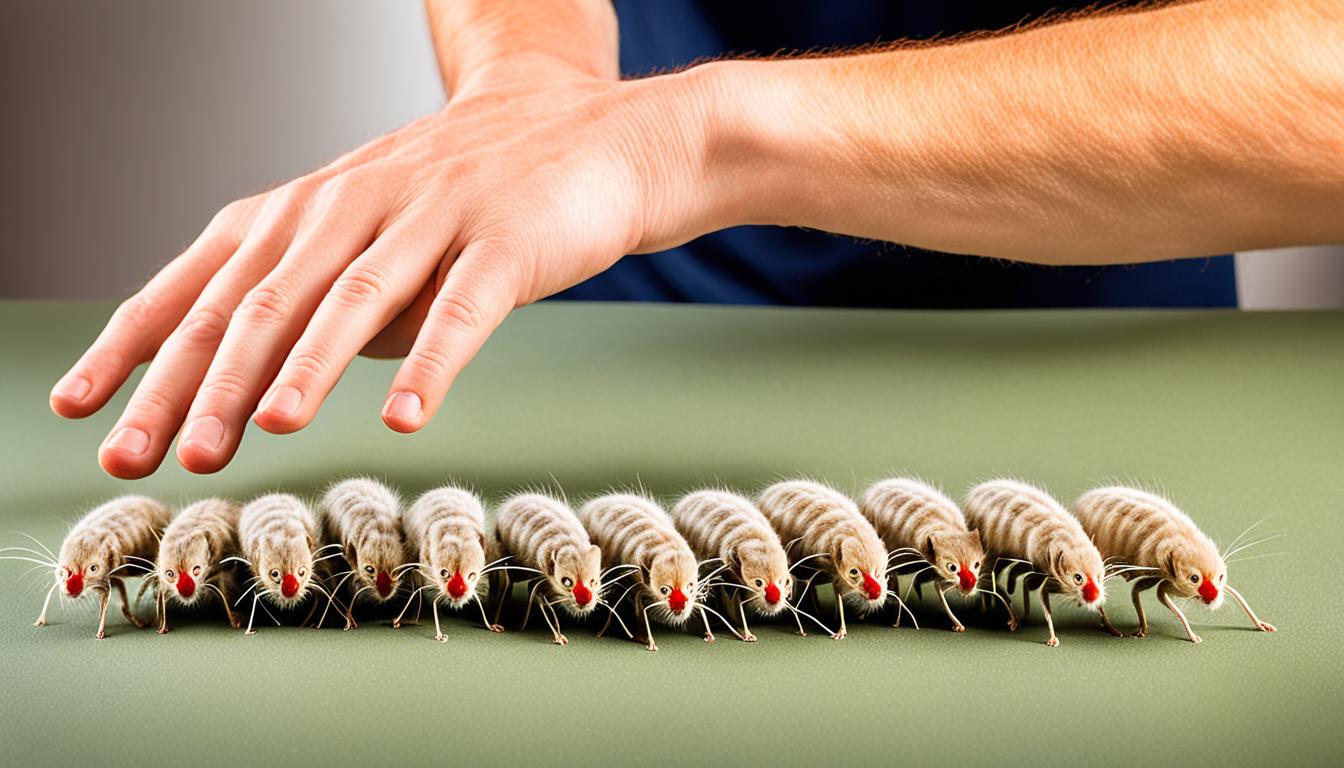

Cat mites are a big concern for your cat’s health. Problems like cat ear mites and burrowing mites can make them scratch a lot. They may also shake their heads and lose hair. This can cause deep cuts. Ear mites and burrowing mites can spread to people and other pets. There are many treatments available. These range from store-bought options to those your vet gives.
Ear mites love to eat ear wax. This looks like dark gunk in the ear. Signs are scratching and head shaking. To treat it, clean the area, then use the right drops. Burrowing mites make the skin itch and cause hair loss. They need quick action, often with special shampoos and creams. With mites being so contagious, it’s important to watch and treat them fast. This helps stop bigger problems.
Knowing about mites is key for helping your cat. Ear mites and burrowing mites are the main kinds. They cause different problems for your cat.
Ear mites in cats are very easy to spread. They live in the ear canal, eating ear wax. This makes cats very uncomfortable.
Cats with ear mites scratch a lot and shake their heads. They might also have black pus in their ears. Doctors look inside the ears to check. They might clean the ears or use medicine.
Burrowing mites hurt the skin, causing hair loss and irritation. You can see the damage on their skin. Skin treatments help get rid of these mites.
It’s important to know about cat mite infestations. This helps keep your cat and your home healthy. It stops mites from spreading to other pets and people.
Many pet owners wonder if humans can get cat mites. It’s vital to know if they pose a risk. Keeping a healthy home involves understanding this.
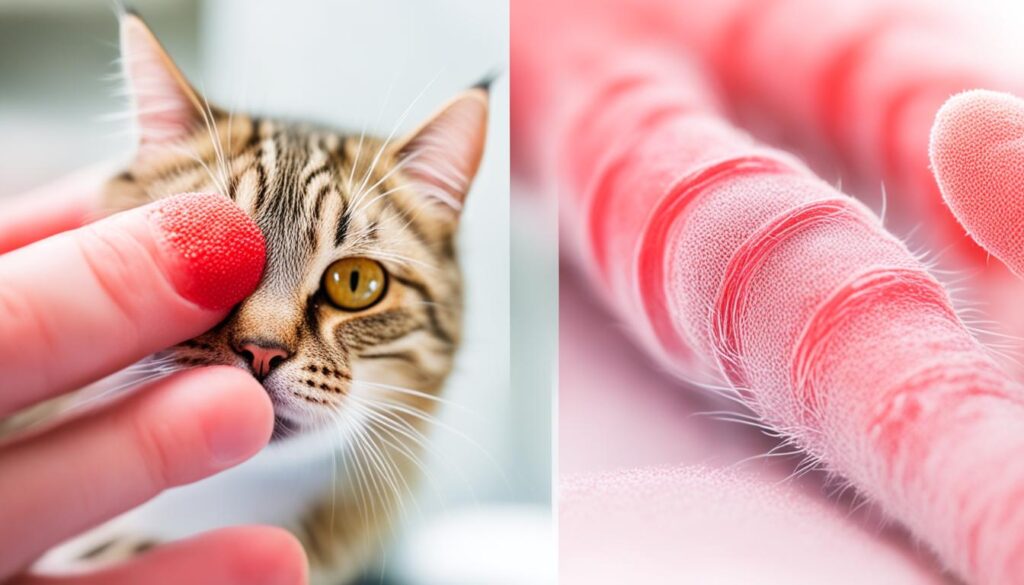
Cat mites can move to humans, mainly when you’re close to an infested cat. Mites can live on both animals and people. So, those who often cuddle their pets or share spaces might get cat mites.
It’s also crucial to remember that these mites can spread in your home. They can go from your cat to other pets. This makes stopping them quickly a must.
Not all cat mites harm humans, but it’s key to act fast if you see signs. These mites might cause skin problems, itching, or allergies in people. You might notice red, itchy spots, sometimes called “mange.”
Because of these risks, it’s best to handle mite problems quickly. This keeps both people and pets safe.
While mites from cats often aren’t dangerous, staying clean and getting expert advice is crucial. This helps keep everyone at home safe and healthy.
Knowing how to spot cat mites is key for your cat’s well-being. If not treated, mite infestations can really upset your cat and lead to health problems.
Cats with ear mites will keep scratching their ears and shaking their heads. You might see dark or reddish gunk in their ears. This crud can even plug up their ears. Such signs mean your cat needs to see the vet to check for ear mites.
Signs of burrowing mites include losing a lot of hair and damaged skin. Cats with these mites scratch a lot because of the itchiness and sore skin. These mites cause mange, which is very contagious and causes big skin problems.
| Type of Mite | Symptoms | Actions |
|---|---|---|
| Ear Mites | Persistent ear scratching, head shaking, dark debris | Veterinary examination, cleaning, medicated ear drops |
| Burrowing Mites | Severe hair loss, skin damage, intense itching | Veterinary diagnosis, anti-parasitic shampoos and creams |
Identifying cat mites involves professional help and looking at home. Early catching is key to good treatment.
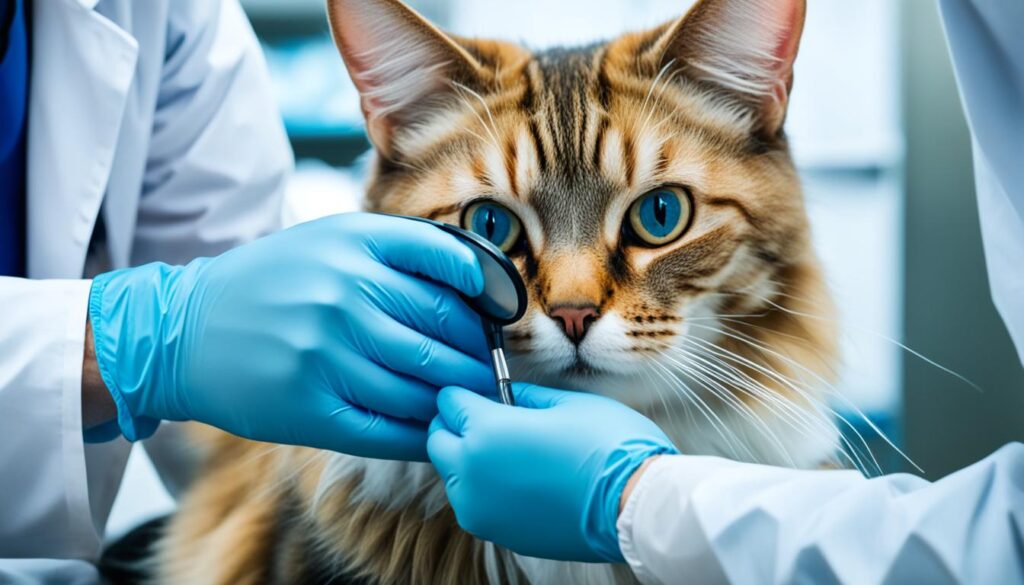
A detailed diagnosis of cat mites starts with seeing a vet. They use an otoscope to check the cat’s ears. They may also test ear swabs under a microscope for mites. This step is crucial to know if the cat has mites and how bad it is.
Pet owners can spot cat mites at home by watching their cats. Look for signs like a lot of scratching, hair loss, and marks in the ears or skin. Seeing these signs early can mean a quicker vet visit and faster treatment.
Humans can get mites from their cats. Ear mites and burrowing mites can move from cats to people. It’s important to act fast to stop this.
While some mites prefer certain hosts and may not normally infect humans, prevention is key.
Regular parasite prevention, proper pet hygiene, and early treatment are pivotal in controlling the risk of transmission to all household members.
Treating cat mite infestations fast is vital for your cat’s health. Knowing the treatments you can use is key. These include store-bought options and meds from a vet.
There are over-the-counter remedies for cat mites you can try. Ear drops, shampoos, and creams are popular. They attack mites and soothe your cat’s skin.
Sometimes, vet-prescribed mite meds are needed for bad cases. These might be insecticides or ear mite solutions. Using them exactly as told by the vet is crucial.
Clean well before applying medicated drops. This ensures they work well. In some cases, more than one treatment cycle is needed. This stops mites from spreading to others at home.
Effective cat mite prevention is based on good care practices. Using these strategies can cut down the risk of mite issues. It also helps keep your kitty healthy.
Routine vet visits for cats are key for spotting and handling cat mites early. Regular check-ups let vets keep an eye on your cat’s health. They give the right flea and parasite control methods. This way, problems are dealt with quickly before getting worse.
Keeping up with feline hygiene care is important for cat mite prevention. Regular grooming helps keep your cat’s coat healthy and mite-free. Clean their beds and living spaces to lower mite risks. In homes with more pets, being extra clean helps stop mites from spreading.
When a cat gets mites in a home with many pets, the risk is not just to them. These parasites can quickly move to other cats and dogs. Treating and preventing mites is crucial for all pets’ health.
Mites easily jump from one cat to another. They use close contact or shared items like beds and brushes. Keeping the sick cat away, cleaning everything, and treating all cats are key steps.
Dogs and cats in the same home can also share mites. Some mites bother dogs, causing itching, hair loss, and sore skin. Owners must watch for mites and treat all pets to keep everyone healthy.
Yes, people can get mites from cats. Ear mites and burrowing mites can move from cats to humans. Though some mites prefer certain species, it’s smart to keep everyone safe.
Cat mites come in two main types. Ear mites live in the ear, enjoying wax. Burrowing mites attack the skin, causing itchiness and a lot of hair loss.
Indeed, humans can get cat mites. Some cat mites may not often jump to humans. Yet, it’s vital to quickly tackle any cat mite problem for human health.
Cats with ear mites constantly scratch their ears and shake their heads. They’ll have dark debris in their ears. Burrowing mites lead to damaged skin and big hair loss.
Vets find cat mites by checking the cat’s ears or looking at ear swabs. Cat owners should watch for mite signs too.
Treatments include store-bought ear drops, special shampoos, or creams. Vets might suggest drugs like Milbemycin or Pyrethrins. Following the treatment plan well is key.
Stop cat mites with regular vet visits, flea control, clean cats, and tidy homes. This helps especially in houses with many pets.
Mites can spread to other cats and dogs in the home. It’s important for homes with multiple pets to prevent mites well.