
 11
11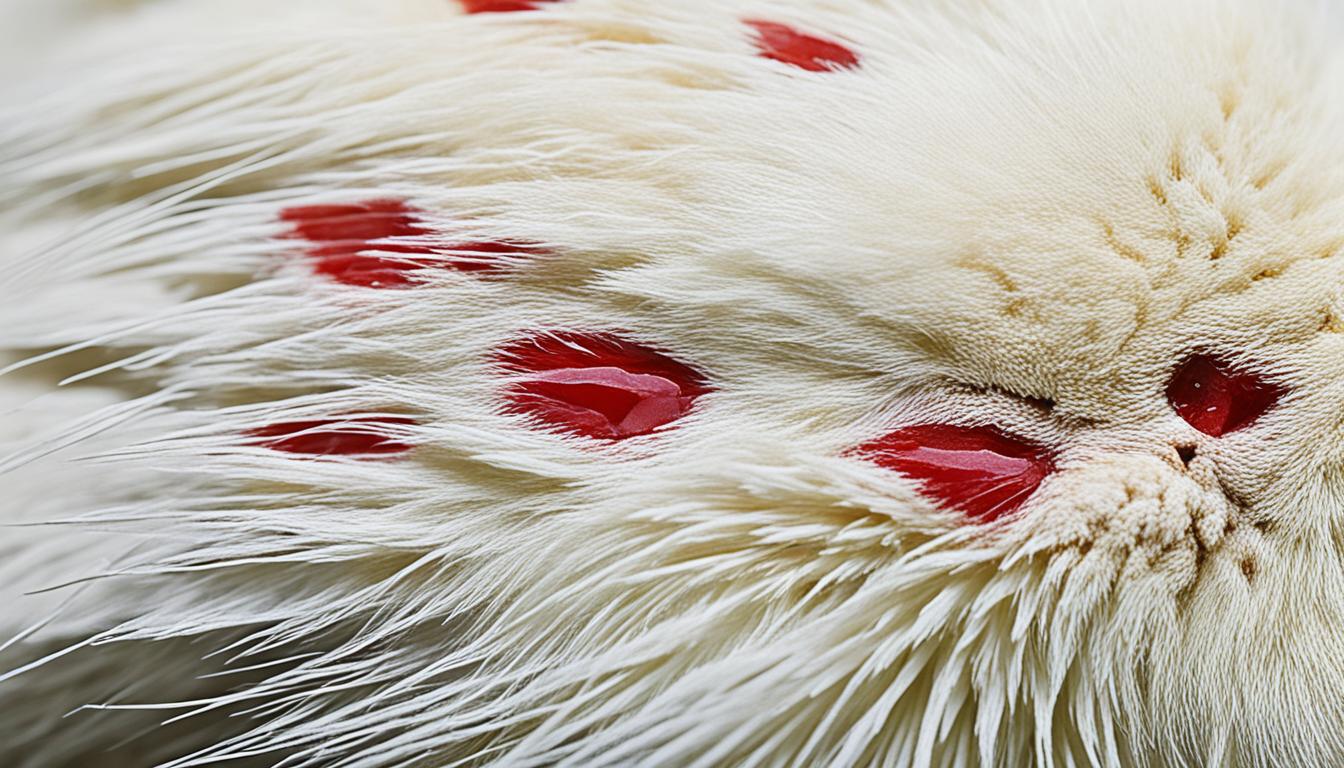

Cat rash, or feline dermatitis, is a usual skin issue in cats. It leads to inflammation, redness, and irritation. It comes from various things, like touching irritants or allergens. Knowing what causes and signs of cat rash are is key to treating it right and keeping your cat’s skin healthy.
Spotting a cat skin rash early is key to quick treatment. Look for signs like itching, red skin, and hair loss. Cats might lick or scratch too much. This can lead to more skin issues. It’s crucial to treat the first signs to stop worse problems.
Itching is a big clue. Your cat might scratch or bite the skin, making it worse. Scaling, or flaky skin, is another sign. This can make the skin look really odd, with redness and swelling.
Watch for hair loss too. Rashes can cause hair to fall out in patches. The skin could get thicker and change color. You might also see more oil or smell an abnormal odor from your cat.
Keep an eye on how your cat acts. Too much scratching or licking can cause bad infections. If you see any signs, getting help from a vet is key. They can figure out the problem and how to fix it.
Fixing a cat skin rash needs a careful plan. A vet will check your cat well to find what’s causing the rash. They’ll decide the best way to treat it.
Here are ways to treat cat skin rash:
Cat skin rashes come from many sources, like irritants and allergic reactions. Finding out what’s behind a cat’s rash is key. This helps treat it right and stop it from coming back.
Things like plants, soaps, and bug bites can hurt a cat’s skin and cause rashes. Poison ivy or oak can lead to contact dermatitis. Soaps and detergents might take away protective skin oils. Fleas or other insects can also cause rashes.
Cats can have allergies that make their skin break out. Flea allergies are big trouble, causing rashes from just one bite. Food allergies or reactions to stuff in the air, like pollen, can also make their skin react.
Finding the exact cause of a rash in cats might take some detective work. A vet may need to do tests or try different diets to figure it out.
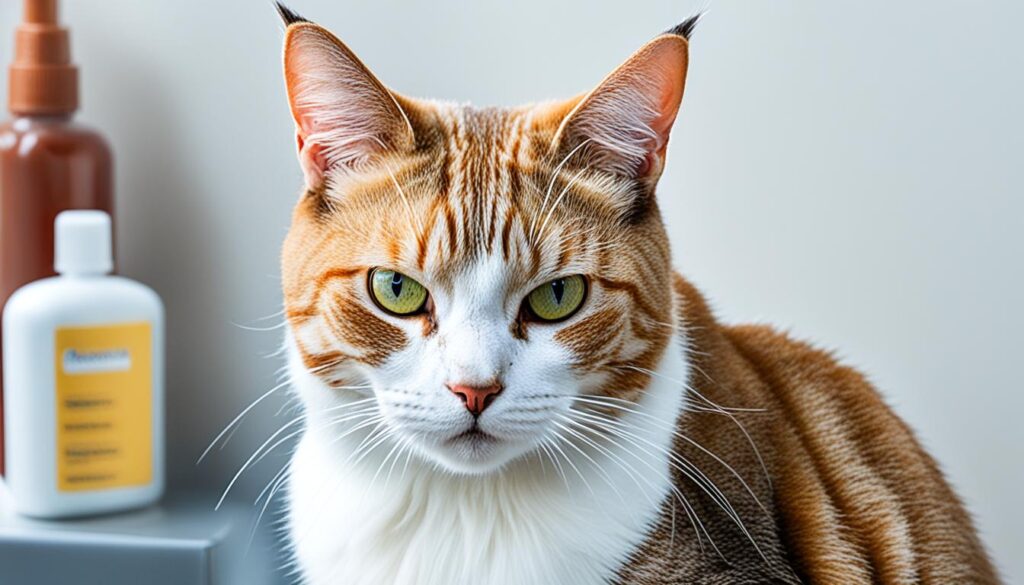
When your cat gets a skin rash, seeing a vet is key. They’ll do a full check, looking at your cat’s health history and testing for bugs or infections. This in-depth check-up helps figure out why the rash happened, guiding the treatment plan.
Different treatments might be suggested once the rash is understood. Medicated shampoos are a common fix. They are made to calm and heal the skin. These shampoos often have oatmeal or aloe vera in them, aiding relief and healing.
Sometimes, oral meds are needed to fight the root cause of the rash. These can lessen swelling, stop itching, or fight off infections. Creams or ointments might also be used to directly help the rash or control symptoms.
If allergies are behind the rash, specific treatments are offered. This could mean antihistamines for itch relief or corticosteroids to decrease swelling. In bad cases, allergy shots might be required to adjust the cat’s immune system.
Keeping your cat well-groomed is crucial for preventing rashes. Regular grooming removes irritants from your cat’s fur. Changing the diet may also help if food allergies or sensitivities are causing the rash.
It’s vital to stick to what your vet recommends for treatment. Always keep an eye on how your cat is doing with the treatment. Share any changes or worries with your vet. With the right care and a custom treatment plan, your cat can get better and stay healthy and happy.
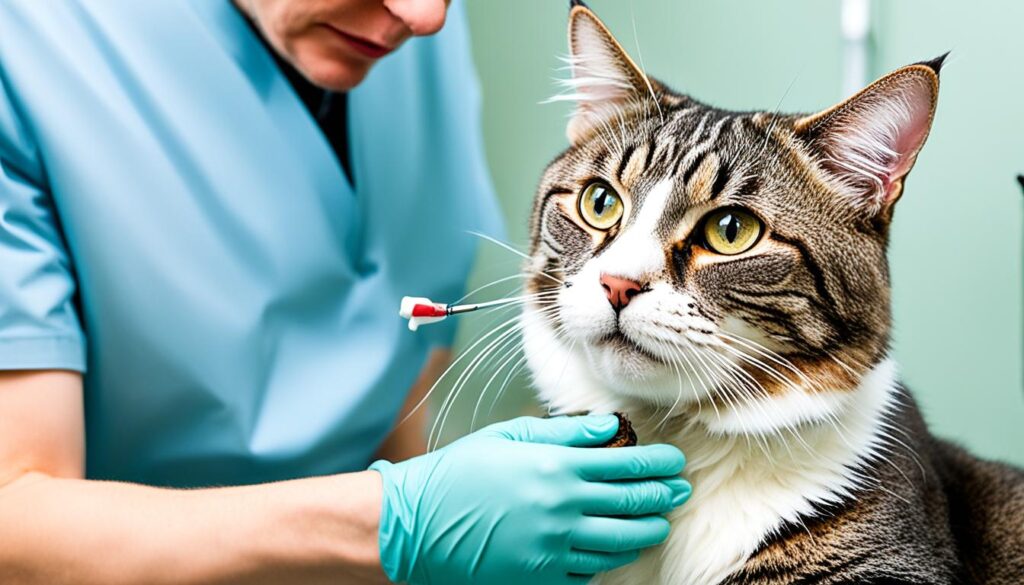
Finding and treating a cat’s skin rash includes a detailed vet check and diagnosis. Treatment might be medicated shampoos, pills, or creams. Allergy care, grooming, and diet changes may help too. Following your vet’s advice and watching your cat’s health is crucial for healing.
Keeping your cat’s skin healthy is key to avoiding skin problems. It’s important to groom them regularly, pick the right grooming products, and feed them a healthy diet. This keeps their skin in top shape.
Grooming your cat often helps get rid of dirt, debris, and extra oil. This can lower the chance of their skin getting irritated. Always use grooming aids made just for cats, like gentle shampoos and conditioners. These products help keep their skin clean and hydrated.
A good diet is also vital for your cat’s skin health. Make sure they get all the necessary nutrients, like omega-3s and vitamins. These are crucial for healthy skin and overall health. Talk to your vet to figure out the best food for your cat.
For the best skin care, see a vet for a proper check-up and treatment plan. They can suggest the right treatments for skin issues, depending on what’s causing them. Following your vet’s advice can ease any discomfort and boost your cat’s skin health.
Cat skin rash symptoms might include itchiness and red, flaky skin. There could also be a thickening of the skin or color changes. Sometimes, there can be oil buildup, a strange smell, and hair loss. Cats might lick or scratch these spots a lot, leading to more infections.
Things like plants, soaps, or bug bites can annoy a cat’s skin and cause a rash. Flea bites, food allergies, or allergies to stuff in their environment could also lead to a rash.
To figure out a cat skin rash, vets do a full check-up and review the cat’s health history. They might test for bugs or infections. Treatment may involve special shampoos, medications, or creams for the skin. Depending on the cause, vets may suggest allergy treatments, better grooming, or a special diet.
Keeping your cat’s skin healthy helps avoid and deal with rashes. Regular brushing and the right grooming products are key. Fitting diet plays a role too. Always talk to a vet to get the right advice and treatment if needed.