 11
11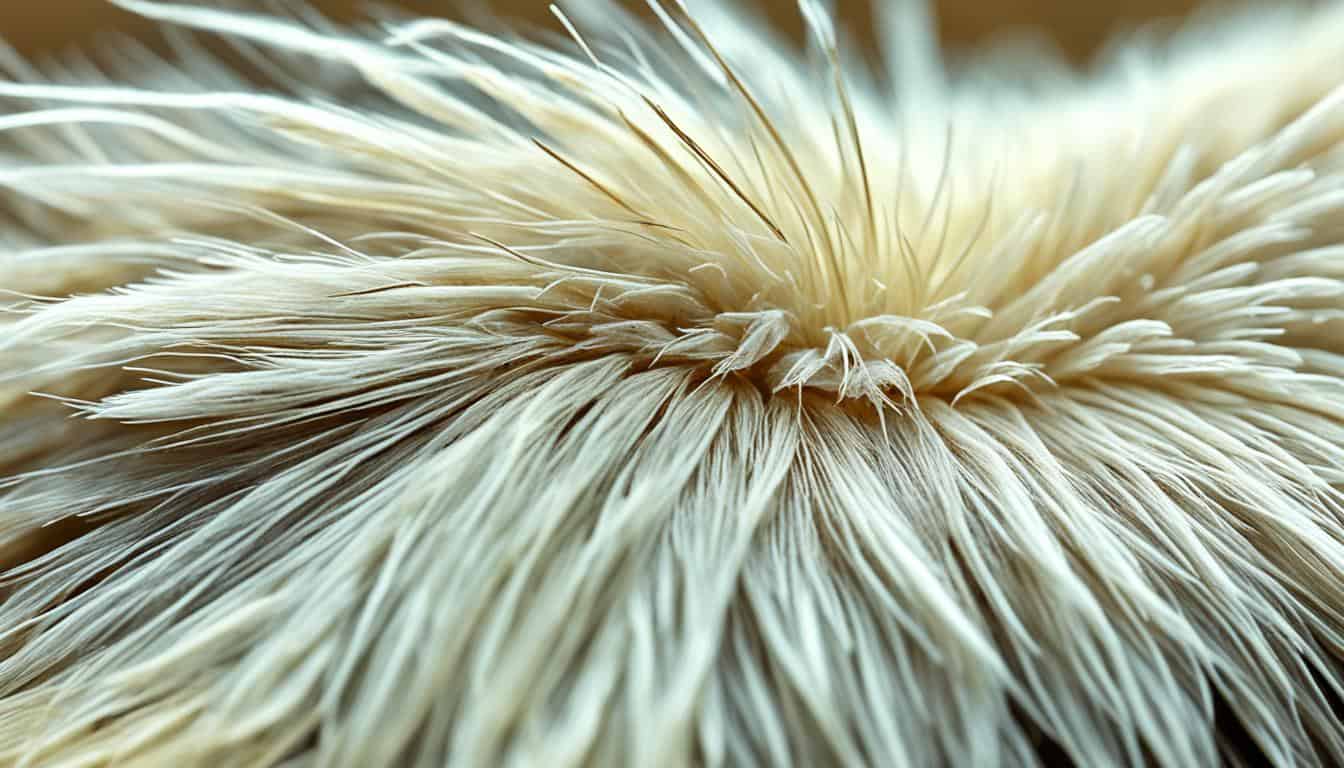

Finding just one flea on your dog means you need to act fast. This might seem minor, but fleas breed rapidly. Without quick action, one flea can turn into a huge problem. This guide will show you how to check your dog for more fleas. We’ll also talk about treating them and stopping more fleas from coming back.
Ensuring your furry friend’s well-being means checking for fleas often. These pests can make your dog uncomfortable and cause health issues. You can catch a flea problem early and fix it by being proactive. Here’s how to check your dog for fleas:
Look out for signs of fleas on your dog’s skin and their behavior. You might see:
Fleas are tiny and move fast, making them hard to find, especially on dogs with dark or thick fur. Watch for flea dirt, tiny dark specks on your dog’s skin. This is easier to see on dogs with light fur.
If you think you see flea dirt, try a simple test. Use a damp paper towel to rub the specks. If they turn reddish-brown, it’s probably flea dirt. This is because flea waste contains blood from your dog.
Fleas like certain places on your dog’s body. Check these spots closely:
By checking these places and watching for signs, you can spot fleas early. Then, you can take steps to keep your pet healthy.
Fleas come in different species that can infest dogs, causing discomfort and health problems. It’s crucial to know the types of fleas affecting your pet. This knowledge helps in taking the right steps for prevention and treatment.
The common cat flea, or Ctenocephalides felis, is often found on pets. Though named “cat flea,” it infests dogs and other animals too. These fleas are reddish-brown and can jump far, thanks to special hind legs.
The common dog flea, known as Ctenocephalides canis, is also found on dogs. Like cat fleas, dog fleas can live on cats and other animals. They’re larger than cat fleas and dark brown.
Both types of fleas can reproduce fast. This makes dealing with infestations important. While these are the most common, other flea types can also pose a risk to dogs. The common cat and dog fleas, however, are usually the main cause of flea problems in homes.
Quick action is key to stop fleas on your dog. We’ll show you ways to eliminate fleas and keep your pet happy and healthy.
To start, bathe your dog with warm water and gentle dog soap. Warm water drowns fleas. The soap cleans dirt and removes fleas from your dog’s coat.
Pro Tip: Avoid using human shampoos or harsh chemicals as they can irritate your dog’s skin. Stick to dog-specific flea bath products for optimal results.
A flea comb helps remove fleas, their dirt, and eggs from your dog’s coat. Carefully comb areas like the neck and rear where fleas love to hide.
Don’t forget about your dog’s bedding. It can have fleas too. Wash all bedding in hot water to kill fleas and eggs. Clean bedding helps avoid more fleas.
If fleas bite you or your dog, clean the area immediately. Use soap and water. For itching, try anti-itch creams or antihistamines.
To stop fleas from coming back, take these steps:
Follow these methods for a home free of fleas. Your dog will thank you.
| Treatment Method | Effectiveness | Ease of Use | Cost |
|---|---|---|---|
| Flea Bath | High | Easy | Low |
| Flea Comb | Medium | Easy | Low |
| Hot Water Washing of Bedding | High | Easy | Low |
| Over-the-Counter Anti-itch Cream | Medium | Easy | Low |
To keep your dog safe from fleas, proactive steps are essential. It’s wise to talk with your vet about keeping fleas away all year. This ensures your dog stays happy and healthy.
Year-round flea control: It’s critical to have flea control all year to stop infestations. Fleas can live almost anywhere, and even dogs that stay inside can get them. Ask your vet what prevention works best for your dog’s situation and way of living.
Flea collars: Flea collars are a good way to keep fleas away. They work for up to six months and are less hassle than monthly treatments. They’re also easier on your wallet.
Monthly treatments: There are treatments you put on your dog every month or pills they can take. They kill fleas at all life stages: eggs, babies, and adults.
For monthly treatments to work, you must use them right and on schedule. If you’re very busy, this can be hard to remember. That’s where flea collars come in handy for non-stop protection.
Staying ahead of fleas is crucial. Work with your vet to pick the best flea control plan. This way, your dog can live a flea-free life.
| Flea Control Method | Duration | Convenience | Effectiveness |
|---|---|---|---|
| Flea Collars | Up to 6 months | Convenient and easy to use | Effective against fleas |
| Monthly Treatments | Monthly application | Requires consistent administration | Effective against fleas at various life stages |
When picking a flea prevention method for your dog, look at each option’s pros and cons. Flea collars are easy and last long. Monthly treatments cover all flea life stages. Talk to your vet to find what’s best for your dog.
Choose the right flea control method to keep your dog both happy and healthy!
Finding one flea may not look serious, but it’s a big deal. Fleas multiply quickly. A single flea can start an infestation fast. They lay up to 50 eggs a day. These eggs drop off your pet onto carpets, furniture, and beds. This lets fleas grow more.
Fleas can live on their hosts for over 100 days. They use your pet as a food source to keep growing. The spots where your pet hangs out can hide flea larvae too.
To spot fleas, look for flea dirt on your pet or their areas. Flea dirt looks like tiny dark specks. Putting it on a wet white cloth and seeing it turn reddish-brown means you’ve got fleas.
Acting fast when you see a flea is key. Treat your pet, clean your home well, and take steps to stop more fleas. This keeps your pet and home safe from fleas.
Even a single flea on your dog could mean there’s an infestation. Fleas multiply quickly. They’re tricky to spot on your pet, but a severe infestation has clear signs:
If you see any of these signs, act fast. Treating your pet and their environment is key to getting rid of fleas. Talk to your vet for the best treatment options and how to keep your pet healthy.
Here is an informative table summarizing the signs of a heavy flea infestation:
| Signs of Heavy Flea Infestation | Description |
|---|---|
| Flea dirt | Small black or brown specks resembling coffee grounds |
| Flea eggs | Oval-shaped and white eggs found in your pet’s environment |
| Visible infestation | Multiple fleas crawling on your pet’s fur or visible bites and irritation |
| Excessive scratching | Intense itching leading to frequent scratching |
| Flea bite dermatitis | Allergic reaction to flea bites causing redness, inflammation, and hair loss |

Fleas can bother us all year. But they’re worst at certain times. Late spring and summer are when they’re most active. This puts pets and their owners at risk.
In the warmer months, fleas love the humidity and rain. This weather helps flea eggs, larvae, and pupae grow fast. So, flea numbers can quickly get out of hand. Your pets are more likely to get infested then.
“Late spring and summer are the peak flea seasons, characterized by increased flea activity and higher flea numbers.”
Keep a close eye on your pets during these times. Watch out for signs of fleas, like scratching, redness, or flea dirt on their coat.
It’s smart to stop infestations before they start. Talk to your vet about the best flea control for your pets. Flea collars and monthly treatments work well to keep fleas away.
Remember, prevention is key. By knowing when fleas are worst and taking steps to protect your pets, you make your home flea-free. This keeps your furry friends happy and healthy.
Many pet owners look for natural ways to fight fleas. While some DIY methods are popular, proof of their effectiveness varies. Still, some pet owners find these natural solutions successful. Here are a few you can try:
Cedar bedding in your pet’s area might keep fleas away because of cedar oil’s strong smell. But remember, it might not clear out fleas that are already there.
Adding garlic or Brewer’s yeast to pet food might make your pet less attractive to fleas. But it’s not proven to work for everyone, and you should talk to a vet before trying it.
Nematodes, tiny worms, eat flea larvae. Using them in your yard may reduce flea numbers outdoors. Still, make sure they’re safe for your pets and use them as directed.
Some think vitamin B in a pet’s diet makes their blood taste bad to fleas. Yet, there’s little science backing this. Always speak to a vet before adding supplements.
Ultrasonic devices and herbal collars may keep fleas away. But there’s not much proof that they work. These options, like those with lavender or eucalyptus oil, lack solid scientific support.
Natural methods might help, but they’re often not as effective as traditional treatments. Effective flea control usually involves treating your pet, home, and outdoors. You might also need repeated treatments to break the flea life cycle.
If you have a serious flea problem or natural methods don’t work, talk to a vet. They can suggest proven flea control products and strategies to keep your pet healthy.
| Method | Effectiveness | Considerations |
|---|---|---|
| Cedar Bedding | May repel fleas | May not eliminate infestation |
| Garlic and Brewer’s Yeast | Not scientifically proven | Consult with a veterinarian |
| Nematodes | May control outdoor flea populations | Ensure safety for pets |
| Vitamin B | Not well-supported by scientific evidence | Consult with a veterinarian |
| Ultrasonic Devices and Herbal Collars | Effectiveness not well-documented | Limited scientific studies |
Keeping your house clean is key to fighting fleas. By cleaning often and using special treatments, you can lower the number of fleas and keep your pets safe from them.
One key step is to vacuum a lot. Make sure to vacuum carpets, sofas, beds, and floors to get rid of flea eggs and larvae. Focus on the places where your pets hang out the most, like their beds and favorite spots. Vacuuming picks up fleas and messes with their growth, stopping infestations. Always throw away the vacuum bags outside to avoid fleas coming back.
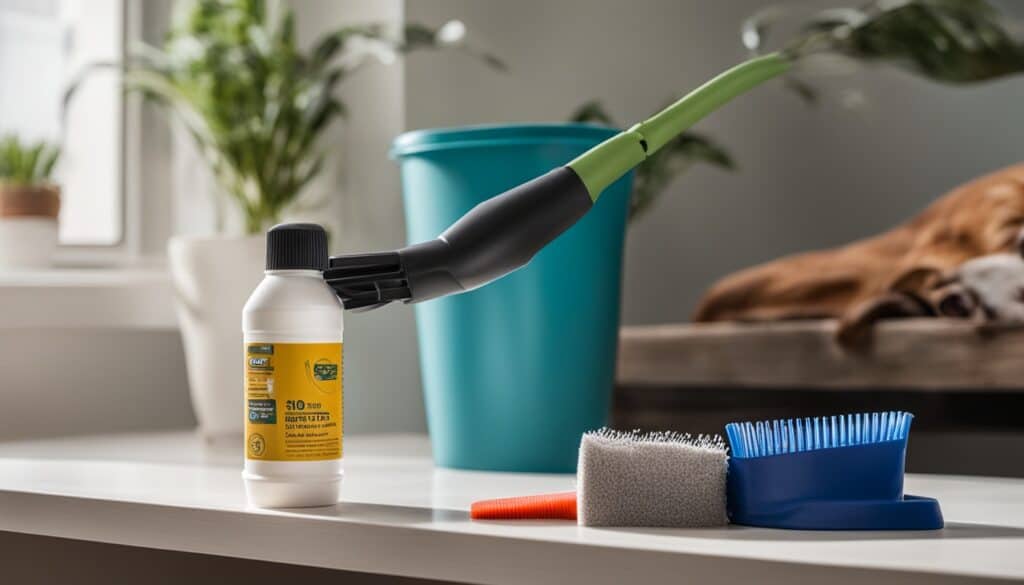
Flea traps are useful for catching grown fleas. These traps lure fleas using light or warmth and catch them on sticky sheets. Set the traps in places where fleas are likely, such as by your pet’s bed or where they scratch a lot.
It’s also important to wash your pet’s bedding often. Use hot water and gentle soap to kill fleas and their eggs in the fabric. Dry the bedding on high heat to kill all the pests.
For homes with carpets, steam cleaning is a strong method against fleas. Steam goes deep into the carpet, killing fleas at every growth stage. You can either pay for a professional steam service or rent a machine and do it yourself.
Stick to these cleaning tips and include them in your usual routine. This way, you can keep fleas away from your home, pets, and family.
To keep your pet safe from fleas, it’s key to act early. A good step is to keep them inside, especially if you live near wildlife. This limits their chance of getting fleas.
Also, make sure rodents can’t find food or water on your property. They can bring fleas in. By securing food and fixing trash bins, you stop rodents and lower flea risks.
All your pets need flea treatment. Whether it’s a dog, cat, or another animal, pick the right flea product. Ensure you follow the product’s guidelines to keep your pets safe.
“Keeping pets indoors, alongside the eradication of rodents and the application of flea treatment, is a comprehensive approach to flea control. It not only protects your pets but also helps maintain a flea-free environment in your home.” – Dr. Emily Peterson, Veterinary Specialist
| Product | Target Species | Key Benefits |
|---|---|---|
| Flea Spot-on Treatment | Dogs, Cats, Other Small Animals | Kills fleas at various stages of their life cycle |
| Oral Flea Medication | Dogs, Cats | Effective against fleas, easy to administer |
| Flea Collarts | Dogs, Cats | Long-lasting protection, repels fleas |
| Flea Shampoo | Dogs, Cats | Kills fleas on contact, provides immediate relief |
By taking these steps and choosing a well-rounded flea control method, you greatly reduce the risk of flea issues at home. Your pets can then be safe and free from flea-related health problems.
If you find a flea on your dog, act fast. Checking your dog for fleas often and using prevention methods are important. These proactive steps help keep your pet safe from flea problems.
Starting treatment early is key to control fleas. It stops them from spreading and keeps other pets safe. It’s smart to ask a vet for advice on flea control products and treatment plans.
In tough cases, where problems don’t go away, you might need to call exterminators. They know how to tackle big infestations. Always remember, stopping fleas early and prevention are the best ways to protect your pet and home.
If you find a flea on your dog, act fast to stop more from coming. One flea may look small, but they can quickly multiply. Without action, your dog might face a big flea problem.
To find fleas, watch for your dog itching a lot, red spots, or hair loss. Fleas are tiny and fast, so they’re hard to see. Check for flea dirt, which looks like small, dark specks.
Fleas like to stay on a dog’s neck, shoulder blades, tail, and back legs. Look carefully in these areas.
The Ctenocephalides felis (cat flea) and Ctenocephalides canis (dog flea) are common. They bother dogs, cats, and other pets.
Start by bathing your dog with mild soap and water. Use a flea comb to get rid of fleas and their eggs. Clean your dog’s bed in hot water.
If a flea bites you or your dog, clean the bite. Use itch cream and antihistamines to feel better.
Talk to your vet about flea control that works all year. A flea collar can protect your dog for months. They’re cheaper and easier to remember than monthly treatments.=>
Seeing one flea means you should act to stop more. While it seems small, fleas breed fast. They lay up to 50 eggs a day and can live on your pet for a long time.
Flea eggs can spread around your house. This shows fleas might be living with you.
A few fleas might not mean an infestation, but many do. Look for flea dirt or eggs. Scratching a lot and flea bites on your dog are also signs.
Fleas are most active in late spring and summer. Fleas grow best in warm, humid weather.
Years with a lot of rain and humidity can mean more fleas. Always be ready to protect your pet.
Some say cedar bedding, garlic, and other natural items work against fleas. Yet, there’s little science backing this up. Treating your pet, home, and yard is usually needed.
You might need more than one treatment to fully get rid of fleas.
Keeping your house clean helps fight fleas. Vacuum often and throw away the bag right away. Use flea traps and wash pet beds in hot water.
Steam clean your carpets to kill fleas at all stages of life.
Keep pets inside and away from wild animals that might have fleas. Block food and water for rodents.
Treat all pets for fleas. Use the right product for each pet and follow the directions carefully.
Finding just one flea means you should start preventing more right away. Check your dog for fleas often and use treatments.
In serious cases, see a vet and maybe call a pro to get rid of fleas. Early steps can keep your pet and home flea-free.