 11
11

Cats are great at hiding when they’re sick. It’s hard for owners to tell when their cats aren’t feeling well. Changes in how they act, look, and their daily habits may signal something’s wrong. It’s vital for cat owners to know the signs of sickness in cats. They should also take their pets to the vet when needed.
Cats often hide when they’re not feeling well. It can be hard to tell when they’re sick. But certain signs can alert cat owners to potential problems. Knowing these signs can lead to early treatment, which may improve your cat’s health.
A change in how your cat acts can be a sickness sign. They might become aggressive, hide more, or act oddly clingy. If your cat is behaving differently, it might need a closer look.
If your cat stops eating or drinking normally, it could be a sign. An increase or decrease in appetite, or drinking too much water, are signs. These changes mean your cat should see a vet.
Cats may vomit or have diarrhea when they’re sick. If it happens a lot, it’s a serious sign. And, if diarrhea happens with other symptoms, it’s worrying.
Signs of illness include sneezing, coughing, or hard breathing. These could mean infections, allergies, or worse, like asthma or heart disease. Cats showing these signs need a vet fast.
A sudden change in how energetic your cat is could mean illness. If your cat is too sleepy or too hyper, pay attention. These could be clues to health problems.
Cats that groom too much or not enough could be sick. Over-grooming or ignoring grooming hints at health issues. Watch for any changes in how your cat cleans itself.
Sudden weight changes in cats are concerning. It’s not always about food and can mean something serious. If your cat’s weight changes quickly, see a vet.
The litter box tells a lot about cat health. Changes in urination or poop can signal big problems, like urinary issues or stomach troubles. Watching these can help catch diseases early.
Eyes showing redness, discharge, or cloudiness can indicate illness. These symptoms should not be ignored. They require quick vet care.
Look out for any unusual signs in your cat. These include being overly tired, limping, or odd smells. Telling your vet about these helps in diagnosing and treating your cat.
Cats are great at hiding discomfort. So, staying alert to illness signs is important. Regular vet visits, a good diet, and a happy environment keep your cat healthy. By caring for your cat’s needs, you help them live a longer, healthier life.
| Common Signs of Illness in Cats | |
|---|---|
| Symptoms | Possible Indications of Illness |
| Changes in Behavior | Aggression, withdrawal, clinginess |
| Altered Eating and Drinking Habits | Decreased appetite, excessive thirst |
| Vomiting and Diarrhea | Recurrent episodes, persistent diarrhea |
| Respiratory Symptoms | Sneezing, coughing, wheezing, difficulty breathing |
| Changes in Activity Level | Decline in energy, restlessness, abnormal behavior |
| Altered Grooming Habits | Excessive grooming, neglect of grooming |
| Weight Changes | Unexplained weight loss or gain |
| Monitoring Litter Box Habits | Changes in urination or defecation patterns |
| Symptoms in the Eyes | Redness, discharge, cloudiness, squinting |
| Other Abnormal Symptoms | Lethargy, limping, excessive scratching |
Knowing why cats get sick is important for their health. They can face many health problems because of:
A vet must work hard to figure out why a cat is ill. They start by looking at the cat’s health history and checking them over. They might need to do blood tests, poop checks, x-rays, and other tests to find the problem.
Knowing the usual sicknesses and acting fast can help cats. Fast help from a vet means they can start feeling better sooner.
Knowing what is normal for your cat is key to spotting signs of sickness. Cats don’t easily show they’re in pain. Watching for changes can clue you in if something’s not right. Here are some signs that your cat might be ill:
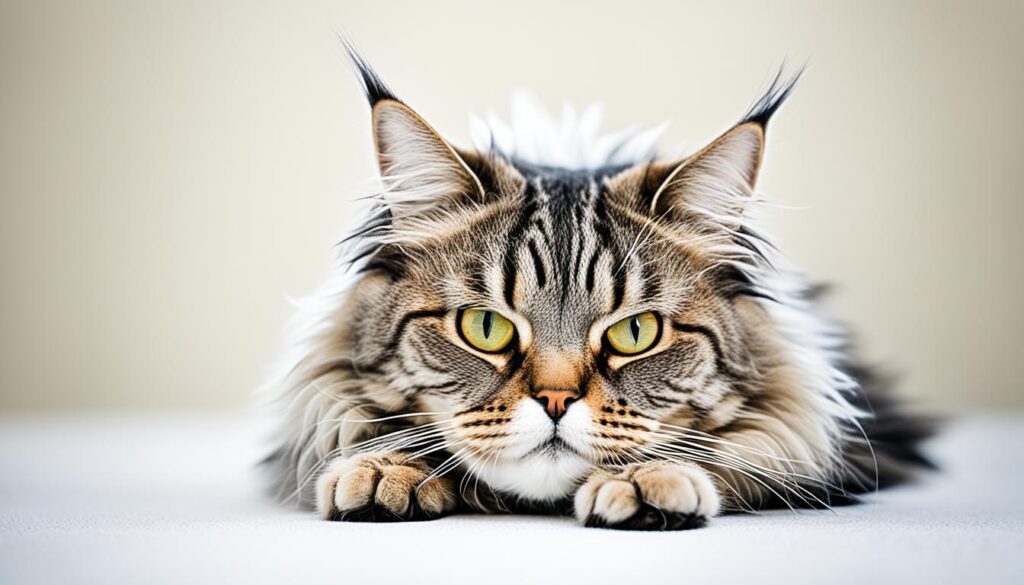
Noticing and understanding changes in your cat’s behavior and looks can alert you when your cat is unwell. This allows you to get it help quickly. Remember, even small changes could hint at bigger health problems, so always keep a close watch on your cat’s well-being.
When unsure, always talk to a vet. They know how to figure out and treat your cat’s sickness. Keeping your cat healthy means regular vet visits, good food, play, thinking activities, grooming, and a safe, loving home.
| Symptoms | Possible Causes |
|---|---|
| Excessive shedding or dull coat appearance | Underlying health issues, poor nutrition, skin infections |
| Withdrawn behavior, reduced playfulness | Pain, stress, anxiety, illness, or injury |
| Sudden increase or decrease in appetite or water intake | Dental problems, gastrointestinal issues, kidney disease |
| Changes in litter box habits | Urinary tract infections, kidney stones, constipation |
| Wheezing, coughing, or shallow breathing | Respiratory infections, allergies, asthma, heart disease |
| Swelling, redness, discharge, or cloudiness in the eyes | Eye infections, trauma, allergies, glaucoma |
| Vomiting, diarrhea, lethargy | Gastrointestinal issues, poisoning, viral infections |
When you see signs of sickness in your cat, take them to a vet quickly. The vet will check your cat, diagnose them, and create a treatment plan.
Looking after a sick cat needs special care. Your vet might suggest fluids to keep them hydrated, which can be given in different ways. They might also suggest changes in diet to help your cat recover and fix any nutrient shortages. These diets are specially made for health issues.
Sometimes, medications like anti-emetics are needed to stop nausea. This helps your cat keep food down and get the nutrients they need. Other times, medications for infections are needed. Treating cat illnesses depends on the exact problem and how severe it is.
The treatment will change based on the illness. For infections, antibiotics are common. Caring for a sick cat might also mean handling long-term illnesses like diabetes. This can involve regular medication, specific diets, and check-ups.
Regular vet visits are key to help a sick cat. This lets the vet check on progress, change treatments if needed, and spot any new problems early.
Good nutrition is very important for your cat’s health. Talk to your vet about the best diet for your sick cat, considering their specific illness.
Exercise and keeping your cat’s mind active are big parts of caring for them when they’re sick. You might need to adjust how much they exercise. Playing gently and using interactive toys can help keep them engaged and active.
Grooming is also important for sick cats. Regular brushing keeps their coat clean and reduces shedding. Remember to be gentle, especially if they’re in pain.
Creating a comforting space is crucial for a sick cat. Make sure they have a quiet place to rest. Their litter box should be clean and easy to reach. Especially since urinary problems are common. Also, give them lots of love and reassurance to help them feel secure.
Caring for a sick cat is about more than just medical care. It includes supportive therapies, the right diet, activity, mental stimulation, grooming, and a loving home. By following these steps and working with your vet, you can help your cat get better and stay healthy.
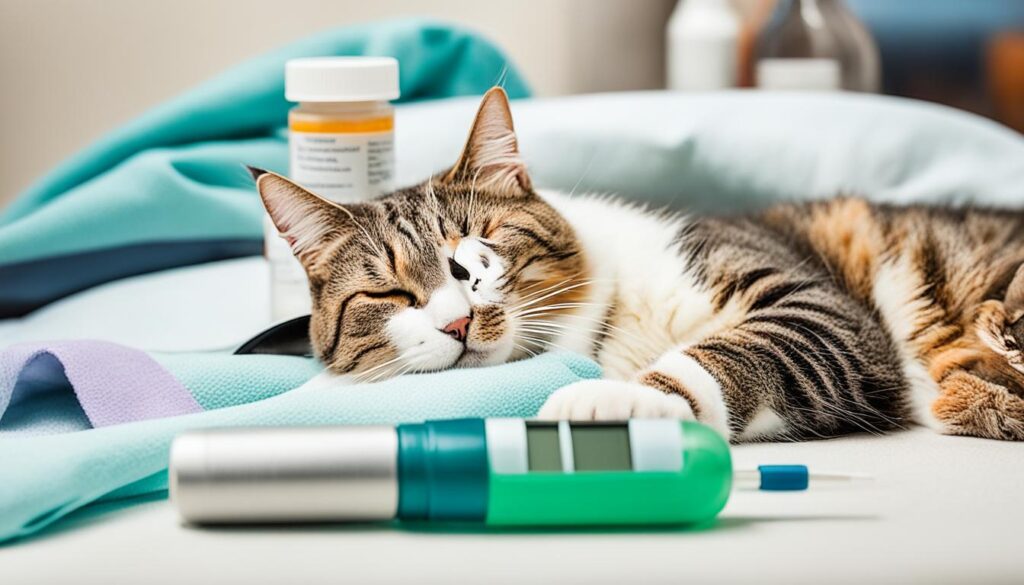
In severe cases, your cat might need to stay at the vet’s for intensive care. This is for conditions that need constant treatment, IV medications, or surgery. Being hospitalized means your cat gets the care they need to recover.
| Treatment Options | Description |
|---|---|
| Fluid Therapy | Administered intravenously or subcutaneously to maintain proper hydration. |
| Dietary Changes | Prescription diets formulated for specific health conditions to support recovery and address nutritional deficiencies. |
| Medications | Antibiotics, antifungals, anti-emetics, and other medications prescribed to treat infections, manage symptoms, and promote healing. |
| Veterinary Check-ups | Regular appointments to monitor progress, adjust treatment plans, and detect any potential complications or new health issues. |
| Exercise and Mental Stimulation | Encouraging gentle play and interactive toys to keep your cat mentally engaged and prevent lethargy. |
| Grooming | Regular brushing and grooming sessions to keep your cat’s coat clean and reduce shedding. |
| Creating a Safe Environment | Providing a quiet and comfortable space, a clean litter box, and plenty of love and attention. |
Knowing the signs of a sick cat is very important for cat lovers. Cats often hide when they’re not feeling well. But with regular vet visits and careful attention, owners can spot the signs early. This means they can act quickly to help their pets.
Regular check-ups by a vet are key to keep cats healthy. Watching for changes in how they act, eat, and clean themselves is also crucial. Catching illness early means owners can give the right care. This helps make cats’ lives better and happier.
To sum up, taking care of a cat’s health is vital. Proper care, staying alert, and getting vet help when needed can make all the difference. By understanding cat illnesses, owners can give the best care to their furry friends.
Cats can fall ill at any time. But they often hide how sick they are. This makes it hard for owners to tell when their cats need help.
Illness in cats can show in many ways. Look for changes in how they act or eat. Vomiting, diarrhea, and coughing are big red flags.
Watch their energy, how much they groom, and if they’re losing or gaining weight. Checking their litter box and watching for eye problems or unusual behaviors helps too.
Many things can make a cat sick. Infections from bacteria, viruses, or fungi are common. Also, chronic diseases like diabetes or kidney issues can occur.
Parasites, toxins, and problems like constipation or stomach issues can also harm them.
Know your cat’s usual behaviors and looks. Any big changes can be a sign of trouble. This might be in how they act or how their coat looks.
Changes in appetite, bathroom habits, breathing, or their eyes are clues too. If they show strange symptoms, they may be sick.
Seeing a vet quickly is very important if your cat seems sick. The vet can find out what’s wrong and how to treat it. They might suggest fluids, different foods, or medicine depending on the problem.
Keeping your cat healthy involves regular vet visits and good care at home. This means proper food, exercise, playing, and grooming. A safe and loving home is also key.