 11
11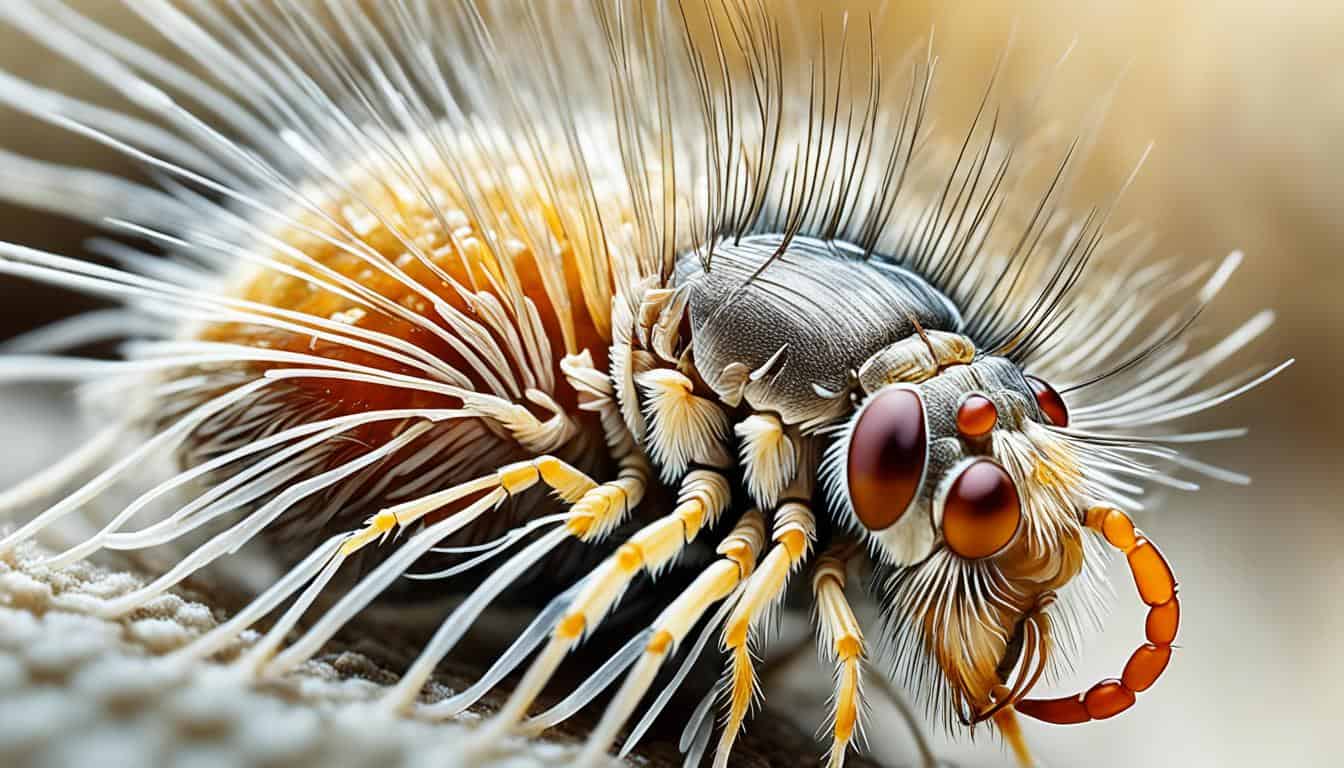

Fleas are tiny, wingless bugs that belong to the Siphonaptera order. They live off the blood of mammals and birds. Knowing where these pests like to stay is key to controlling them.
These insects can adapt to many places, from fur and feathers to our homes’ carpets and beds. They’re good at sticking to their hosts, making them a big problem for pets and people alike.
To really deal with fleas, understanding their life cycle is key. There are four stages: eggs, larvae, pupae, and adults. Each stage needs different conditions to grow.
To fight fleas, know their life cycle. Aim at eggs and larvae to break the cycle. Clean regularly with a vacuum. Wash pet items in hot water. Use flea treatments. Keep everything clean.
Stopping infestations means targeting all flea stages, not just adults. Knowing about the flea cycle helps keep pets and homes safe from fleas.
Fleas have different lifespans at each stage of their life. Knowing how long they live is key to fighting them off effectively.
Eggs: Flea eggs last up to 2 weeks in the right conditions. Clean regularly, especially where your pets sleep and play. This stops new fleas from popping up.
Larvae: After eggs hatch, flea larvae feed on organic matter. This includes flea poop and dead skin. They live for weeks to months if it’s warm and safe. So, vacuum often and keep your place tidy to minimize their food supply and stop them from growing.
Pupae: In their next stage, fleas wrap themselves in cocoons. They can chill there for a long time, waiting for the perfect moment to wake up. This could be when they sense heat or carbon dioxide. That’s why dealing with fleas means getting rid of both the active ones and those hiding out as pupae.
Adult Fleas: Adult fleas come out of their cocoons ready to live for a few weeks to months. They mate and feed on blood during this time. To keep your pets and home free of fleas, use flea treatments regularly.
Understanding flea life stages helps in setting up a good fight against them. Keep your home clean, vacuum a lot, and use flea killers. This reduces their numbers and keeps your pets and family safe.
| Life Stage | Lifespan |
|---|---|
| Egg | Up to 2 weeks |
| Larva | Weeks to months |
| Pupa | Weeks to months |
| Adult Flea | A few weeks to a few months |
Fleas reproduce quickly, so knowing where they lay eggs is vital. They pick hidden spots for their eggs. This ensures the eggs hatch and grow well.
Common egg-laying spots for fleas include:
To fight infestations, we must target these key spots. Clean and treat pet bedding often. Vacuum carpets well and seal floor gaps. This reduces the chance of fleas in our homes.
We also need to watch outdoor areas pets use. Using flea control outside can stop fleas from coming in. Stopping the flea life cycle helps keep our homes flea-free. By acting early, we make our spaces safer for us and our pets.
Fleas adapt well and live in many places by using their hosts and surroundings. Knowing where fleas like to be is key to stop and prevent them.
Fleas feel at home in places like our homes, yards, and even on pets. Their perfect spots have things that help them live and grow.
Flea numbers can explode, often more than those on pets. So, it’s important to look everywhere for fleas when you are trying to get rid of them.
To fight fleas, you need to hit them and where they live. Here’s how to do it:
Dealing with fleas and where they like to be can help you keep them away. This keeps your home, pets, and family safe.
Let the image below give you a visual depiction of flea habitats:
Fleas are tiny insects without wings. They belong to the Siphonaptera order. Their unique way of feeding helps them survive. It also makes controlling them tough. Understand their feeding and behavior is key to preventing infestations.
Flea Behavior:
Fleas live on the outside of animals, feeding on blood. This includes dogs, cats, and sometimes humans. They find their hosts by sensing heat, movement, and the carbon dioxide breathed out. This helps them jump on their prey without being noticed.
They have mouthparts made for piercing skin and drinking blood. They start feeding by sticking to their host. The saliva they release stops the blood from clotting. This helps them feed more easily.
Flea Feeding Habits:
Fleas feed a lot. They need many blood meals to live and make more fleas. Adult fleas must find blood soon after leaving their cocoon. They need blood to have energy and reproduce.
Flea larvae, however, don’t eat blood. They eat things like flea droppings, dead skin, and other organic stuff around them. They keep away from light, hiding in carpets and small cracks. This makes them hard to find.
After larvae grow up, they become pupae. Pupae stay in a cocoon, safe from the outside world. They can stay like this for a long time. They’re tough to clean up because they resist many cleaning methods.
Preventing Flea Infestations:
To stop fleas from moving in, focus on all life stages. Here are some tips:
Knowing about flea habits can guide you in fighting them off. Taking steps before fleas show up is the best protection. It keeps your pets and home flea-free and comfy.
Adult fleas don’t stay in carpets all the time. But they use them for their offspring to grow. Carpets give them places to hide, food, and the right conditions for eggs to hatch. Knowing how fleas use carpets helps control them better.
Flea eggs are laid in places where pets or wildlife hang out. This often includes carpets. Flea eggs blend in with carpet fibers, hard to see without magnification. They hatch in one to ten days, if conditions are right.
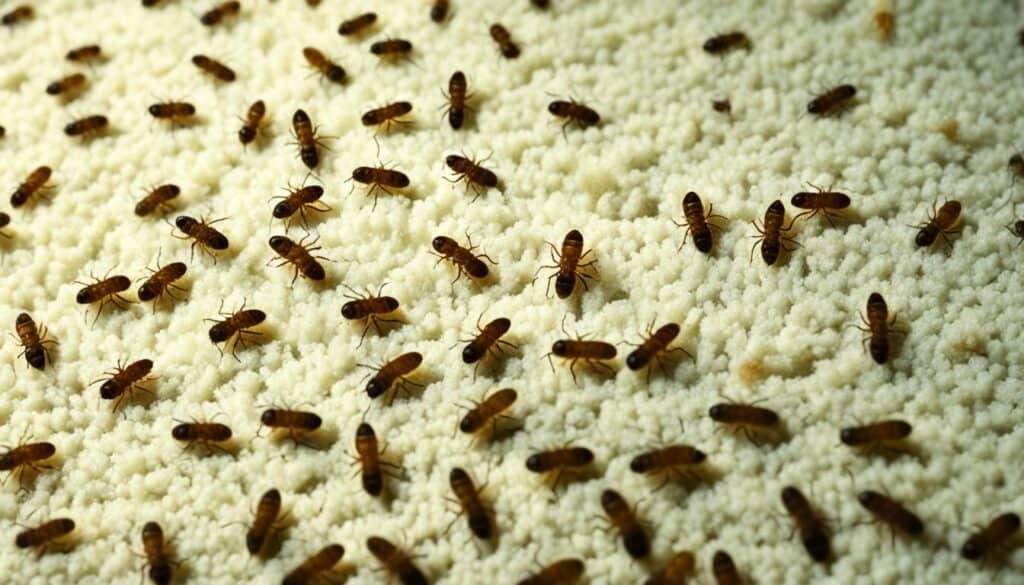
When flea eggs hatch, larvae come out and start living in the carpet. These larvae are blind and look for dark spots, knowing it’s safer there. They hide deep within carpets, hard for people to find them.
Larvae look like tiny worms, about 1-5mm long. They eat anything organic in the carpet. This includes dead skin and flea dirt. They grow by molting, getting ready for the next life stage.
| Key Points about Flea Larvae in Carpets |
|---|
| They can live in carpets for weeks or months, finishing their growth there. |
| Carpets offer the moisture and warmth larvae need to thrive. |
| Vacuuming regularly can mess up their habitat, lessening their numbers in carpets. |
After growing, larvae make cocoons to become pupae. Pupae stay hidden in cocoons, hard to find in carpets. They are dormant, slowly turning into adult fleas.
This pupal stage is very important. It can last from a few days to weeks. It depends on the weather and the moisture in the air. Warmer, moister conditions speed up their growth.
“Carpets are not just where fleas live. They’re also where fleas start their lives. Knowing this helps target flea control better, getting rid of these pests for good.”
| Flea Development and Survival in Carpets |
|---|
| Eggs can last up to 2 weeks in good conditions. |
| Larvae feed on organic stuff in carpets for a long time. |
| Pupae can stay dormant for a long while. |
| Adult fleas can live from 2 weeks to 6 months, depending on conditions. |
Dealing with fleas in carpets is tough. They can quickly become a big problem. Regular vacuuming, cleaning carpets professionally, and using flea products are key. Tackling fleas at every stage is crucial to stop them from coming back, keeping both pets and people safe.
Carpets are a favorite spot for fleas. They offer a safe place for fleas to live and grow. Knowing how long fleas and their eggs can stay in carpets helps us fight them better.
Flea eggs can live in carpets for up to two weeks. If it’s colder, they might last even longer. These tiny eggs can start a new wave of fleas without us seeing them.
The next step for a flea is becoming a larva. Larvae hide in the carpet, eating bits of food and dust. They can live there for a long time, growing and getting ready to change again.
Pupae are the next phase. They can stay hidden in the carpet for weeks or months. They wrap up in cocoons, safe from harm, as they change inside. This stage is tough to beat with normal flea-killing methods.
Fleas can stay in carpets from 2 weeks to 6 months. It all depends on the weather, humidity, and if there’s food. Fleas are good at making the most of carpet life.
To fight these fleas, we need to tackle every stage of their life. Vacuuming a lot can get rid of fleas in all their stages. Also, using flea killers and taking care of pets and their places helps stop them.
Knowing how fleas live in carpets lets us stop them better. We can keep our homes and pets safe from these annoying pests.
Many factors are crucial in the growth of fleas in carpets. Knowing these can help homeowners stop and prevent flea problems.
Temperature and humidity affect flea growth a lot. Fleas do well in warm areas, around 70-85°F (21-29°C), and when humidity is over 70%. These conditions help fleas grow quickly, leading to more fleas. But, cold can slow down fleas, making it hard for them to grow and have babies.
Stuff like pet hair, dirt, and dead skin in carpets feed flea babies. If there’s a lot of food, the baby fleas can grow strong and move to the next stage. Cleaning carpets often cuts down their food, stopping them from growing.
Cleaning carpets well is key to fighting fleas. Using a strong vacuum can remove flea eggs and young. Focus on pet areas because these spots might have more fleas. Using steam to clean carpets also helps kill fleas and clean up.
“Keeping clean and using vacuums and steam helps stop flea problems in carpets.”
Stopping fleas before they start is important. This means grooming pets often, using flea products like treatments or collars, and keeping inside clean. These steps make your home unfriendly to fleas, lowering the chance of fleas moving in.
“Starting prevention steps early means less chance of flea troubles at home.”
Below is a table showing how temperature and food change how fast fleas grow in carpets.
| Factors | Ideal Conditions | Faster Development | Slower Development |
|---|---|---|---|
| Temperature | 70-85°F (21-29°C) | Accelerates | Slows down |
| Humidity | 70% or higher | Accelerates | Slows down |
| Food Availability | Abundant organic debris | Promotes growth | Inhibits growth |
Fleas do not only bother household pets. They can also infest squirrels, raccoons, rabbits, and other wildlife. These animals unknowingly help to spread fleas in the wild. When our pets mix with these wild animals, they can catch fleas too. This makes controlling fleas hard.
To manage fleas well, we need to know how they interact with wildlife. Knowing which animals can carry fleas helps us and pest experts make better plans. These plans help keep pets and homes safe from these pests.
“Fleas in wildlife pose a significant challenge for flea control, as they can act as reservoirs for infestations. Identifying and addressing these hidden hosts is crucial to achieving long-term control and reducing the risk of flea-borne diseases.” – Dr. Emily Peterson, Veterinarian
Wild animals living near our homes can easily bring fleas into our spaces. As they move through different areas, they pick up fleas. These fleas then travel with them into our yards or houses, making new places infested.
Pets that explore outside or meet wild animals can get fleas too. These pets then carry fleas into our homes. This spreads the fleas to other pets and sometimes to people.
To stop fleas in wildlife, we must act early. This means taking care of both wild animals and our pets.
1. Encourage responsible pet ownership: Keep pets inside or watch them closely outside. This reduces their chance of getting fleas from wildlife.
2. Install physical barriers: Fences can keep wild animals out of your yard. This helps stop fleas from coming in.
3. Trim vegetation: Cutting back bushes and tall grasses takes away hiding spots for fleas and wild animals.
4. Partner with wildlife management agencies: Working with local wildlife agencies can solve flea problems related to specific animals in your area.
5. Consult with a pest control professional: If wildlife fleas are a big problem, it’s smart to get help from a pest expert. They can create a plan just for you.
| Table: Fleas in Wildlife and Their Impact |
|---|
| 1. Fleas in wildlife make it harder to control fleas in homes. |
| 2. Wildlife with fleas can keep flea numbers high, risking more infestations. |
| 3. These animals can spread diseases to other animals and people. |
| 4. Flea problems can change wildlife habitats and affect many species. |
Fleas in wildlife matter to us all. By understanding how wildlife affects flea spread, we can help. Together, we can protect our pets and nature from fleas.
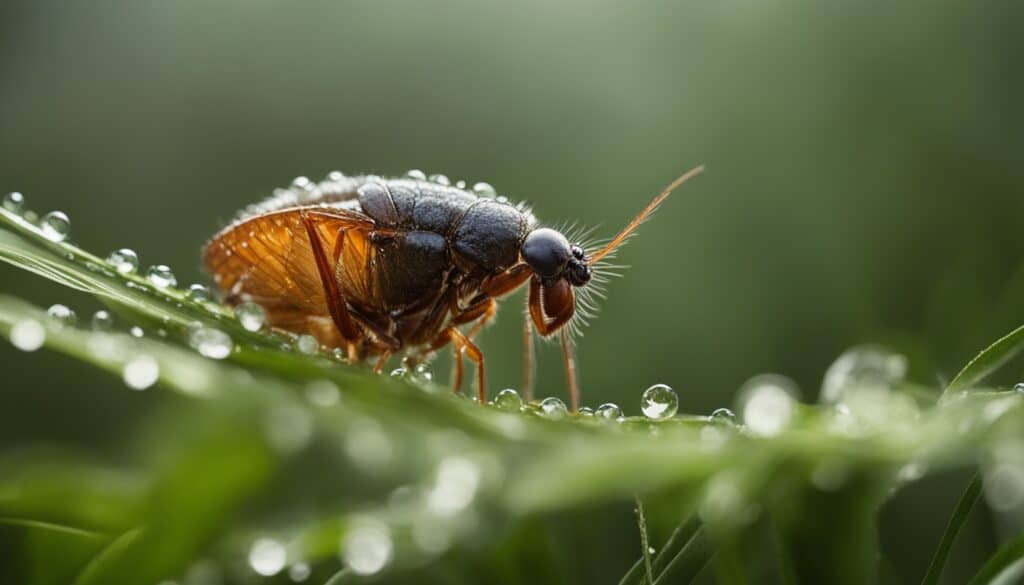
Two types of fleas are common in wildlife: the cat flea and the dog flea. The cat flea, known as Ctenocephalides felis, is especially widespread. It lives on many animals, including cats, squirrels, rabbits, and raccoons. This flea can easily grow and spread across different animals, making it a major issue.
The dog flea, or Ctenocephalides canis, usually lives on dogs. However, it can live on other mammals too. Although it’s less common than the cat flea, the dog flea still poses a big problem for dogs and wildlife.
Knowing which fleas affect wildlife helps us fight infestations better. By learning where these fleas are found, experts can create better plans to control them. This is important for keeping both wild animals and pets safe from fleas.
| Flea Species | Hosts | Distribution |
|---|---|---|
| Cat Flea (Ctenocephalides felis) | Cats, dogs, wildlife | Global distribution |
| Dog Flea (Ctenocephalides canis) | Dogs, wildlife | Global distribution |
The table above shows that cat and dog fleas are found all over the world. They can live on many different animals. This fact underscores the need for wide-ranging flea control measures. These measures must protect pets and consider wildlife and the environment.
Fleas are tough parasites that live in many places. They can be in animal fur, carpets, bedding, and the wild. Understanding their life cycle, where they like to live, and how they act is key to stop them.
To keep fleas away, we must take specific steps. Regularly using a vacuum can get rid of flea eggs and larvae in our homes. Using vet-recommended flea treatments helps protect our pets year-round.
Staying clean is another big part of stopping fleas. Wash your pet’s bedding in hot water often to kill fleas and their eggs. Also, keeping your home and yard clean lowers the chance of fleas moving in.
By using these methods and focusing on keeping fleas out, pet owners can protect their pets. They can make their homes safe from fleas. With careful attention and regular care, controlling and preventing fleas is possible. This ensures our pets and families stay healthy and happy.
Fleas find homes in animal fur, carpets, bedding, and wildlife.
Fleas go through four life stages: egg, larva, pupa, and adult.
Fleas live different lengths of time at each stage. Eggs last up to 2 weeks. Larvae feed for weeks to months.
Pupae wait dormant for several months. Adult fleas can survive a few weeks to months.
Fleas hide their eggs in pet bedding, carpets, and outdoor areas.
Fleas like warmth and humidity, ideally around 70-85°F with over 70% humidity.
Fleas drink the blood of dogs, cats, and humans.
Carpets provide a space for fleas to lay eggs and shelter their young.
Fleas in carpets can live from 2 weeks to 6 months, depending on conditions.
Warmth and humidity speed up flea growth. Organic debris feeds larvae. Regular vacuuming can help by removing eggs, larvae, and pupae.
Yes, wildlife like squirrels and raccoons can get fleas.
Wildlife often have cat fleas and dog fleas.
Combat fleas by vacuuming, using flea products, and keeping clean.