 11
11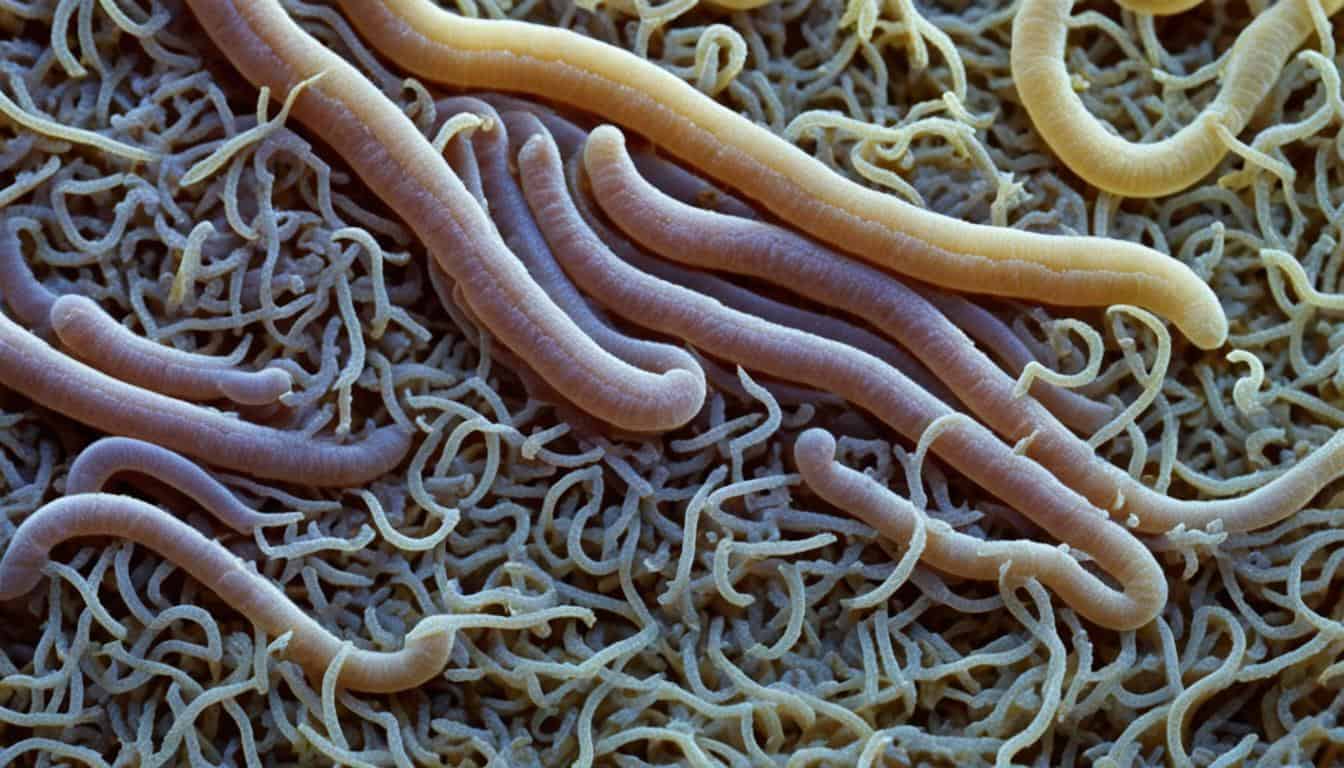

Capillariasis is a parasite problem found in dogs and cats, but it hits dogs more often. Dogs can catch various Capillaria parasites like Pearsonema plica, Eucoleus aerophilus, and Eucoleus boehmi1. They get infected by eating eggs or larvae from dirty soil or poop1. The signs of Capillariasis depend on the parasite type and where it is in the body1. Finding Capillaria is hard because the eggs aren’t always there1.
Getting rid of Capillaria is straightforward with medicines like fenbendazole, ivermectin, and milbemycin1. You can also stop Capillaria by keeping dogs away from earthworms1. It’s important to remember Capillaria can also make people sick, especially the lungworm kind, E. aerophilus. Washing hands and using gloves can stop it from spreading to humans1.
Knowing about Capillariasis is vital for a dog’s health. By understanding the signs, how to diagnose, and treat it, owners can protect their dogs from this illness and its dangers.
Dogs can get sick from different types of Capillaria worms. These include Pearsonema plica, Eucoleus aerophilus, and Eucoleus boehmi. Each kind harms the dog’s health in its way.
Pearsonema plica, or Capillaria plica, mainly targets the dog’s bladder and sometimes the kidneys. This infection leads to urinary problems and other symptoms related to the urinary system.
The respiratory system is under attack by Eucoleus aerophilus, known as Capillaria aerophilus. It sticks to the lungs and trachea, leading to coughs, breathing trouble, and wheezing. This condition threatens the dog’s lung health.
Eucoleus boehmi, or Capillaria boehmi, lives in the nose and sinuses. Dogs with this infection often sneeze and have a runny nose.
Dogs tend to get Capillaria infections more often than cats do.
According to data1, Capillaria infections hit dogs more than cats.
Dogs get Capillaria infections from the places they explore. The way Capillaria spreads depends on the kind of Capillaria. For the types found in the bladder, like Pearsonema plica1, their eggs leave the body in the dog’s pee. When a dog pees, these eggs go into the ground.
Meanwhile, types that live in breathing passages, like Eucoleus aerophilus1 and Eucoleus boehmi1, lay eggs in the dog’s airways. When an ill dog coughs, it shoots out these eggs. They are then swallowed and leave the body in the dog’s poop.
It’s key to remember that some Capillaria need an earthworm to eat their eggs before a new dog can get sick1.
Many dogs with Capillaria might not show any illness signs. But, signs can occur depending on the Capillaria species and where the infection is.
Pearsonema plica can target the bladder and kidneys in dogs. This may cause blood in urine, urinary accidents, and straining to urinate.1
Eucoleus aerophilus affects dogs’ respiratory tract. It can lead to coughing, wheezing, and difficulty breathing.1
Eucoleus boehmi resides in dogs’ nasal passages and sinuses. It can cause symptoms like sneezing and a runny nose.1
It’s key to remember some dogs with Capillaria might not show any signs. Yet, if symptoms show, they can hint at the infection’s type and place.
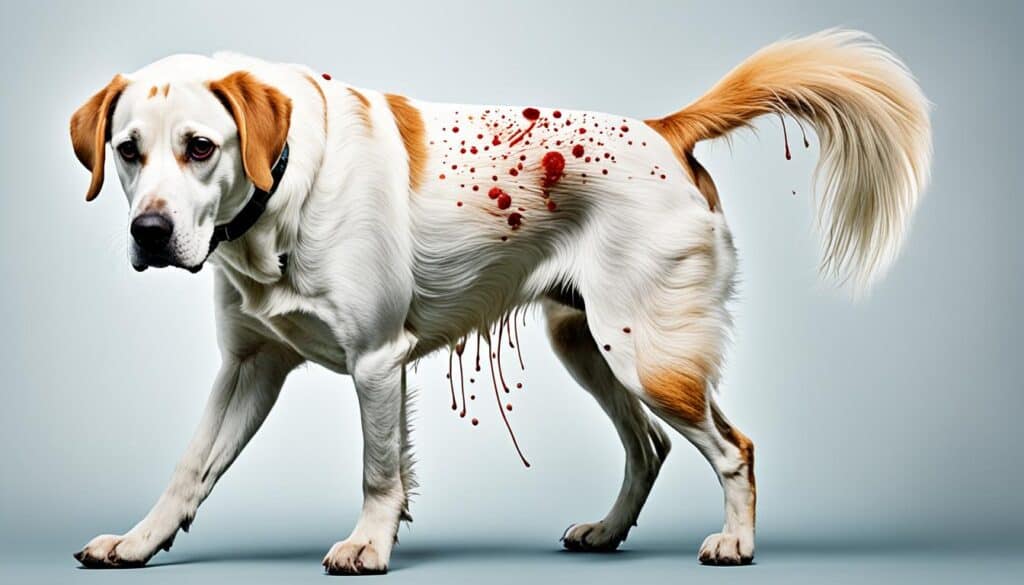
To diagnose Capillariasis, it’s important to know the symptoms for each Capillaria kind and where the infection is. This helps vets find the best treatment and manage the condition well.
Finding out if a dog has Capillariasis can be tough. This is because the parasite does not always shed its eggs. There are several ways to check for it, depending on the type of parasite.
Checking the urine is a good way to find Pearsonema plica infection. Signs like inflammation, blood, and tiny eggs in the urine mean the parasite is there1.
Looking for Eucoleus aerophilus infection is a bit different. The worms are too small to see with just an x-ray. You need to look at the poop under a microscope to find the eggs and know for sure it’s the infection2.
To spot Eucoleus boehmi, you can examine the poop or use rhinoscopy. The poop test looks for eggs. Rhinoscopy lets you see inside the nose, where the parasite lives2.
Different tests, like checking urine, poop, and using rhinoscopy, are key to finding this parasite in dogs. These tests help confirm the infection and decide the best treatment12.
Table: Diagnostic Methods for Capillariasis in Dogs
| Species | Diagnostic Method |
|---|---|
| Pearsonema plica | Urinalysis |
| Eucoleus aerophilus | Fecal Examination |
| Eucoleus boehmi | Fecal Examination or Rhinoscopy |
Once we know a dog has Capillaria, the right treatment can start. This helps get rid of the infection and makes the dog feel better.
Dogs can be treated for Capillariasis with several dewormers and medicines. The kind of treatment depends on the Capillaria species and where the infection is. Fenbendazole, ivermectin, and milbemycin dewormers work well for getting rid of the infection3.
Fenbendazole helps fight different stomach parasites, including Capillaria. It’s given by mouth, and how long to use it can change based on the infection’s seriousness and the Capillaria type. Ivermectin is another dewormer that works against many parasites, like Capillaria. It can be given by mouth or as a spot-on treatment3.
Milbemycin is also used to fight Capillaria infections. Often, it’s mixed with other medicines for fighting more parasites. You can get Milbemycin as chewable pills or spot-on drops. It fights many stomach parasites, including Capillaria, offering lasting protection3.
Spot-on treatments with moxidectin can fight some Capillaria species well. Applied directly on the dog’s skin, these treatments target both outside and inside parasites. Moxidectin works against Capillaria’s adult and baby stages, helping to stop the infection3.
Besides dewormers, dogs with Capillariasis might need extra medicine to lessen infection inflammation. Vets might suggest anti-inflammatory drugs or special care to help dogs feel better3.
After treatment, vets may suggest checking the dog’s feces again. This makes sure there are no more Capillaria eggs and checks if the treatment worked. These checks help watch how well the treatment is going and make sure the dog fully recovers3.
Talking to a vet is important for the right diagnosis and treatment plan for Capillariasis in dogs. The vet will look at the Capillaria species, how bad the infection is, and the dog’s overall health before choosing the best treatment.
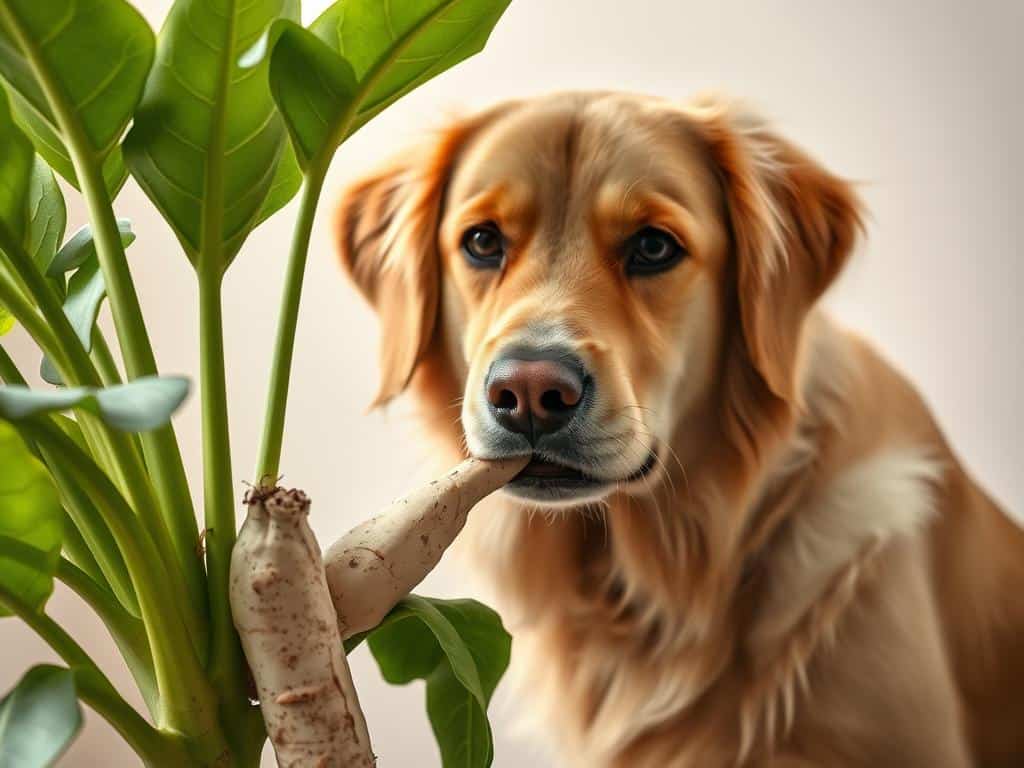
To keep dogs safe from Capillaria, it’s wise to keep them away from earthworms. Since these worms can spread the infection, it’s key to avoid them. Also, regularly picking up dog poop from places they roam can help stop the disease from spreading.
Prevention is key to fighting Capillariasis in dogs. By keeping dogs from eating earthworms and cleaning up after them well, owners can really lower their pet’s risk of getting this worm infection.
Keeping dogs away from earthworms helps prevent Capillariasis. Since earthworms can carry Capillaria eggs, it’s important dogs don’t eat them. Watchful eyes during walks and playtime outside can keep dogs from picking up these worms.
Statistical data: Research shows Eucoleus boehmi is common in red foxes in Italy and other places4. This shows why dogs should stay away from earthworms, as foxes can also carry Capillaria.
Cleaning up dog poop right away is crucial for preventing Capillariasis. Dogs with the infection pass eggs in their poo, which could infect others. Tidying up after your dog helps stop the spread of the infection.
Statistical data: There’s a lot of lungworm in wild foxes in central Germany, which underscores the need for cleaning up waste, as foxes can spread Capillaria4.
Taking steps to prevent Capillariasis protects dogs from getting sick and helps lower the disease rates among all dogs. Limiting contact with earthworms and good poop cleanup are ways to keep dogs healthy. This makes a safer place for all our furry friends.
Capillaria, mainly a dog issue, can sometimes pass to humans. This happens through the lungworm called Eucoleus aerophilus. To lower this risk, doing things like washing hands and wearing gloves when you clean is key. It also helps to regularly remove dog waste quickly1.
To stop Capillaria from moving from dogs to humans, cleanliness is very important. Here are ways to stay safe:
Following these steps can greatly reduce the chance of Capillaria infecting humans1.
Capillariasis affects dogs by causing symptoms that change based on the infecting species and infection site. Dogs with urinary capillariasis might have frequent urination, bladder inflammation, painful urination, and urinating at wrong times2. Finding the infection can be hard due to eggs not always being present, but treatment is possible and often successful2. Keeping dogs away from earthworms can cut down the infection risk2. This disease is mainly a dog issue but could possibly spread to humans, so good hygiene is key4.
Besides Capillariasis, dogs can get other parasitic diseases. One common issue is canine whipworm infestation, from Trichuris vulpis5. While adult dogs might not show signs, a heavy parasite load can cause serious gut problems5. Dogs might also get infected with Capillaria aerophila or Capillaria boehmi, leading to no symptoms or even breathing troubles5. Mixing up egg types in tests, especially when more than one infestation is present, makes correct diagnosis tricky5.
Being watchful and getting regular vet checks are key to fighting parasitic diseases like Capillariasis in dogs. Knowing what signs to look for, how it’s diagnosed, and treatment choices helps pet owners keep their dogs safe and healthy.
Capillariasis is a parasite problem that dogs can get from different Capillaria worms. They pick up these worms from their surroundings.
The types of Capillaria that can make dogs sick include Pearsonema plica, Eucoleus aerophilus, and Eucoleus boehmi.
Dogs get Capillaria from their environment. How they get it depends on the kind of Capillaria worm.
Dogs with Capillariasis may have blood in their pee, pee inside the house, and have trouble peeing. They might also cough, wheeze, have trouble breathing, sneeze, and have a runny nose.
Diagnosing Capillariasis in dogs is hard because the worms don’t always lay eggs. Tests might include checking pee for Pearsonema plica, poop for Eucoleus aerophilus, and poop or nasal exams for Eucoleus boehmi.
To treat Capillariasis in dogs, vets use dewormers like fenbendazole, ivermectin, and milbemycin. Some spot-on skin treatments work too. Sometimes, dogs need extra medicine to help with inflammation.
To prevent Capillariasis in dogs, keep them away from earthworms and always clean up their poop. This lowers the chance of them getting infected.
Humans can catch a kind of Capillaria from dogs, especially the lungworm Eucoleus aerophilus. Always wash your hands and wear gloves when you clean up after dogs to stay safe.
Other than Capillariasis, dogs can get sick from heartworms, fleas, ticks, and worms in their guts like roundworms and hookworms.