 11
11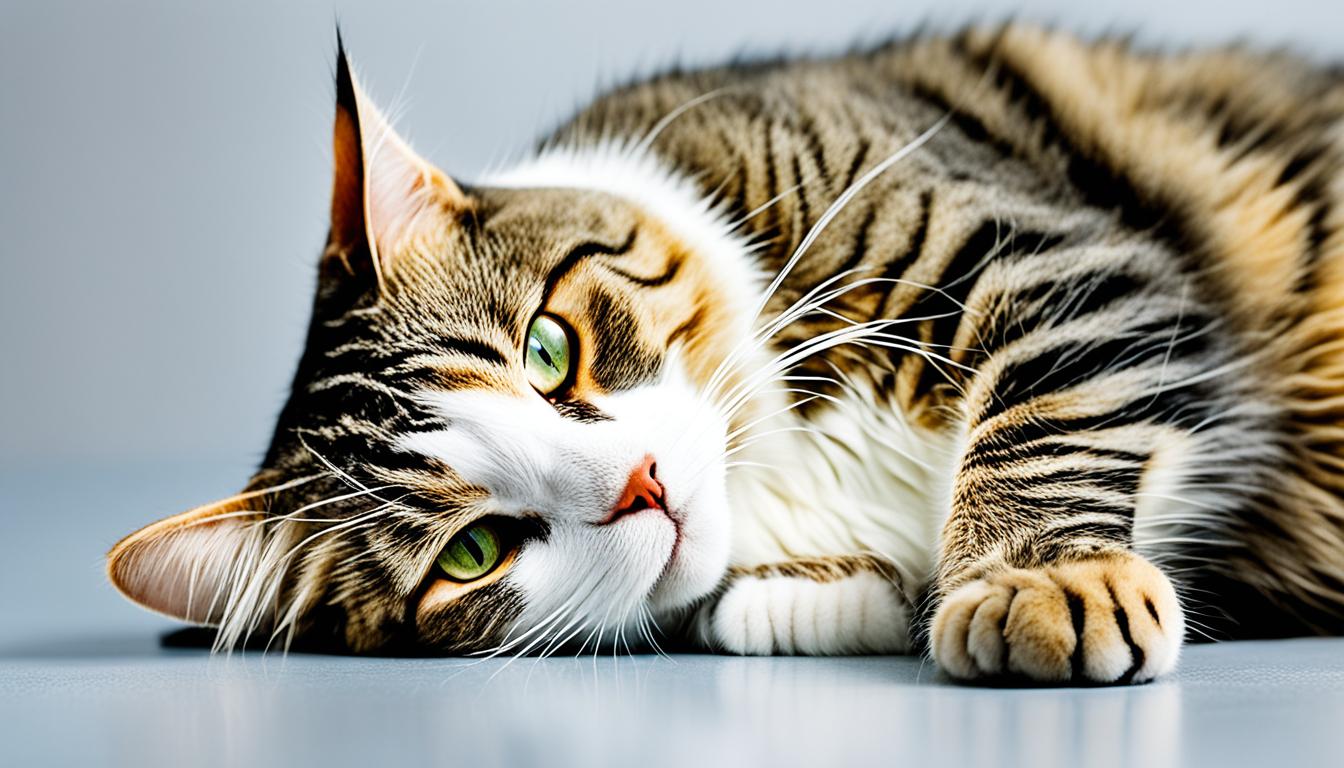

Cats hide illness to not appear weak to predators. This means they might not show cat health warning signs early. They might become quieter or change how they act or look. Thus, regular veterinary care for sick cats is key. Vets suggest check-ups twice a year for early health issue detection.
Signs like changes in how they look, act, their coat, eating, and bathroom habits can warn of a feline illness. Symptoms like not drinking enough, losing weight, and not grooming need quick vet visits. Noticing these signs early and getting quick treating sick cats helps a lot with their health.
It’s very important to watch for early signs of sickness in cats. You should observe your cat often. This helps in spotting any symptoms of cat illness quickly. Look out for less social behavior or changes in energy, which are signs of illness.
If your cat grooms less, it might not feel well. Changes in how much they eat or drink are also clues. Issues with using the litter box or more serious symptoms like vomiting need quick vet help.
Being alert to changes in your cat’s habits is key. Watch for different grooming habits, less hunger, or more thirst. Noticing these signs early makes sure your cat gets help in time.
Cats often face several common cat health problems. Owners need to watch for signs of illness. Early detection is key to keeping your cat healthy. Here’s what you might see:
Fleas make cats very uncomfortable. They cause itching, skin issues, and hair loss. Without treatment, they could lead to anemia from blood loss. Use regular flea control and keep your home clean to fight fleas.
Worms are a big problem too. Signs are itchy back ends, eating more, and tummy troubles. Roundworms, tapeworms, and hookworms are common. Your vet can give deworming meds. Staying on top of treatments stops worms from coming back.
Cat flu attacks cats with symptoms like runny noses, sore eyes, and sneezing. It’s very dangerous, especially to kittens or older cats. Vaccinations are the best defense. They keep your pet safe from this catching sickness.
Cats also get diabetes, feline leukemia virus (FeLV), and feline parvovirus. Chlamydia felis is another one. Each illness has different signs. Watch your cat closely and talk to a vet if you’re worried. This helps manage these health issues well.
When cats get sick, they often act differently. Watching how they change can help find health problems early. This helps get them the right help quickly.
Cats hide or stay away when they don’t feel good. This keeps them safe from danger in the wild. At home, it means they are not okay.
Watch out if your friendly cat starts to keep to itself.
Some cats do the opposite and become more needy. This might be because they want comfort. Pay attention to these small changes to help your cat early.
If your cat is not as active, it might be sick. They may sleep a lot, be uneasy at night, or not want to play. These signs mean your cat needs to be checked out.
Watch your cat’s looks and actions closely. This can show health problems early. Knowing the signs helps you act fast to get treatment.
A key cat health warning sign is changes in the coat. A messy look, more dandruff, or less shine are clues. These cat illness symptoms mean your cat might be sick and grooming less.
Too much goop from the eyes or nose is a big health clue. Squinting, odd goop, or big pupils mean a vet visit is needed. These signs can point to different sicknesses that need a doctor.
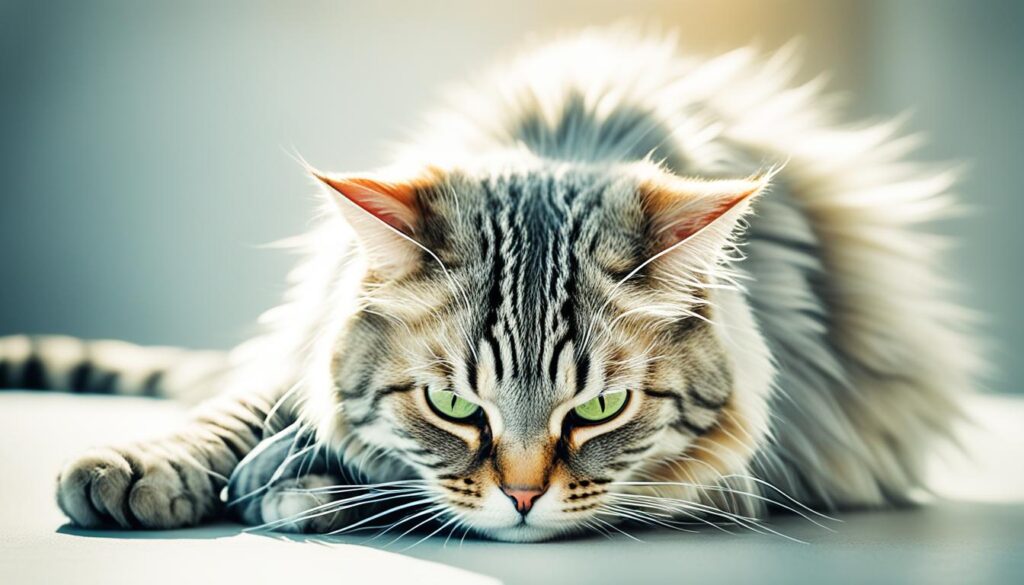
Cat vomiting and diarrhea can point to both small and big health issues. If these don’t stop, getting help from a vet is crucial. It stops dehydration and finds the main problem. Always take these cat health warning signs seriously.
Regular veterinary check-ups greatly improve care for sick cats. They are often advised every six months. This helps spot health problems early, which means quick and efficient treatment.
“An ounce of prevention is worth a pound of cure.” – Benjamin Franklin
These check-ups usually include a detailed exam. Vets can catch illnesses early during these visits. The visits are based on the cat’s age, health, and if they have any sickness already.
| Check-up Frequency | Cat Age | Recommendations |
|---|---|---|
| Twice a year | Adult Cats (1-10 years) | Early detection and ongoing health monitoring |
| Quarterly | Senior Cats (Over 10 years) | Detailed checks due to age-related issues |
Keeping up with regular veterinary check-ups helps prevent and manage health issues. This makes treatment for sick cats more effective. It shows how important it is to watch and manage their health early.
Maintaining a cat’s health is crucial for a long, active life. A mix of shots, the right food, and treatments for fleas and worms is key. These steps greatly improve a cat’s well-being.
Shots are vital for avoiding serious cat sicknesses. Illnesses like feline leukaemia virus (FeLV), feline parvovirus, and cat flu can be prevented. Talking to a vet about shot schedules is important. It helps protect your cat and other cats too.
Eating well is very important for cat health. High-quality cat food meets their unique needs. Cats need foods rich in protein, taurine, and some fats and vitamins. Ask a vet for tips on what your cat should eat. This ensures your pet gets the right nutrients.
Keeping up with flea and worm treatments is a must. Fleas can cause itching and other skin problems. Worms can lead to tummy issues and weight loss. A vet can tell you when these treatments are needed. This keeps your cat safe from parasites.
| Preventative Measure | Key Benefits |
|---|---|
| Vaccinations | Prevents serious and potentially fatal diseases |
| Proper Diet and Nutrition | Supports overall health and well-being |
| Flea and Worm Treatments | Avoids parasitic infections and related health issues |
By taking these steps, you can help your cat stay healthy. Always talk to a vet. They can offer advice suited to your cat’s needs.
Feline Lower Urinary Tract Disease, or FLUTD, affects cats’ urinary tracts. It’s common and needs quick vet care.
FLUTD symptoms include having a hard time urinating, finding blood in the urine, and urinating more often. Seeing these signs means you should act fast. FLUTD can become very serious, like causing a urethral blockage.
FLUTD has various causes. For example, stress, being overweight, diet, and urinary stones. Knowing these factors helps find the right treatment.
Let’s look at the causes of FLUTD:
FLUTD is serious and can soon become a major health issue. It’s vital to watch your cats closely for any urinary trouble. If you spot any signs, see a vet right away.
Cats can get sick for many reasons, but we can prevent or fix many with care. Knowing why helps owners protect their pets from health issues.
Cats sometimes eat things they shouldn’t, like string or toys. This can cause stomach blockages or poisoning. Keep dangerous items away and give your cat safe toys to play with.
Cats can also be harmed by toxic things at home. Items like medicines, some plants, and chemicals are very dangerous if eaten. Store these safely and keep your cat away when using chemicals. If you think your cat is poisoned, see a vet right away.
Stress and big changes in their surroundings can hurt a cat’s health too. Moving or changes in the family can cause stress illnesses. Keep routines the same, give your cat hiding spots, and introduce changes slowly to reduce stress.
Look for changes in how your cat acts or looks. These can hint they’re not feeling well. Signs include less friendliness, energy changes, eating or drinking changes, and using the litter box differently. Vomiting, diarrhea, and trouble breathing are serious signs that need quick vet help.
Cats often face issues like fleas, worms, and cat flu. Diabetes, feline leukemia virus (FeLV), and Chlamydia felis are also common. These problems vary in how serious they are and the symptoms they cause.
Cats may act differently when they’re sick. They might keep to themselves, hide, or stick by your side more. You might notice they’re less playful, sleep more, or seem upset at night. These changes suggest your cat should see a vet.
Ill cats might not keep themselves as clean. Their coats can look messy or lack shine. Eye issues can also appear, along with vomiting and diarrhea. These signs suggest it’s time for a vet visit.
Check-ups help keep your cat healthy and catch problems early. Vets recommend seeing them twice a year. They’ll check your cat and do tests to prevent serious illnesses early on.
Keeping your cat healthy involves vaccinations, a good diet, and treatments for fleas and worms. Talk to a vet to create a health plan that’s right for your cat. This is key for their long-term wellbeing.
FLUTD affects a cat’s urinary system with symptoms like trouble peeing, blood in the pee, and peeing often. Stress, being overweight, diet, and bladder stones cause it. If your cat shows these signs, see a vet right away to avoid dangerous blockages.
Cats get sick from eating things they shouldn’t, touching harmful stuff, or feeling stressed. Make your home safe, watch their behavior, and keep their living space stress-free. This can prevent many common health issues.