
 11
11

Learning about cats health is vital for their happy lives. It’s not just about how long they live. It’s also about their life quality. This depends on their genes, care, and where they live. As pet owners, it’s our job to give them good food, health care, and love. This helps our cats live better and longer. We want to share tips to make your cat’s life great.
A cat’s life length varies a lot. This changes between being inside and outside. Knowing these factors helps owners keep their cats healthy and live longer.
Typically, cats live between 12 to 18 years. Cats living inside often live longer. They avoid many dangers. But, outdoor cats face many risks like cars, animals, and sickness.
Many things affect how long a cat lives. Genes are important, as some breeds have common health issues. Good care, like vet visits and shots, is also key. Food matters too; healthy food means a healthier cat. Lastly, their living situation and how much they play affect their life.
Choosing between keeping a cat inside or outside is big. Indoor cats usually live longer since there’s less danger. But outdoor cats often live shorter lives because of those dangers. For cats going outside, preventing risks is critical.
| Factors | Indoor Cats | Outdoor Cats |
|---|---|---|
| Average Lifespan | 15-18 years | 5-10 years |
| Exposure to Hazards | Low | High |
| Routine Health Monitoring | Easier | Challenging |
| Risk of Common Cat Health Problems | Reduced | Increased |
| Access to Preventive Care | Higher | Lower |
Knowing these facts helps owners make better choices for their cats’ health and long lives.
Knowing about common cat health problems is key for their well-being. Issues like diabetes and obesity need early spotting. By doing so, you can make your cat’s life better.
Many cats suffer from diabetes, which can seriously harm them if ignored. Watch out for signs like more thirst and peeing. Feeding cats right and checking their blood sugar is very important.
Too much weight is bad for cats, leading to other sicknesses like arthritis. Giving them proper food and enough play helps avoid this. Keep an eye on their weight and food portions always.
Some cat breeds have common health problems. For example, Persians often get kidney disease and Maine Coons might have heart issues. Spotting these early helps in taking care of them. Regular vet visits are crucial to keep an eye on these problems.
A balanced diet is key to a cat’s health and long life. Feeding them the right nutrients is crucial. Let’s explore what makes a cat’s diet healthy.
Cats need meat to stay healthy because they are obligate carnivores. Animal proteins and amino acids like taurine are important. Taurine can’t be found in plants. Other key nutrients are:
Knowing what not to feed cats is as important as knowing the right foods. Some human foods are bad for cats. For example:
It’s important to feed cats right to avoid obesity. Too much food leads to health problems like diabetes. In homes with many cats, it’s good to:
Follow these cat care tips for a healthy diet. Plus, add best cat supplements as needed for their diet.
It’s vital to keep cats healthy through exercise and mental stimulation. Both physical and cognitive activities should be on a cat health checklist. This keeps your cat lively and in good health.
Physical activity keeps obesity away and supports good health. Playing every day burns calories, strengthens muscles, and helps the heart. Cats that play a lot manage their weight better and are more active.
Interactive toys and fun spaces make cats mentally sharper. Toys like feather wands and laser pointers make play exciting. Adding climbing towers and places to hide makes playtime even better.
Knowing about cat behavior and enrichment is key. Games that let cats use their senses can prevent problems and lower stress. These activities keep cats healthy overall.
| Activity Type | Examples | Benefits |
|---|---|---|
| Physical Exercise | Chasing feather toys, laser pointers, ball games | Weight management, muscle strength, cardiovascular health |
| Mental Stimulation | Puzzle feeders, scent games, treat hunts | Improved cognitive function, reduced boredom, stress relief |
| Behavioral Enrichment | Interactive play, climbing, scratching activities | Natural instinct expression, overall well-being, behavioral balance |
Preventive care is key for your cat’s health and long life. Regular vet visits help find health issues early.
Dental care is very important for preventive care for cats. Without it, cats can get serious health problems. Brushing and dentist visits are a must.
Vaccines are vital for cat’s health. They protect from sickness and stop disease outbreaks. A vet can create a vaccine plan for your cat.
Blood tests are crucial for watching your cat’s health. They make early diagnosis possible. This is very important for older cats to track their health.
For great preventive care for cats, adding best cat supplements as advised by a vet is helpful.
Looking into natural remedies for cats helps pet owners. They find ways to keep their pets healthy. These options can go well with regular vet care.
Cat owners love herbal supplements more and more. Catnip, valerian root, and chamomile help relax cats. They ease stress and worry. Milk thistle and turmeric are good for the liver and can lessen swelling. This helps cats stay well.
Aromatherapy can also be good for cats. Oils like lavender and frankincense help calm them. But, make sure they are safe for pets. Always talk to a vet before trying new scents.

Homeopathic treatments are natural ways to look after cat health. Using arnica for pain, calendula for skin issues, and pulsatilla for breathing problems is common. Remember to use these under a vet’s watch. They should fit into a plan for a healthy cat life.
| Natural Remedy | Benefits | Considerations |
|---|---|---|
| Catnip | Stress relief, stimulation | Monitor usage to avoid over-stimulation |
| Milk Thistle | Supports liver health | Consult vet for proper dosage |
| Lavender Oil | Calms anxiety | Ensure safe dilution and application |
| Arnica | Pain relief | Use under veterinary supervision |
It’s key to manage stress for a cat’s best health. Long-term stress hurts their immune system and behavior. A full plan is needed to keep them well.
Finding out what stresses cats is the first move. Changes at home cause stress. This includes moving, new pets or people, and routine shifts. Loud sounds and no hiding spots make them anxious too.
Watch your cat for stress signs. These include hiding, too much grooming, and eating or acting differently.
A calm space reduces cat stress. Give them cozy spots to hide and feel safe. A set routine for feeding and play helps. Less noise and less mess means a happier cat.
Many products help calm cats. Feliway mimics cat smells to make them feel safe. Calming collars and sprays with lavender are good too. Mood-stabilizing supplements support their well-being.
| Stress Trigger | Management Technique | Product Suggestions |
|---|---|---|
| Household Changes | Maintain routine, provide safe spaces | Feliway diffuser, calming collars |
| Loud Noises | Soundproof rooms, create quiet zones | Calming sprays, pheromone diffusers |
| Unfamiliar Environments | Gradual introduction, familiar items | Lavender-infused products, chamomile supplements |
How cats live and who they meet affects their health a lot. Giving them a good place to live helps them be happy and healthy. It’s all about creating the right space for them.
Keeping cats inside is safer for them. It keeps them away from dangers like cars and sick animals. This way, it’s easier to take care of them and keep them healthy for years.
Cats need fun things in their home to stay well. Things like toys, places to climb, and posts to scratch keep them busy. They also need quiet spots to relax and feel safe.
Being with people and other pets is good for cats. It makes them feel loved and happy. Playing and spending time with them helps their minds and feelings, which is great for their health.
Giving supplements to your cat can really help their health. It’s key for owners to know which ones are needed. They should understand the good and not-so-good points of using them.
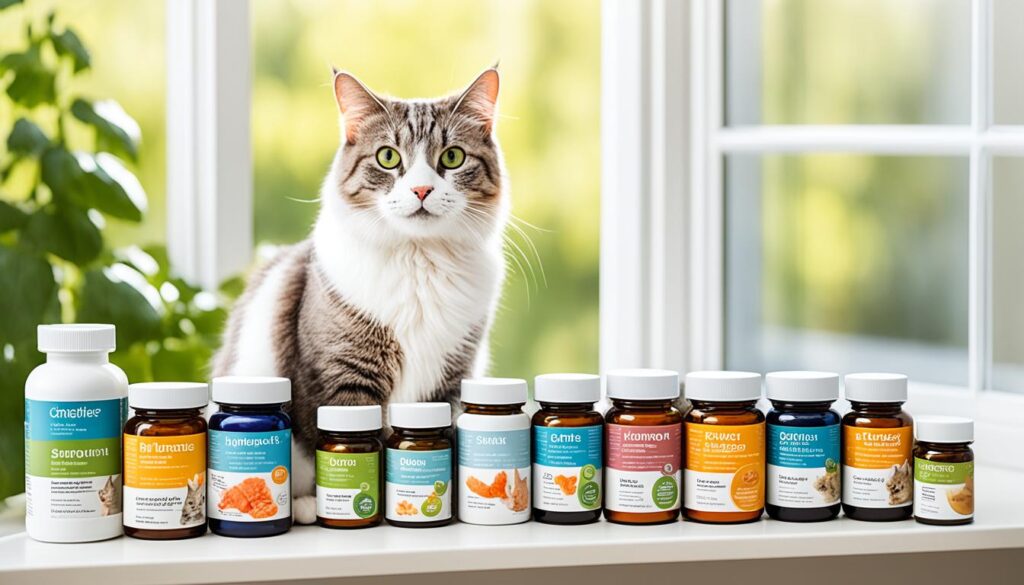
Some top supplements for cats include those with omega-3s, taurine, and probiotics. Omega-3s keep their coat shiny and help with swelling. Taurine is key for a healthy heart and eyes. Probiotics are good for their tummy, helping keep a healthy balance.
Adding supplements can boost health, support certain conditions, and make wellness better. But, owners must watch out for risks. Too much can be harmful or cause bad reactions, especially with other meds. Knowing these dangers helps use supplements well.
Always talk to a vet before giving your cat supplements. They can give advice based on your cat’s age, health, and what they eat. A vet’s help makes sure you pick the right supplements and doses. This prevents bad reactions and makes sure your cat gets the best health perks.
Looking at our cats’ health needs more broadly is important. This means paying attention to diet, exercise, and care. All these factors are key for a cat’s health. Creating a stress-free space and enriching their environment is also crucial.
We must focus on what we feed our cats. Choosing the right food prevents health issues like obesity. It’s also vital to have regular vet visits and keep up with vaccinations. This helps catch and treat possible health problems early.
Preventive care, fun activities, and a safe environment improve our cats’ lives. This knowledge enables us to create a space where cats can be happy and healthy, both in mind and body. By caring for our cats thoughtfully, we ensure they live joyful and long lives.
Cats usually live between 12 to 18 years. Being indoors helps them live longer. This is because they face less danger.
The life of a cat depends on their breed, health care, food, and how they live. Seeing the vet often and getting shots helps them live a longer, healthier life.
Living inside is good for cats. It keeps them safe from accidents, sickness, and predators. It also makes sure they are healthy and live in a controlled place.
Cats often face health issues like diabetes, obesity, and breed-specific problems. For example, Persians may get PKD and Maine Coons can get HCM. It’s vital to take them to the vet regularly.
Managing cat diabetes needs a good diet, exercise, and sometimes insulin. A vet must watch their blood sugar often.
Obesity can cause big health problems like diabetes and arthritis. It can also shorten their lives. To prevent it, feed them the right amount, make sure their diet is healthy, and provide plenty of exercise.
Cats need a diet with meat, proteins, fats, vitamins, and minerals. Avoid bad foods and watch how much they eat.
How much and how often to feed a cat depends on their age, weight, and how active they are. Splitting their daily food into a few meals helps prevent overeating and keeps their weight healthy.
Exercise keeps cats at a healthy weight. It stops obesity and helps their body work right. It’s also good for their mind and feelings.
To keep a cat’s mind active, use toys, puzzle feeders, and make their home fun. Playing and exploring keeps their mind sharp and happy.
Things like teeth cleaning, shots, and blood tests are key for finding and treating diseases early. They help cats live longer, healthier lives.
When a vet says it’s okay, natural treatments can be safe for cats. They can help with small health issues or stress.
Signs of stress in cats include hiding, being mean, or eating differently. To reduce stress, make their living area calm, keep routines, and use products that calm them down.
Things like staying indoors, having a safe and fun home, and being social are important. They make a cat’s life better, both mentally and physically.
Supplements can meet cats’ special health needs, like for their joints or fur. Always talk to a vet to make sure the supplements fit the cat’s health and diet.