 11
11

The cats with COVID story has worried many pet owners worldwide. Experts in animal health have found out how COVID-19 affects cats. They also learned about the dangers it poses and the best ways to look after them.
This piece highlights important facts. It talks about how the illness changes cats, signs to look out for, and how to stop it from spreading. It also covers treatment options. Getting this info is key for people who want their pets to stay safe and well during these tough times.
COVID-19, from the SARS-CoV-2 virus, affects humans and animals, including cats. Knowing about coronavirus in cats is key for pet owners and vets.
COVID-19 is a lung illness that causes breathing problems in humans. It comes from a group of viruses called coronaviruses. Cats can get this virus too and show similar breathing issues.
Animals and humans spread COVID-19 differently. It mostly spreads from person to person. But, cats can get the virus from their owners too. This shows we need to learn how it spreads between species.
Cats with the disease show signs like coughing, sneezing, and being tired. If a cat gets very sick, it might have pneumonia. If this happens, they need to see a vet right away.
The world mainly looks at how COVID-19 spreads between people. But we’re also learning how our pet cats can get and spread the virus. Researchers have found out how cats can catch the virus from humans and each other. Even with lots of study, it’s still pretty rare for cats to give the virus to humans.
People with COVID-19 can pass it to their cats. This might happen when they pet or feed their cats. If you’re sick, be careful around your pet. You might even want to get your cat tested if they seem sick. Knowing how COVID-19 affects cats can help us keep them and us safe.
Cats can also give COVID-19 to each other. This is through the droplets when they breathe out. This is a big deal if many cats live together, like in a house or shelter. Testing cats often in these places can catch the virus early and stop it from spreading.
There’s a chance cats could give COVID-19 back to people, but it’s very rare. Studies show cats can carry and get rid of the virus. Yet, they’re not likely to make humans sick. Still, it’s important to stay clean and watch over the health of our pets and ourselves.
| Transmission Type | Likelihood | Preventive Measures |
|---|---|---|
| Human to Cat | High | Avoid close contact when symptomatic, consider testing |
| Cat to Cat | Moderate | Regular testing in multi-cat households, isolate infected cats |
| Cat to Human | Low | Maintain hygiene, monitor health of pets |
Taking care of cats with COVID means learning about risks. Knowing about different cat species helps us protect them better.
It’s important to know what puts cats at risk from COVID-19. Cats with health issues, like breathing problems or weak immune systems, face more danger. Also, older cats may struggle more with infections.
Some cats get sick from COVID-19 easier than others. House cats can catch it more often than wild ones. Yet, watch for signs like coughing or sneezing in any cat.
Researchers highlight the importance of monitoring and extending extra care to cats with pre-existing conditions to prevent severe manifestations of the virus.
Knowing how cats with COVID react to the virus is key. Being aware of these risk factors for cats helps owners keep their pets safe and healthy.
The pandemic has affected not just humans but our cats too. It’s key for cat owners to spot feline COVID symptoms quickly. This ensures cats get early help. Knowing these symptoms is crucial for your cat’s health.
A cat with a cat respiratory virus like COVID-19 may show several symptoms. These signs can include:
Some cats might show mild symptoms, while others have serious ones. Severe feline COVID symptoms need quick vet care. These include:
Testing your cat for COVID-19 matters a lot when they might be sick. It’s especially true if they were near someone who was sick. It’s good to know when and how to test to keep them from getting worse.
If your cat is having trouble breathing or has been near a sick person, test them. Watch for coughing, sneezing, runny nose, and breathing trouble. Testing early helps with the right treatment.
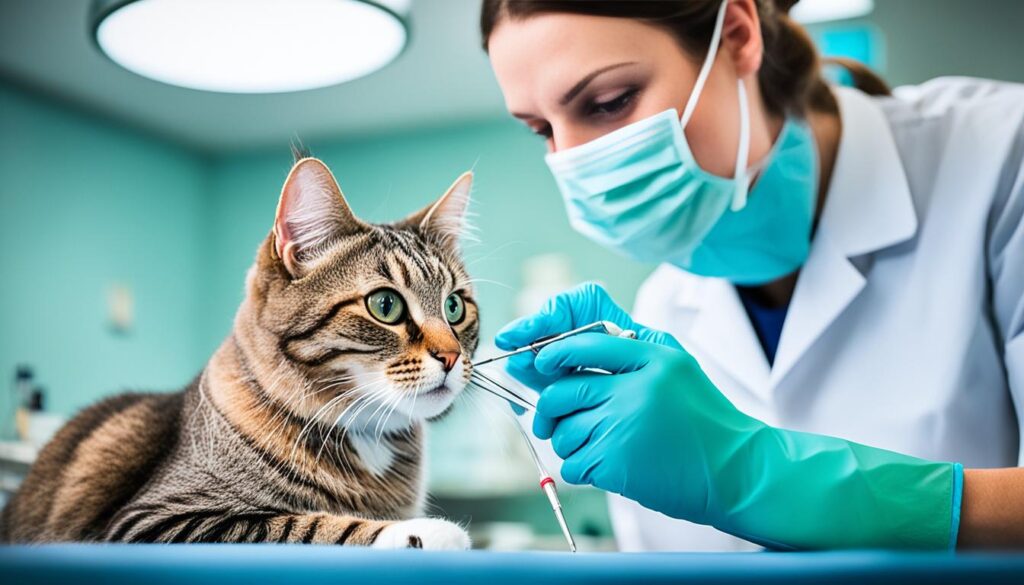
For COVID testing, vets take samples from your cat’s nose or mouth. They use swabs to get these samples. These samples go to a lab for checks. Sometimes, blood tests are also needed to find antibodies.
| Test Type | Description | Importance | Results Time |
|---|---|---|---|
| RT-PCR | Detects viral RNA in nasal or oral secretions | Highly accurate in early detection | 24-48 hours |
| Antibody Test | Identifies past infection through antibodies | Useful for understanding immunity | 1-2 days |
It’s vital to keep cats safe from COVID-19. Use hygiene, general care, and think about vaccines.
Clean living for cats cuts virus spread risks. Wash their stuff like food dishes and beds well. Also, wash your hands well before and after touching them. This keeps things safe.
Keep your cat away from sick people or animals. This helps a lot. Have your cat stay inside and avoid unknown cats. Keeping them healthy with good food and vet visits helps their immune system.
No COVID vaccine for cats yet, but keep their other shots updated. This helps their overall health. Talking to your vet about vaccines is smart.
When a cat gets COVID-19, how we care for them can change a lot. This can mean supportive care at home or more serious help from vets. Knowing the treatment options helps keep cats well.
For mild cases, home care for cats with COVID is key. Make sure they are comfortable, hydrated, and fed. They might need to be kept away from other pets and people. This helps stop the virus from spreading.
Watching their symptoms closely is also important. Here are some good home care practices:
Sometimes, a cat needs more help from a vet. Getting feline coronavirus treatment early from a vet can really help. It can make symptoms better and help your cat recover. Vet care might include:
It’s very important to talk to a vet if your cat has COVID-19. A vet can give the right help quickly. This is important for your cat’s health.
People often wonder if cats with COVID-19 can spread it. The main way COVID-19 spreads is between humans. But, we are still studying how cats might affect the spread of SARS-CoV-2.
Research now shows cats have a low chance of giving COVID to humans. Studies prove cats can catch the virus from both people and other cats. Yet, it’s very rare for them to spread it back to humans. More research is happening to know more about this.
There are steps to take if a cat gets COVID-19. Keep the sick cat away from other animals and people. Wearing masks and washing hands well can help stop the virus. Keeping your home clean and checking on all pets’ health is also good.
By following these tips, cat owners can protect their pets and themselves. It’s important to keep up with new studies and advice on keeping cats healthy during COVID-19.
COVID-19 comes from the virus SARS-CoV-2. It is a sickness that affects the lungs. It mainly spreads among people but can also affect animals, like cats.
COVID-19 can make several animals sick, including cats. In cats, it may cause mild or severe lung problems. This depends on the cat’s health and how much virus they contact.
Cats mainly get COVID-19 from being close to infected people or other sick cats.
While rare, cats can in theory give COVID-19 back to people. We must be careful around sick pets.
Cats at risk have been near sick people. Or they have health issues or weak immune systems.
Yes, some cats might get sicker than others. It depends on their type, age, and health.
Cats may cough, sneeze, have runny noses or eyes, and get very tired.
Really sick cats have trouble breathing. They are very weak, eat less, and could get worse from other infections.
Test a cat if it shows signs of COVID-19. This is especially true if they’ve been near sick people or animals.
A vet takes swabs from the cat’s nose or mouth. Then, a lab looks for the COVID-19 virus.
Keep cats away from sick people. Stay clean. Talk to a vet about vaccines.
No vaccines for cats against COVID-19 are out yet. But scientists are working on it. Ask a vet for updates.
Keep sick cats alone. Make sure they drink water and eat. Give them a cozy spot to rest. Always talk to a vet.
Get a vet if your cat breathes poorly, is very weak, or gets worse at home.
Studies continue, but for now, cats can get and give the virus to other cats. Yet, they rarely spread it to people.
Keep sick cats alone. Keep them away from people and pets. Stay clean. Follow what the vet says to keep everyone safe.