 11
11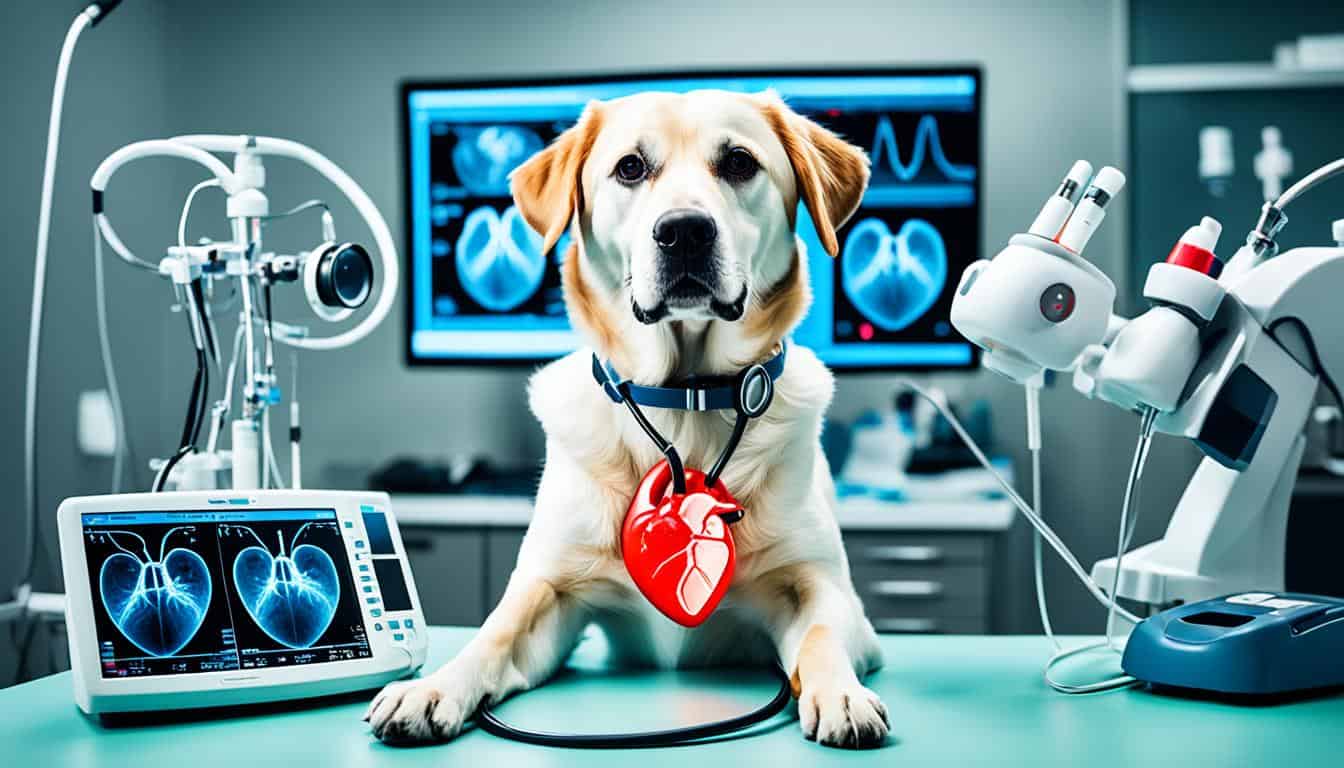

A ventricular septal defect (VSD) in dogs is a heart problem seen mostly in puppies. It happens when the heart’s inner wall doesn’t fully close, leaving a hole. This issue’s seriousness depends on how big the hole is.1.
Various dog breeds can randomly get VSD. However, English Bulldogs and Keeshonds are at higher risk.1. To find out if a dog has VSD, vets use X-rays, EKG, and echocardiograms. These tests show the hole’s size and spot, along with any other heart problems.
For treating VSD, dogs mostly get medicine to manage symptoms. But, serious cases might need surgery. This could be putting a band on the lung artery or even heart surgery.1. Managing VSD with medicine is less costly than surgery. Surgery can cost between $3,000 and $10,000, depending on the method and place.1.
Stopping VSD from happening is key, especially for certain breeds like English Bulldogs and Keeshonds. Breeders should not breed dogs that have VSD or their family members. This can help lower future cases of VSD.1. By focusing on prevention, breeders play a big part in reducing VSD in dogs moving forward.
Depending on its severity, VSD in dogs can cause varying symptoms. Some puppies might have a tiny defect that heals on its own, showing no symptoms. Yet, in more serious cases, dogs can have persistent problems. A distinct sign of VSD is a loud heart murmur found by a vet during an exam2. This murmur happens because blood flows oddly through the hole in the heart’s dividing wall. It’s crucial to understand that more symptoms appear with larger holes and more abnormal flow.
At times, dogs with VSD might get short of breath when active. Not being able to exercise much is also a usual sign since the strange blood flow lowers oxygen levels, making dogs tired quicker. In worst-case scenarios, if not found or treated, dogs can suddenly pass away2. If a dog’s gums turn blue, it means it’s not getting enough oxygen. This is serious and needs quick vet help.
To diagnose a dog with VSD, vets use several tests. X-rays can show if the heart looks weird and pinpoint the issue. An EKG checks for odd heart rhythms. But, an echocardiogram is the best way to see the hole’s size and spot in the heart using ultrasound12.
Using these tools, vets can confirm a VSD in dogs and choose the right treatment12.
| Symptom | Description |
|---|---|
| Heart Murmur | A loud, abnormal sound detected during a veterinary examination. |
| Shortness of Breath | Difficulty breathing, especially during physical activity. |
| Exercise Intolerance | Inability to engage in physical activities for an extended period due to decreased endurance. |
| Sudden Death | Unexplained and abrupt loss of life, especially in severe cases of VSD. |
| Cyanosis | A bluish discoloration of the gums caused by insufficient oxygenation of the blood. |
VSD can affect many different dog breeds. English Bulldogs and Keeshonds are especially prone to this condition1. Studies show that VSD is often passed down in these breeds through genes1.
To stop the spread of this genetic issue, it’s vital to not breed dogs with VSD or their close relatives1.
To highlight how often VSD occurs in certain breeds, look at the table below:
| Breed | Incidence of VSD |
|---|---|
| English Bulldogs | Higher incidence compared to other breeds3 |
| Keeshonds | Predisposition to VSD1 |
| Boxers | Commonly diagnosed with VSD and other septal defects3 |
| Standard Poodles | Higher incidence of ASD3 |
| Samoyeds | Commonly diagnosed with VSD3 |
For those who breed or own English Bulldogs and Keeshonds, knowing about VSD risk is important. By choosing not to breed affected dogs, we can lower VSD cases1.
Ventricular septal defect (VSD) in dogs involves many treatment choices. These choices depend on how serious and big the defect is. The main goals are to ease symptoms, make life better, and stop the disease from getting worse. Some VSDs might close on their own. But others might need medicine or surgery to handle the issues they cause.
Most VSDs in dogs are small and don’t cause big health problems4. These dogs often don’t need special treatment. With regular vet check-ups, dogs with small VSDs can live well.
When VSDs are medium-sized, they can make pressure in the heart go up. Then, doctors might suggest medicine to help with symptoms and heart health. Drugs like water pills, ACE inhibitors, and beta-blockers can help with things like getting tired easily and heart failure.
If a dog has a big VSD, it needs more attention. Big VSDs can cause serious issues like lung pressure problems. It’s important to act fast to stop very high lung pressure. This condition is dangerous if not treated early.
VSD is a common heart problem in dogs, ranking 4th to 6th most common5. This shows why acting quickly to treat it is so important.
Surgery might be needed if the VSD is making the heart work too hard. This can be done with open heart surgery or less invasive methods. New tools and methods have made these surgeries more successful5. Devices designed for each dog can close the defect well, leading to better results.
Making changes at home can also help dogs with VSD. Not doing hard exercise can lessen heart stress. Special food for heart health and keeping a healthy weight are good too. These steps support the heart and slow down symptom progress.
Dogs with bad heart failure usually live 6 to 18 months with treatment4. Regular checks and proper care are key to managing VSD and helping dogs live longer.
| Treatment Option | Description |
|---|---|
| Medical Management | Use of medications such as diuretics, ACE inhibitors, and beta-blockers to manage symptoms and improve cardiac function. |
| Surgical Closure | Surgical intervention to close the VSD, either through open-heart surgery or transcatheter techniques using closure devices. |
| Lifestyle Modifications | Exercise restriction, special diets, and weight management to support cardiac health and minimize symptoms. |
Choosing a treatment for VSD in dogs depends on several things. These include the defect’s size, where it is, and how bad it is. A heart specialist vet needs to closely look at these factors to pick the best treatment. It’s also important to keep going to the vet to check how the treatment is working.
With the right treatment and care, dogs with VSD can enjoy a better life. Dog owners should talk to their vets to choose the best way to help based on their dog’s health.
The cost of treating Ventricular Septal Defect (VSD) in dogs can vary greatly. It depends on the treatment needed. Usually, using medication is the cheapest way to handle VSD in dogs. But, for tougher cases, surgery might be needed, and this can get pricier depending on where it’s done.
A study in the Journal of the American Veterinary Medical Association looked at 109 cases of dogs and cats with VSD from 1992-2013. It gave info on the animals’ characteristics, symptoms, echo test results, and how they did after treatment6. Surgery like putting a band around the pulmonary artery to slow blood flow can cost between $3,000 and $10,0006. Open-heart surgery costs even more6. Owners need to know how much treating VSD might cost. It’s smart to think about your budget and what you can spend.
To keep dogs from getting ventricular septal defect (VSD), it’s important to breed responsibly. This means not breeding dogs who have VSD, or their family members. English Bulldogs and Keeshonds are more likely to get VSD because of their genes.1 Not breeding these dogs can help stop VSD from spreading in these types.
While there’s no sure way to prevent VSD, teaching people about it is key. This includes telling breeders and dog owners about the benefit of genetic checks. Identifying dogs at risk and not breeding them can lower the chances of VSD.1
Preventing VSD needs constant work. Watching over breeding dogs closely helps spot VSD early. Things like genetic tests are important tools here. They help breeders and dog owners make smart breeding choices.1
Knowing about VSD is crucial for its prevention. Breeders and owners need to understand how VSD is passed down. They should also know what signs to look for and how to treat it. This knowledge helps them decide best for their dogs.
It’s also important for vet experts and breed clubs to push for genetic tests. This can tell breeders if a dog might pass VSD to their puppies. With this info, breeders can avoid making those matches.1.
VSD can affect any breed, not just certain ones. That’s why it’s important to look out for it in all dogs. Having a variety of genes in the mix helps lower the risk of VSD and other heart issues.
Breeders, vets, and scientists need to work together on this. They can use breeding plans, genetic advice, and health screenings. These steps can help less dogs get VSD.1
In sum, to prevent VSD in dogs, responsible breeding and genetic tests are key. Add in education for breeders and owners, plus teamwork. Together, these steps can help keep dogs’ hearts healthy.1
VSD in cats is less often seen than in dogs. The defect’s size and place may change. This can lead to a strong murmur on the right side of the heart4. Vets use a special heart scan to see the defect and figure out how serious it is. The future health and treatment for cats with VSD depends on the defect’s specifics4.
Mostly, cats with VSD don’t need treatment and do well. But, they should be watched closely by a vet. This ensures the defect doesn’t get worse or cause other health problems. If needed, there are medicines to help the heart work better4.
Signs of VSD in cats include trouble breathing and not being able to play much. They might also faint, cough, have pale gums, or their heart beats too fast4. Cat owners should know these signs and get their cat checked if anything seems off.
The exact reason why cats get VSD is not known. But, genes might play a role. To prevent VSD in kittens, cats with VSD shouldn’t have babies because the issue might be passed down4.
Even though VSD is more rare in cats than in dogs, knowing about it is vital. Owners should watch for signs, know how it’s found, and what treatments can help. Regular visits to the vet can spot problems early. This lets cats get the right care and stay healthy.
The exact reason why some dogs have ventricular septal defects (VSD) is not known yet. However, experts think it might be related to genetics1. This condition is a type of birth defect affecting the heart1.
To diagnose VSD in dogs, vets do a detailed physical check-up and run blood tests. They also use X-rays and echocardiography to see inside the heart1. These methods help figure out how big and where the hole in the heart is. They also check for any other heart problems1.
Dogs with ventricular septal defects (VSD) may show a variety of signs. These vary based on how big and where the hole is. Some dogs might not show any symptoms at all. Others may face issues like:
Cats, typically, do not show signs when they have VSD.
VSD can change how blood flows and stress the heart. This leads to symptoms in impacted dogs. The seriousness of these symptoms depends on the hole’s size and spot. Dogs with VSD might also face pulmonary hypertension, making their condition worse.
Studies say animals with serious congestive heart failure (CHF) from VSD may live 6 to 18 months with medical care4. It’s crucial for pet owners to know these signs and get vet help if they notice anything odd.
Most dogs with Ventricular Septal Defect (VSD) get help from outpatient treatment. This includes taking medication and not doing too much physical activity. But, severe cases might need surgery, like cardiopulmonary bypass or pulmonary artery banding1.
If a dog has a small VSD, they can live a normal life with the right care and regular vet visits. It’s key to keep up with these visits. This way, the vet can update the treatment to make sure the dog stays healthy1.
Sometimes, medicine alone isn’t enough, and a dog might need surgery. A vet specialist will suggest this if needed. These surgeries can fix the defect and make the dog’s life better. But they can be expensive and have risks, and it’s vital for owners to think about this carefully1.
When living with a dog that has VSD, it’s important to take care of them well. You should follow the vet’s advice about giving meds, limiting exercise, and what to feed them. This helps keep your dog healthy and handle any symptoms they might have1.
It’s very important for dogs with VSD to have regular check-ups at the vet. At these visits, the vet can check on the dog’s health, tweak their treatment if needed, and deal with new problems quickly. How often these checks should happen depends on the dog’s condition and what the vet says1.
Medicine is a big part of treating VSD in dogs. Vets may give drugs to help with symptoms, lessen the heart’s work, and make the dog feel better. These might include water pills, ACE inhibitors, or beta-blockers1.
It’s also key to manage their lifestyle well. Owners should make sure their dogs live in a peaceful place and avoid hard exercise. Eating right and keeping a healthy weight are also crucial for dogs with VSD1.
“Good management and seeing the vet often are key for dogs with VSD. With plans made just for them, including meds, lifestyle changes, and maybe surgery, many dogs can have a pretty normal life.”
VSD affects dogs and sometimes cats. With the right care, many dogs with VSD can have good lives. The outcome for dogs with VSD depends on the defect’s size, location, and how severe it is. It also depends on if there are other health problems. Dogs with VSD need regular vet visits, medicine, and certain lifestyle changes to help them feel better.
Stats5 reveal that VSD is not common in dogs. Muscular-type VSDs are even less common. VSD has a few types based on where they are in the heart. It’s ranked as the 4th-6th most seen heart issue in dogs. Yet, we don’t know exactly how often VSD happens in dogs, especially the muscular-type. Some dogs with small VSDs don’t show signs, even when they’re grown-ups. But, big VSDs that change blood flow a lot might need surgery. Many VSDs in dogs aren’t noticed unless checked for something else. Also, measuring blood flow changes can show how serious a VSD is.
More stats7 show VSD is one of the top five heart problems dogs are born with. Small to medium VSDs usually cause a very loud sound in the heart. VSDs of a medium size might cause heart failure or high blood pressure in the lungs. It’s rare for VSDs in dogs to close up on their own, not like in kids. But, there are two cases where dogs’ VSDs closed up by themselves when they were 12-30 months old. This was seen with heart scans.
Ventricular septal defect, or VSD, is a heart problem dogs can be born with. It’s when the wall between the heart’s two bottom chambers doesn’t fully close. This leaves a hole or gap.
The signs of VSD in dogs change based on how bad the defect is. Some puppies might have a tiny gap that seals up by itself, causing no symptoms. Others may develop a noticeable heart murmur.
This could lead to issues like breathlessness, not being able to exercise properly, or even sudden passing. Some dogs might also turn blue.
English Bulldogs and Keeshonds are more likely to get ventricular septal defect (VSD).
Treating VSD in dogs might involve medication or, for serious cases, surgery.
The price of VSD treatment in dogs varies. Medicines tend to cost less. Yet, surgeries like pulmonary artery banding can be between ,000 and ,000.
To prevent ventricular septal defect (VSD) in dogs, avoid breeding dogs with this condition and their kin.
Yes, cats can get VSD too, but it’s less usual than in dogs.
It’s still unclear what causes VSD in dogs, but genes might play a role. Experts use physical checks, blood work, X-rays, and echocardiography for diagnosis.
Dogs with VSD might struggle to breathe, exercise, or may faint. They could also cough, have pale gums, a fast heartbeat, or pulmonary hypertension. Symptoms relate to the defect’s size and spot.
VSD in dogs is mostly handled without hospital stays, using medicine and exercise limits. Tough cases might need surgery.
Dogs with VSD’s outlook depends on the defect’s specifics and any extra complications. With right care, many can lead a fairly normal life.