 11
11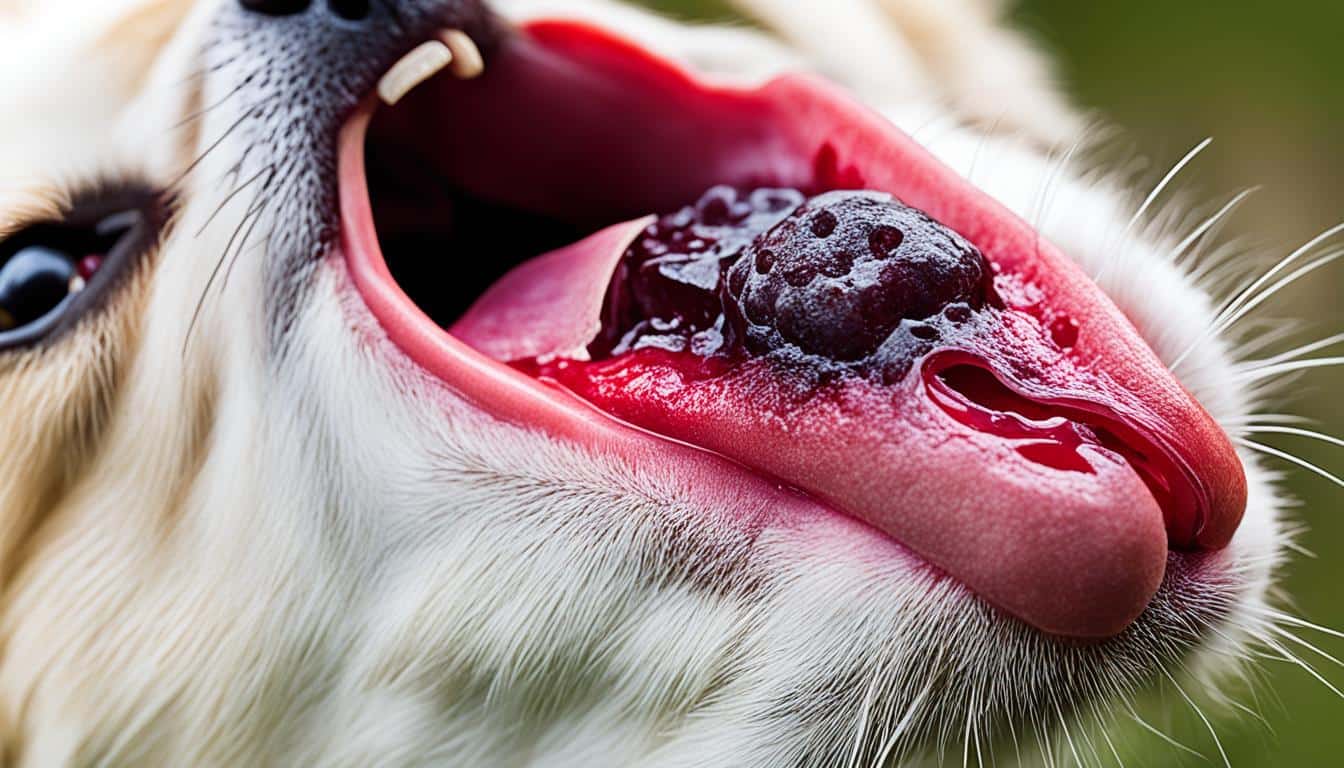

Oral cancer in dogs usually shows up at around 11 years old. But, it can happen at any age1. Dogs can get different types of mouth cancer like melanoma, squamous cell carcinoma, and fibrosarcoma. Some breeds like Weimaraners, German Shepherds, Boxers, Chows, and Miniature Poodles are more at risk1.
The signs of dog mouth cancer can include things like bad breath and drooling a lot. Dogs might also have bleeding from their mouth, find it hard to chew, or have pain in their mouth. Other signs are loose teeth, bumps or lumps in the mouth, swelling on the face, not wanting to eat, and losing weight1. Knowing these signs and getting your dog checked early is key to helping them get better1.
Removing tumors through surgery is a top way to fight oral cancer in dogs, especially when caught early1. Finding the cancer early can mean dogs might live much longer, like 5-17 years. But, dogs found to have cancer later might only live 6 months to a year12. Without treatment, dogs with mouth cancer typically live around 65 days12.
Getting your dog diagnosed quickly and starting treatment fast is crucial to improve their chances and extend their life. Regular teeth check-ups and watching your dog’s mouth health closely are important for finding cancer early1. Depending on the situation, vets might also use radiation therapy and immunotherapy as other treatments1.
Oral cancer in dogs is about cells that grow too fast in their mouth. This can cause tumors. These tumors might be harmless or harmful. The main types are melanoma, squamous cell carcinoma, and fibrosarcoma. No one knows exactly why some dogs get oral cancer. But, genes and the environment might have something to do with it. Also, some types of dogs are more likely to get it than others.
Any dog can get oral cancer, but it’s usually found in dogs around 11 years old. Finding it early and starting treatment fast can make a big difference. Dog owners should know the signs of oral cancer. This way, they can catch it early and help their dogs get better sooner.
- Male dogs are twice as likely to develop oral cancer than female dogs3.
- Certain breeds have a predisposition to oral cancers, including Akita, Cocker Spaniel, Collie, Boxer, Dachshund, Doberman Pinscher, Golden Retrievers, Poodle, Scottish Terrier, and Shetland Sheepdog3.
- Depending on the type of oral tumor present, the metastasis rate can be as high as 80%3.
- Surgical removal is the most common recommendation for treating oral tumors in dogs3.
- In cases where metastasis has been observed, chemotherapy may be discussed as a treatment option for dogs3.
- Targeted electromagnetic thermoablation has been studied as a treatment for certain oral tumors in dogs3.
Early detection of dog mouth cancer is key for successful treatment. Knowing common symptoms helps owners spot signs in their dogs early on. Here are key symptoms to watch for:
The signs of mouth cancer can differ by the tumor’s type, size, and place. If your dog shows any symptoms, they should see a vet right away for tests and advice.
Source:1
The exact causes of oral cancer in dogs are not always clear. Yet, experts have pinpointed some risk factors. Males have a higher chance of getting oral cancer than females3. Breeds like Akita, Cocker Spaniel, and others are at increased risk3.
Being around certain chemicals or infections could also raise their risk. But not every dog with these risks gets oral cancer. It’s a tricky disease, with many causes. More studies are needed to understand it fully.
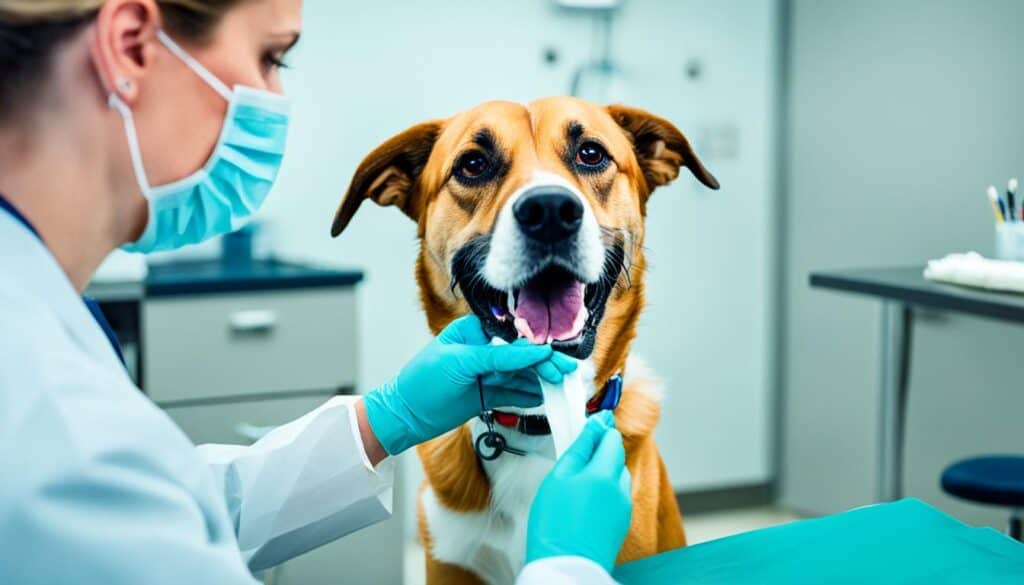
To find out if a dog has oral cancer, a vet must check them well. They look inside the dog’s mouth for tumors or odd spots1. Sometimes, they take a small piece of tissue to study it closer1. They might also use a thin needle to get cells from the growth for a closer look under a microscope1. The vet might suggest X-rays, CT scans, or MRIs too. These help see how big the tumor is and where it is located1.
The tests show if the tumor is harmful (malignant) or not (benign). They also show how the tumor affects the dog’s health. This info helps vets create the best plan for treating the dog with mouth cancer.
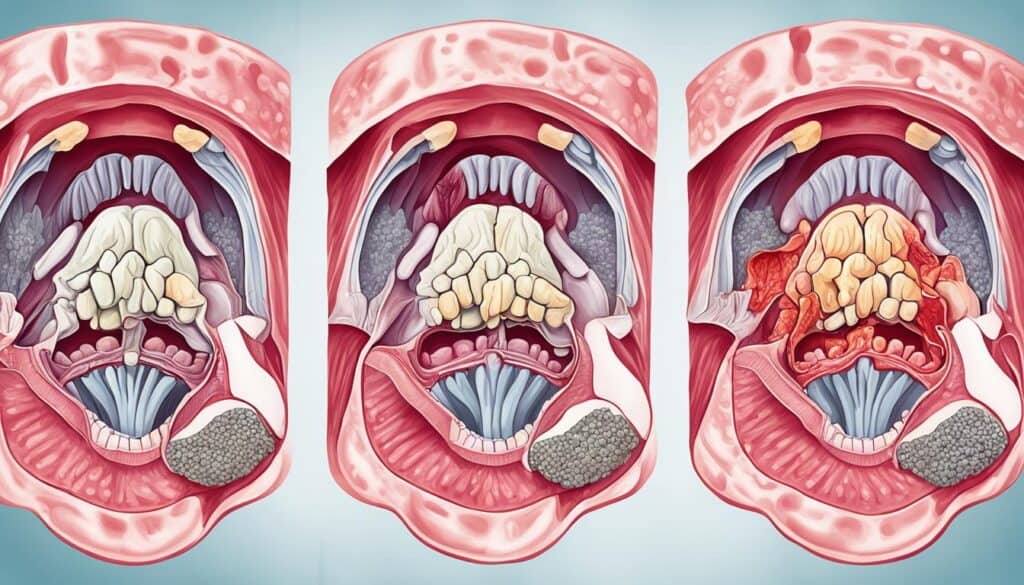
Finding the cancer early is key to better outcomes for the dog1. Catching it early means starting treatment soon, which can be very effective. Watch for signs of mouth cancer in dogs. These signs include bad breath that won’t go away, a lot of drooling, bleeding from the mouth, trouble chewing, pain in the mouth, teeth that move, lumps or bumps in the mouth, swelling on the face, not wanting to eat, and losing weight without a reason1. If you see any of these, take your dog to see a vet.
By doing thorough checks and using special testing methods, vets can figure out if a dog has mouth cancer. Then, they can make a plan that meets the dog’s specific needs.
There are several ways to treat oral cancer in dogs. Surgery is often the first step. It aims to remove the tumor. The size, type, and location of the tumor determine the surgery’s extent.3 In some situations, part of the jaw may be removed to get rid of the cancer completely.
Other treatments may also be suggested. Radiation therapy is one, targeting leftover cancer cells to prevent return. It uses high-energy beams to kill these cells. Also, immunotherapy might be an option. It boosts the body’s immune system to attack cancer. One treatment includes the DNA melanoma vaccine, Oncept®.3
If cancer spreads, chemotherapy might be needed. This uses drugs to kill cancer cells all over the body. It can work alongside surgery and radiation to get better results.3
Choosing the right treatment for dog oral cancer requires considering many factors. The dog’s health, tumor type and stage, and each treatment’s pros and cons are key. Vets and pet owners should work together, focusing on the dog’s needs. Each dog’s situation is different, requiring a tailored treatment plan.
Treatment can work well in some situations, but how well varies. Many things affect outcomes, including how early the disease is caught and the dog’s overall health. Catching it early and acting fast increases the chance of success. Regular vet visits and watching for any changes in the dog’s mouth are important. With the right treatment and care, many dogs with oral cancer can still have a good quality of life.3
| Treatment Options | Success Rates | Considerations |
|---|---|---|
| Surgery | Varies, depending on tumor type and stage | May involve removal of a portion of the jaw |
| Radiation Therapy | Varies, but may improve outcomes when used in combination with surgery | Can target remaining cancer cells |
| Immunotherapy | Varies based on specific treatment and response | Can enhance the body’s immune response to cancer cells |
| Chemotherapy | Varies, but may be considered in cases of metastasis | Can target and kill cancer cells throughout the body |
Dog mouth cancer is serious and needs quick action for the best outcomes. Survival rates depend on the cancer stage and treatment success4.
Finding the tumor early is key for a good prognosis. Dogs with early diagnoses can live long, happy lives4. If the cancer has spread, dogs may only live 6 months to a year5.
Without treatment, dogs with oral cancer may live around 65 days5. Regular vet visits are crucial for catching any new tumors early4.
The outlook varies based on cancer type, stage, and the dog’s health. Working with a vet for the right treatment plan is critical4.
The table below shows survival times for various oral cancers in dogs:
| Type of Oral Cancer | Average Survival Staff |
|---|---|
| Melanoma | Around 6-12 months, depending on the stage and treatment |
| Squamous Cell Carcinoma | Usually shorter than melanoma |
| Fibrosarcoma | Usually shorter than melanoma |
| Osteosarcoma | Depends on the disease extent and treatment |
| Osteochondrosarcoma | Depends on the disease extent and treatment |
| Mast Cell Tumors | Depends on the stage and treatment |
| Hemangiosarcoma | Depends on the stage and treatment |
These times are general estimates and can vary with each dog. Always see a vet for the most accurate prognosis4.
Statistics offer some prognosis insight, but every dog’s case is unique. It’s essential to work with a vet oncologist for the best care plan4.
It’s not always surefire to prevent mouth cancer in dogs, but pet owners can take steps to lower the risk.
One key step is focusing on your dog’s dental health. Regular tooth brushing and vet dental check-ups are vital. Good oral hygiene keeps your dog’s mouth healthy and can spot early warning signs.
By keeping the teeth clean and avoiding plaque, you’re helping fight off oral cancer.
You can also cut down on your dog’s exposure to cancer-causing agents. Keep them away from smoke and harmful chemicals. Making sure they live in a clean, safe place lowers cancer risk.
Feeding your dog a healthy diet is crucial too. A nutritious diet boosts their overall health and immune system. This might help keep oral cancer at bay. Talk to your vet about the best food for your dog.
Don’t skip vet visits. They’re key for spotting mouth issues early on. The vet will check for any unusual signs in your dog’s mouth. Catching and treating any problems early vastly increases success chances.
Following these steps can help protect your dog from mouth cancer. Always remember, catching it early and getting quick vet help is critical for a good outcome.
If your dog has bad breath, bleeds from the mouth, struggles to chew, or has bumps in their mouth, see a vet. Getting help early can make treatment more effective. This means a better chance for your dog to get well.
Dogs most often get mouth cancer at age 116. If found late, they may live only 6 months to a year6. Without quick treatment, dogs with oral cancer might only survive for 65 days6. So, it’s vital to get your dog checked by a vet right away.
The vet will check your dog carefully. They might need to do tests, like taking samples or doing scans, to see if it’s oral cancer6. Some dog breeds have a higher chance of getting this disease. This includes Weimaraners, German shepherds, boxers, chows, and miniature poodles2.
Finding oral cancer early can mean surgery to remove it. This could help your dog live 5 to 17 more years2. But if caught late, they might have only 6 months to a year left. This is because the cancer could spread to other body parts2.
Caring for a dog with oral cancer is a big task, but there are ways to make it easier. Creating a stress-free living space, keeping a healthy diet, managing pain, and following the vet’s advice are key. These steps help you take good care of your pet.
Seeing the vet often and talking about any changes in your dog’s health is vital. This helps in managing the condition and getting support.
To help a dog with oral cancer, it’s important to make their space stress-free. A quiet, cozy area is ideal for rest. Try to keep it calm and avoid loud noises and busy activity that might upset them.
A good diet supports a dog’s health, especially with oral cancer. Talk to a vet to plan meals that meet your dog’s needs, considering any eating problems. Soft or wet food might be easier for them to eat.
Keeping your dog comfortable is a must. A vet may prescribe pain meds or suggest treatments like acupuncture. Watch how your dog reacts to treatments and tell your vet about any issues.
It’s crucial to stick to the vet’s treatment plan. Treatments may include surgery, radiation, or immunotherapy. Always follow care instructions and take your dog to all follow-up checks. This helps in changing the plan if needed.
Taking care of a dog with oral cancer is tough emotionally. Being there for your pet is key. Spend time together, do things they like, and stay positive. It’s also good to connect with others in similar situations for support.
Regular check-ups with the vet keep track of your dog’s cancer. These visits check their health, plan effectiveness, and spot any new issues. Always go to these appointments and talk openly with your vet.
In summary, caring for a dog with oral cancer involves several important steps. Make their space comfortable, ensure a healthy diet, manage any pain, follow the vet’s plan, give lots of love, and go to vet check-ups. By focusing on these, you can help your dog live a better life.
Oral cancer in dogs is a challenging illness. It needs to be found early and treated quickly for the best results. Knowing the signs, risks, and treatment choices helps owners care for their pets’ health.
Oral tumors form 6 to 7 percent of all tumors in dogs, and most are cancerous7. The top oral cancers in dogs include malignant melanoma and squamous cell carcinoma8. Dogs at higher risk are often older, male, and specific breeds like poodles and spaniels8. It’s vital to catch these early, as they can spread fast7.
Keeping up with dental care and regular vet check-ups is essential. Watch for signs like drooling, bad breath, and difficulty eating9. Even dogs without swollen lymph nodes can have cancer spread in 40 percent of cases7. Veterinary oncologists run studies to learn more about treating these cancers9.
If you notice any issues, see a vet right away for a diagnosis and treatment plan. Treatments may include surgery or chemotherapy, depending on the dog’s specific needs7. Dogs that get diagnosed and treated early tend to live longer, sometimes years longer, depending on the cancer and treatment7. Catching the disease early and getting the right treatment can help dogs live comfortably for much longer.
Dogs with mouth cancer may have bad breath and drool a lot. They might bleed from the mouth and have trouble chewing. They could also have oral pain, lose teeth, and not want to eat, leading to weight loss.
The most common oral cancers in dogs are melanoma, squamous cell carcinoma, and fibrosarcoma.
Yes, some breeds like Weimaraners, German Shepherds, Boxers, Chows, and Miniature Poodles have a higher oral cancer risk.
To diagnose oral cancer, a vet will do a thorough check. This includes looking inside the mouth and possibly doing biopsies and scans.
Treatment usually starts with surgery. In some cases, doctors may also suggest radiation and immunotherapy.
The outcome for dogs with oral cancer depends a lot on how early it’s caught. Early detection tends to lead to a better prognosis.
Preventing oral cancer in dogs isn’t always possible. But, regular teeth cleaning, avoiding carcinogens, and quick vet visits can help lower the risk.
If your dog has bad breath, bleeding, or lumps in its mouth, see a vet. It’s crucial for a proper diagnosis and treatment plan.
To care for a dog with oral cancer, ensure they’re comfortable and eating well. Also, manage their pain and stick to the treatment plan.
It’s key to catch oral cancer early, get treatment quickly, and have regular vet visits for a better outcome.