
 11
11

Worms can go from cats to people and make them sick. This is a big health issue. Cats carry roundworms that may cause diseases in humans. The most common ones are Toxocara canis (mostly from dogs) and Toxocara cati (from cats). They are found all over the world.
These worms don’t usually move from one person to another. They infect humans when they swallow tiny worm eggs from dirty soil or pet waste. The worms’ eggs then hatch inside the body.
To avoid worm diseases, keep clean, worm your pets, and throw away waste properly. Knowing how worms move from cats to us helps us stop these diseases. We can keep ourselves safe with the right steps.
Worms can go from cats to people. We look at . Cats carry parasites like roundworms. These parasites complete their cycles inside them. Contact with dirty soil or feces spreads worms from cats to humans. Humans pick up these parasites accidentally.
People with weak immune systems are at higher risk. We must focus on the risks of cat worms for human health. The danger varies. Being around places with cat feces increases the chance of getting worms. Staying clean and managing the environment is key to staying safe.
Talking about how humans get worms from cats, it’s clear we need to be careful. Keeping clean and other steps can lower the risk of getting cat worms. Keep areas where pets hang out clean. Also, take your pets to the vet for check-ups.
Knowing how worms move from cats to people helps lower health risks. Teaching people about this can protect our health, especially for those most at risk.
| Source of Infection | Preventive Measures |
|---|---|
| Contaminated Soil | Avoid contact with unknown soils, especially for children. |
| Cat Feces | Regularly clean litter boxes with gloves and sanitize regularly. |
Understanding transmission of worms from cats to humans is important. It helps us protect our health and our communities. By being aware and taking preventive steps, we can minimize the risks of cat worms for human health.
Cats can pass several types of worms to humans. It’s important to know about these worms. They are a health risk to people.
Roundworms, or Toxocara spp., are common from cats. They live in cat intestines and lay eggs. These eggs can end up in humans.
Ancylostoma spp., or hookworms, also come from cats. They can get into people through the skin. They cause skin problems and sometimes anemia.
Tapeworms are not common but still harmful. People get them from infected fleas. They can lead to stomach issues.
| Type of Worm | Scientific Name | Transmission Route | Common Symptoms |
|---|---|---|---|
| Roundworms | Toxocara spp. | Ingestion of contaminated soil | Abdominal pain, fever |
| Hookworms | Ancylostoma spp. | Skin penetration | Itching, anemia |
| Tapeworms | Various species | Ingestion of infected fleas | Digestive issues |
Roundworms, called ascarids in science, start their life in an animal’s intestines. These creatures, like Toxocara canis and Toxocara cati, lay eggs. These eggs leave the host’s body in poop. Once they reach the soil, they become infectious larvae.
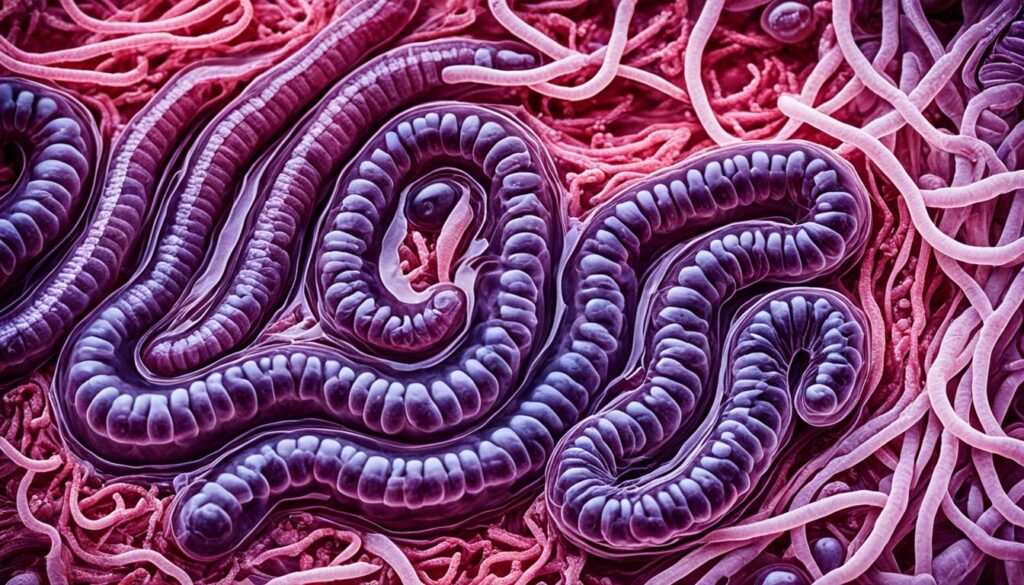
People get roundworms by swallowing these larvae-filled eggs. This happens when they touch soil or spots with larvae on them. Kids are especially at risk. After being swallowed, the larvae move through the body, causing health problems.
In animals, roundworms grow to adults. But in people, this growth stops. The larvae move in the body without becoming adult worms. They harm tissues, which is called larval migrans. This shows how Toxocara canis and Toxocara cati affect people differently than animals.
Understanding roundworm life cycle helps us know how they impact humans. This knowledge underlines the importance of taking steps to avoid roundworm infection. It explains the complex way these worms move from cats to people.
There are many ways people can get worms from cats. It’s key to know how to avoid cat worm infections in humans. People might swallow parasite eggs found in dirty soil, poop, or things cats touch. Kids often get these eggs on them by playing outside.
Certain actions make it easier to get worms from cats. Not washing hands well after touching cats or their litter boxes is risky. Also, eating meat that’s not well-cooked and has parasites can make you sick. It’s important to learn how do humans get worms from cats to prevent avoiding cat worm infections in humans.
Taking your pet to the vet often and getting them dewormed helps a lot. Keeping clean spaces for pets and people lowers health risks from these infections.
The risks of cat worms for human health are different across groups. Certain people are more at risk due to their specific vulnerabilities.
Children face a high risk from cat worms. Their growing immune systems and love for outdoor play increase their risk. They often touch contaminated soil or objects, swallowing worm eggs by accident.
It is important for parents and caregivers to teach children good cleanliness habits. This helps lower their risk of getting worms.
Immunocompromised individuals are very much at risk from cat worms. This includes people receiving chemotherapy, those with HIV/AIDS, or those who had organ transplants. Their weaker immune systems make it hard to fight off infections.
Worm infections can be more dangerous for them, possibly causing severe problems. It is vital to ensure pets are healthy and maintain strict cleanliness. This helps keep immunocompromised individuals safe from worm infections.
Cat-to-human worm infections can cause many symptoms. These range from mild discomfort to serious health issues.
People with common symptoms of worm infections may have stomach problems like diarrhea and pain. They might also feel sick to their stomach. Coughing and itching, especially if the skin touched dirty places, can happen too. It’s key to notice these cat-to-human worm transmission symptoms early. Then, getting help quickly is easier.
In bad cases, people can face tougher complications. For example, ocular and visceral larva migrans are serious. Ocular larva migrans can hurt your sight or even cause blindness. Visceral larva migrans can damage your organs a lot. These severe complications show why it’s crucial to spot and treat the problem fast. This way, you can avoid bigger health problems later on.
| Symptom Type | Description |
|---|---|
| Gastrointestinal Distress | Includes diarrhea, abdominal pain, and nausea. |
| Itching | Commonly occurs from direct skin contact with contaminated soil or feces. |
| Ocular Larva Migrans | Can lead to vision problems and potentially cause blindness. |
| Visceral Larva Migrans | Involves migration of larvae causing organ damage. |
Identifying cat worm infections starts with lab tests. These tests find parasites. It’s key to catch the issue early. This helps pick the right treatment for worm infections from cats. Many methods help doctors find the infection type and how bad it is.
There are many ways to spot cat worm infections in people:
Treating worm infections from cats depends on the worm type and how serious the infection is. Here are some common treatments:
Finding cat worm infections early is key. It ensures the treatment for worm infections from cats works well. This helps avoid long-term health problems and aids in recovery.
Stopping worm infections from cats means keeping things clean and watching your cat’s health. Doing these things well lowers the chance that people will catch worms from cats.
Being clean is key to stopping worm infections from cats. Always wash your hands with soap and water after touching cats or their litter. It’s also vital to keep where you prepare food clean and away from germs. Also, tell your family, especially kids, not to touch animal poop to avoid getting worms.
Seeing the vet regularly is very important to keep cats from getting worms. Check-ups and deworming at the right times can find and get rid of worms early. Vets make a plan for deworming that fits the cat’s life and where it lives, helping keep pets and people safe.
Also, having a clean place for your cat to live and teaching people about vet visits are big steps in stopping worms. Taking care of your cat and teaching others makes everyone, including cats and people, healthier.
| Prevention Measure | Benefit |
|---|---|
| Handwashing | Reduces the risk of ingesting parasitic eggs |
| Routine Veterinary Visits | Early detection and treatment of worms |
| Educating Family Members | Minimizes exposure to contaminated soil or feces |
| Clean Living Spaces | Prevents environmental contamination |
Kids are often close to pets. Teaching them about pet hygiene is key to stop cat worm risks. By showing the importance of washing hands after touching pets, we cut down health risks.
Also, it’s important to avoid playing in dirty areas. Using fun games and pet care books teaches good habits. Making sure kids know the risks of cat worms for human health builds lifelong hygiene.
Here’s a list of good practices for teaching kids about pet hygiene. It also shows how to lower the risks of cat worms:
| Practice | Benefits |
|---|---|
| Handwashing | Reduces transmission of parasites and bacteria |
| Avoiding Contaminated Areas | Prevents accidental ingestion of parasite eggs |
| Engaging Educational Programs | Encourages consistency in hygiene practices |
Knowing about cat-to-human worm spread is key for our health and pets’ well-being. We can lower risks by working together and being aware. This means learning, being clean, and taking cats to the vet regularly.
Education helps us all, especially those at higher risk, fight worm infections. Washing hands well after touching cats or their litter is key. Pets also need regular treatments from vets to keep worms away.
Combining these steps helps stop worms from moving from cats to people. We need to keep teaching, stay clean, and see the vet often. This helps us and our cats stay healthy together. Learning about worm spread is important for a safe, healthy community for us and our pets.
Humans can get worms from cats by touching contaminated soil or feces. People can also get infected by touching objects that have worms on them. It’s important to wash hands well to stop these worms from spreading.
Cats can pass roundworms, hookworms, and tapeworms to people. These worms can make humans sick in different ways.
Roundworms lay eggs inside the cat’s guts. These eggs then turn into larvae in the soil. When humans swallow these eggs, the larvae move through the body. However, these roundworms don’t grow up in humans like they do in animals.
Kids and people with weaker immune systems can get really sick from cat worms. They’re more likely to have bad symptoms and problems because their bodies can’t fight the worms well.
People with worm infections might feel stomach pain, itchiness, and cough. In worse cases, it could lead to loss of sight or harm to organs.
Doctors use lab tests to find these worm infections. They then give medicine based on the type of worm and how bad the infection is. Catching it early helps make treatment work better.
Keeping hands clean, especially after touching cats or their litter, helps prevent worms. Cats should also see the vet regularly. It’s important to handle waste safely and teach everyone how to stay safe.
Teaching kids about keeping clean around pets is key because they’re more likely to catch worms. They often play where they might touch worm eggs. Learning about hygiene can help them stay worm-free.