 11
11

Many of us love our cats deeply. But, we must know the health risks they might bring. Cats can pass diseases to humans, known as zoonotic diseases. These include bacterial, fungal, and other infections, impacting different body parts.
People with weak immune systems face more risk. This includes those with AIDS, cancer, the elderly, and babies. By keeping clean, caring for your cat, and taking precautions, we can lower the disease risk.
Cats bring joy to many homes but can also pose health risks. Understanding zoonotic diseases from cats is crucial. Knowing how to address these risks can improve health.
To avoid zoonotic diseases, pet owners must learn about possible infections. Cats can carry bacterial, parasitic, and fungal diseases. These can spread through bites, scratches, or touching an infected cat. Knowing this helps in taking preventive steps.
Talking to veterinarians and healthcare experts is vital for risk management. They can give advice on vaccines and hygiene to lower disease transmission. This ensures pet owners know the risks and how to reduce them.
Good hygiene is key to preventing zoonotic diseases. Wash your hands after touching cats or cleaning their litter. Regular vet visits for check-ups and shots are also important. These practices help keep both cats and humans safe.
Learning about zoonotic diseases and taking steps to prevent them is important. Good communication and hygiene are crucial. These actions protect both pet owners and their cats.
Cats can give humans zoonotic bacterial infections. Knowing and taking action can cut down risks a lot.
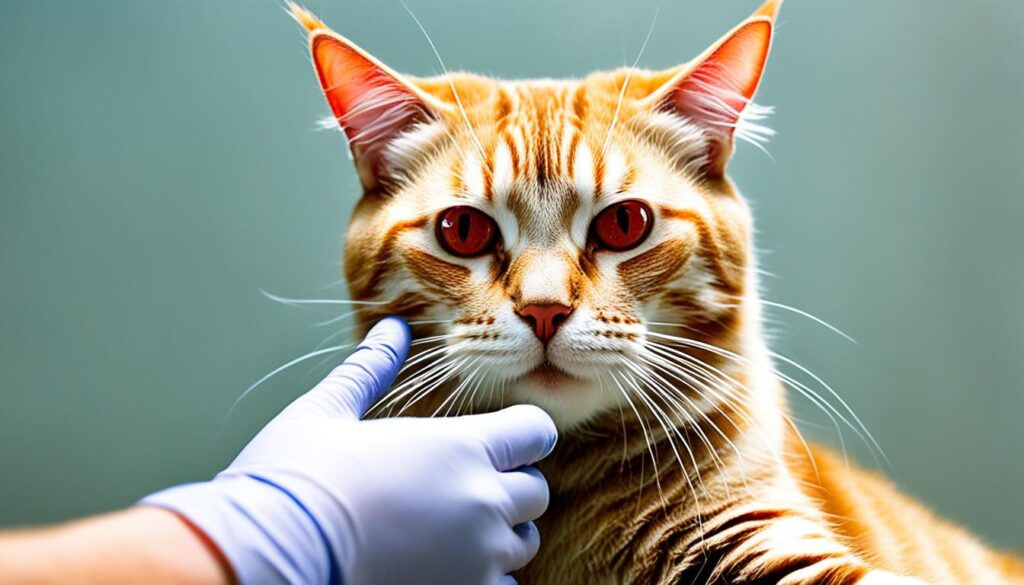
Cat scratch fever comes from Bartonella henselae bacteria. Cats spread it through scratches or bites. It can cause swelling, fever, and for some, bigger health problems.
Keeping fleas away and washing hands well are key to avoid this.
Pasteurella multocida lives in cat mouths. It causes painful bite infections. If ignored, the pain can spread, becoming serious.
Clean bites right away. See a doctor if you feel worse. It’s important to act fast.
Cats can carry Salmonella too. This germ spreads through cat waste. It leads to tummy upset and diarrhea.
Keep places clean and stay hygienic to dodge zoonotic bacterial infections.
| Infection Type | Cause | Symptoms | Prevention |
|---|---|---|---|
| Cat Scratch Disease (CSD) | Bartonella henselae | Swelling, fever, complications in immunocompromised individuals | Flea control, hand hygiene |
| Pasteurella Multocida | Bacteria in cat’s mouth | Painful infections at bite sites | Immediate cleaning, medical attention |
| Salmonella Poisoning | Salmonella bacteria | Gastrointestinal issues: diarrhea, stomach cramps | Environmental cleanliness, good hygiene |
Cats can give people parasitic infections if not taken care of. Knowing about them and treating them fast is key. This stops the spread.
Fleas on cats are very common and can pass on diseases. They spread Cat Scratch Disease and tapeworms. Cleaning well and seeing the vet regularly helps.
Scabies comes from mite bites, causing itchy skin. It’s rarer but important to catch early. Treating both pets and people is needed to stop it.
Some worms in cats, like roundworms and hookworms, are bad for humans, especially kids. Going to the vet often and keeping pets clean are ways to prevent this.
| Parasite | Transmission Method | Diseases Caused |
|---|---|---|
| Fleas | Direct contact | Flea-transmitted diseases, Tapeworms |
| Mites | Direct contact | Scabies |
| Roundworms | Ingestion of eggs | Visceral larva migrans, Ocular larva migrans |
| Hookworms | Penetration of larvae through skin | Visceral larva migrans, Ocular larva migrans |
Fungal infections are often found in people who are close to animals. Ringworm, a common zoonotic disease, comes from a fungus in cats. Knowing how it spreads, its signs, and how to stop it is key to keep humans and cats safe.
Ringworm moving from cats to people is something to watch for. It’s easy to catch and shows clear signs. Most often, it happens when someone touches an infected cat’s skin or fur. The main symptoms are round, itchy spots. They can show up anywhere like the scalp and feet. Homes with many pets can get full of fungus spores, so cleaning well is crucial.
To manage ringworm, you need to:
Doing these things helps lower the chance of getting and spreading cat fungus. This means people and cats can live together more safely.
| Actions | Benefits |
|---|---|
| Vigilant Hygiene | Reduces spore transmission |
| Antifungal Treatments | Effectively treats infection |
| Regular Vet Check-ups | Prevents future outbreaks |
| Maintaining Clean Environment | Curbs contamination risk |
Protozoal infections are big health worries with cats. These problems can get serious if not prevented or understood well. We will look into key diseases from cats.
Cryptosporidiosis comes from a parasite called Cryptosporidium. Cats with the parasite can pass it through their poop. It can cause tummy troubles like diarrhea and cramps. Keeping clean and checking your cat’s poop helps avoid it.
Cryptosporidiosis can hit hard, especially in people with weak immunity or kids.
Giardiasis spreads through touching poop from infected cats. It’s caused by Giardia parasites. This leads to symptoms like watery diarrhea and tummy pain.
To stop giardiasis, take your cat to the vet often and clean well. Stay hygienic and avoid bad water to prevent it.
Toxoplasmosis is well-known for its link to cats. The parasite Toxoplasma gondii in cat poop is risky, especially for pregnant women and the weak. It can cause flu-like symptoms and muscle pains.
Knowing about toxoplasmosis helps us stop it. Don’t eat raw meat and keep hands and litter clean.
Regular vet visits and clean habits help keep these diseases away. They protect people and cats too.
It’s important to know if cats can make people sick. Diseases from cats can spread to humans. How likely you are to get sick depends on your health and how well you prevent diseases.
Most won’t get sick from cats thanks to strong immune systems and good care. But, the elderly, babies, and those with weak immune systems are at higher risk. Staying clean is key to staying healthy.
Regular veterinary care is highly recommended as it can help in early detection and treatment of potential zoonotic diseases from cats. Ensuring your feline companion is up-to-date with vaccinations and deworming can significantly reduce health risks.
Taking care of your pet the right way is very important. Keep their litter boxes clean and wash your hands after touching them. Avoiding stray or wild cats also helps keep diseases away.

Cats bring joy and friendship to our lives. Yet, for some, they bring health risks. People with a weak immune system, the elderly, and babies face more dangers from cat diseases.
Older adults may have other health issues that make them vulnerable. Even small infections can become serious for them. Babies are still building their body’s defense against germs. This puts them at greater risk from cat diseases.
| Population | Health Risk from Feline Diseases | Preventive Measures |
|---|---|---|
| Immunocompromised Individuals | Increased susceptibility to severe infections like Toxoplasmosis | Regular vet care, avoiding direct contact with cat feces |
| Elderly | Higher risk of complications from zoonotic diseases | Enhanced hygiene, maintaining a clean environment |
| Infants | Susceptible to serious infections and parasites | Keeping cats away from infants, regular health check-ups |
To protect these groups, public health steps and vet advice are key. Doctors and vets working together help keep everyone, including cats, safe and well.
It’s important to stop diseases that spread from cats to people. Using good hygiene, seeing the vet often, and keeping places clean are key. These steps help keep everyone safe.
Washing hands well is easy and keeps you safe. Always wash with soap and water after touching cats or their stuff. It gets rid of germs that can make you sick. Using hand sanitizers that have at least 60% alcohol helps too, especially when you can’t use soap and water.
Vet visits are important for cats and people around them. Going for check-ups and getting shots stops diseases. Taking care of cats this way stops diseases from spreading to people. Vet visits find and fix health problems early, keeping everyone healthy.
Keeping your home clean helps stop diseases. Clean and disinfect places where cats hang out. This kills germs. Stay away from wild or stray cats because they might be sick. Teaching pet owners to keep cats inside stops them from getting and spreading diseases.
Yes, cats can carry diseases that can spread to humans. These include infections caused by bacteria, parasites, and fungi. Keeping clean and taking your cat to the vet can lower these risks.
Cats can give people Cat Scratch Disease (CSD), Pasteurella multocida from bites, and Salmonella. These can range from minor discomfort to very serious sickness, especially if your immune system is weak.
Cat fleas can spread diseases like Cat Scratch Disease and tapeworms to people. Using good flea control and staying clean can lessen these risks.
Yes, cats can pass scabies, caused by mites, to humans, causing itchy spots. To treat it, clean thoroughly and get medical care for both humans and the cat.
Intestinal worms from cats, like roundworms and hookworms, can be very harmful. They can cause major health problems, especially for kids. Keep clean and take your cat to the vet often to prevent this.
Ringworm, a fungus, spreads by touching an infected cat. It looks like round, itchy spots. Cleaning your house and using antifungal medicines can control and prevent it.
Cats can spread protozoal diseases like Cryptosporidiosis, Giardiasis, and Toxoplasmosis. These diseases can upset your stomach and cause big health issues, mostly for pregnant women and people with weak immune systems. To avoid them, check your cat for these diseases and don’t eat raw meat.
Toxoplasmosis can harm unborn babies if a pregnant woman gets it. To stay safe, pregnant women should not touch cat litter or eat undercooked meat. They should also take their cats to the vet regularly.
People with weak immune systems should wash their hands often, get their cats checked by a vet frequently, keep their environment clean, and stay away from stray or feral cats. This can help avoid diseases from cats.