
 11
11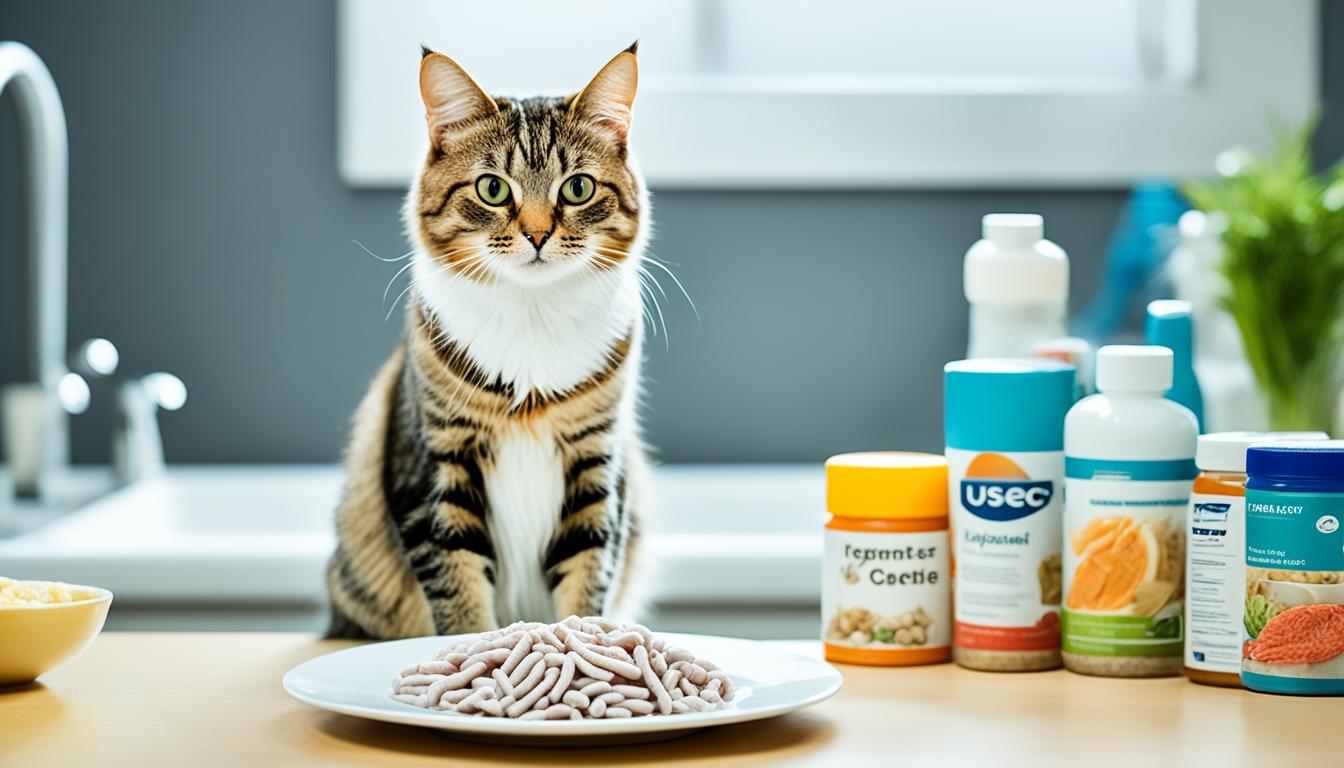

Tapeworms in cats are common but usually not a big health problem. They are easy to cure. The worry is if people can get these worms from cats. The tapeworm Dipylidium caninum is common in cats but rarely harms people.
Yet, the Echinococcus tapeworm is rare but can be harmful to people. Getting this worm happens by accidentally swallowing a flea with the worm’s larvae. This is a bigger issue for kids in places with lots of fleas.
Many pet owners deal with tapeworms in cats. There are mainly two types of tapeworms in cats: Dipylidium caninum and Echinococcus. Knowing about these worms is important due to the cat tapeworm to human infection risk.
Dipylidium caninum is often found in cats but isn’t much of a threat to people. On the other hand, Echinococcus is less common but can be serious if it gets to humans.
How do humans get tapeworms from cats? People can get them by accidentally swallowing infected fleas. They might also get them by eating infected small animals.
Cats can get tapeworms by eating infected fleas. This usually happens when they clean themselves. They can also get them by eating small animals that have the parasite. If you see pieces that look like rice grains in your cat’s waste, it might have tapeworms.
It’s really important to catch and treat this early. Doing so helps keep your cat healthy. It also lowers the cat tapeworm to human infection risk.
The idea of getting tapeworms from cats might worry you. But, knowing how they spread, seeing the risks, and clearing up myths can help calm your fears.
Humans can get Dipylidium caninum from cats if they accidentally swallow a flea with tapeworm eggs. While Echinococcus spp. is also dangerous, it’s less likely to infect humans. People might be exposed by eating tainted food or being in places with lots of fleas.
Kids are more at risk of getting tapeworms from cats. This is because they often put their hands in their mouths. They might do this more in dirty places or in homes without good flea control. Fleas are the middlemen in this, so stopping fleas is key to prevent tapeworms.
Some fear tapeworms from cats more than needed. Many think that just being near or petting cats can infect them. This is not true. The main way people get tapeworms from cats is by swallowing infected fleas. Knowing this helps pet owners protect themselves without unnecessary worry.
Getting a cat tapeworm infection in humans might not always show signs. It’s easy to miss. But when symptoms show up, they mostly affect the stomach area. It’s very important to notice symptoms early. This helps get medical help fast.
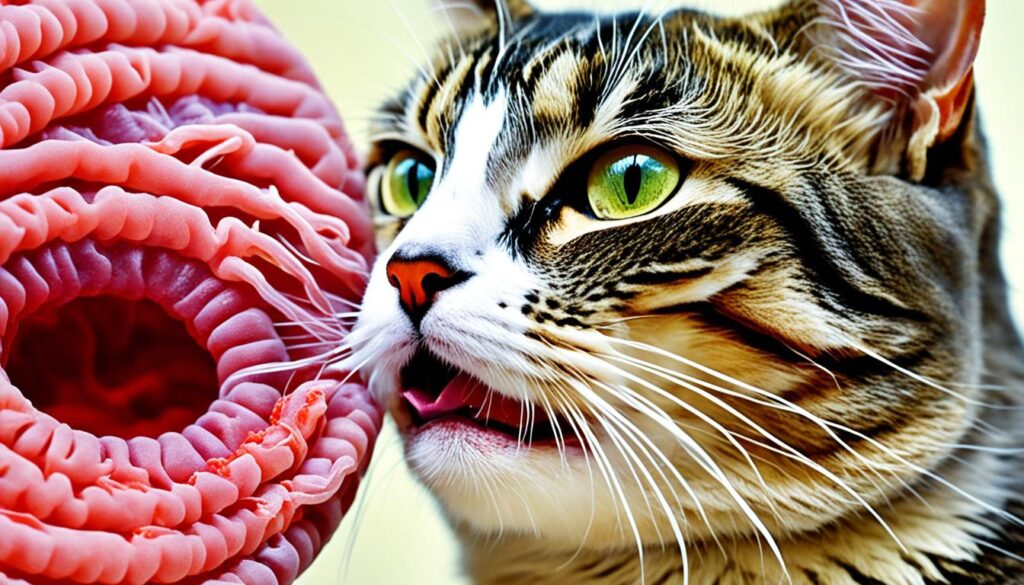
Stomach problems can happen with a tapeworm infection. You might feel sick, have stomach pain, or your eating habits might change. You could also have problems like diarrhea or constipation. These issues can be mistaken for less serious stomach problems. That can make it hard to figure out what’s wrong right away.
There could be other signs of a tapeworm infection besides stomach issues. You might lose weight without trying, feel really tired, or show you’re not getting enough vitamins. Spotting these signs can lead to better checks and find out if you have tapeworms.
| Symptoms Category | Common Symptoms |
|---|---|
| Gastrointestinal | Nausea, Abdominal Discomfort, Appetite Changes, Diarrhea |
| Other Symptoms | Weight Loss, Malaise, Nutrient Deficiency Signs |
Finding tapeworm infections in humans correctly is key to treating them well. Doctors use many ways to check for these parasites. They make sure the right steps are taken to fight off and fix the problem.
Doctors start figuring out if someone has a tapeworm with a full check-up. They look for signs like belly pain, losing weight, and tapeworm pieces in poop. Asking about the patient’s history and how they live can help decide what tests to do next.
To be sure about tapeworms, lab tests are important. Looking at poop samples under a microscope can show tapeworm eggs or bits. Using special lab methods can tell for sure if someone has tapeworms.
Here’s a look at some lab tests doctors use:
| Test Type | Description | Advantages | Disadvantages |
|---|---|---|---|
| Microscopic Examination | Visual identification of eggs or segments in stool samples | Quick, cost-effective | May miss infections if eggs are not present |
| ELISA | Detects antibodies or antigens associated with tapeworms | High sensitivity and specificity | Requires specialized equipment |
| PCR | Amplifies tapeworm DNA for detection | Highly accurate | More expensive, requires specialized lab |
Choosing the test depends on the patient and the doctor’s knowledge. They aim for the most sure way to find tapeworms. This helps plan the best treatment.
Doctors often treat tapeworm infections in humans easily. They use special medicines. It’s important to listen to doctors to get rid of worms and stop new infections.
Doctors mainly use anthelmintics to fight tapeworms. These drugs aim to kill the parasites in our bodies. The most common ones are:
Each drug comes with its own instructions and possible side effects. Listening to your doctor’s advice is key to fighting tapeworms successfully.
Apart from medicines, taking care of yourself at home is crucial. Here are important steps:
Good medication, proper home care, and regular doctor visits help in beating tapeworm infections. This lowers the chance of getting infected again, keeping you healthy.
| Medication | Usage | Common Side Effects |
|---|---|---|
| Praziquantel | Single dose | Nausea, headache |
| Albendazole | Multiple doses over days | Stomach pain, dizziness |
| Niclosamide | Single dose | Abdominal discomfort, itching |
To stop tapeworms in cats and people, start with a complete plan. This includes flea control, staying clean, and asking a vet for help. These steps greatly lower the risk of getting tapeworms.
Fleas spread tapeworms. So, it’s key to fight fleas well. Use meds like Frontline or Comfortis to keep fleas away. Clean floors and pet beds often. A flea comb also helps.
Good hygiene helps prevent tapeworms from cats. Wash your hands a lot. This is really important after touching pets or cleaning their spaces. Make sure kids know to wash their hands to avoid eating fleas by mistake.
Key Hygiene Practices:
Talking to a vet gives great tips on avoiding tapeworms. They know the best flea fight methods for your pet. They can also guide you on keeping things clean. Seeing the vet often helps catch and treat pet parasites early.
By using these flea fight steps, keeping clean, and listening to your vet, you can better avoid tapeworms from cats. It keeps pets and their human friends safe and healthy.
| Prevention Strategy | Description |
|---|---|
| Flea Control Measures | Using flea preventatives, vacuuming, and washing pet bedding |
| Proper Hygiene Practices | Frequent handwashing, pet grooming, and litter box cleaning |
| Veterinary Advice | Consulting vets for tailored flea control and routine check-ups |
When talking about cat tapeworms and human health, we need to focus on kids and immunocompromised people. These individuals are at a higher risk of getting infections. This is because they might accidentally swallow fleas due to their weaker immune systems.
To keep them safe, controlling fleas is key. Also, staying clean is very important. Make sure pets are well-groomed. Also, keep places where kids play very clean to lower the risk.
Here are some helpful steps:
Following these steps helps protect kids and vulnerable individuals. This way, they are safer from the dangers of cat tapeworms.
Knowing how tapeworms differ from other cat parasites is key. Toxoplasma gondii, for example, is particularly harmful. It can cause serious health issues.
Tapeworms don’t usually harm humans much. But Toxoplasma gondii is different, especially for people with weak immune systems and pregnant women. Cats get tapeworms from eating infected fleas or small mammals. Humans can get tapeworms from accidentally swallowing infected fleas.
On the other hand, cats get Toxoplasma gondii from eating contaminated meat or touching infected soil or water. Humans can catch it from handling cat litter or eating undercooked meat with the parasite’s cysts. This parasite can harm organs or cause serious issues during pregnancy. It shows why knowing the difference between these parasites is important.
There are more parasites that can infect cats and affect humans too:
Understanding these parasites helps cat owners protect their pets and themselves.
Lots of people think simply touching a cat can give you tapeworms. But, you actually get tapeworms by accidentally swallowing infected fleas. This fact is key to understanding the real ways these parasites spread.

Fleas serve as a middleman for tapeworms, particularly for the Dipylidium caninum. The problem usually starts when someone, like a kid, eats a flea that has tapeworm babies. Correcting these myths means we need to tell people how fleas and tapeworms are linked. This can help stop the spread.
Some believe if you have a cat, you’ll definitely get tapeworms. But it’s more about knowing what increases your risk and how to prevent it. Clearing up these myths helps pet owners learn the truth. This reduces fears and leads to better care for pets.
The table below shows what’s actually true and what’s just a myth. It’s all about giving you the real facts on how tapeworms get passed along:
| Myth | Fact |
|---|---|
| Simple contact with cats leads to infection | Transmission usually requires ingestion of infected fleas |
| All types of contact with felines are risky | Focus should be on flea control to mitigate risks |
| Humans are guaranteed to get tapeworms if they own cats | Maintaining proper hygiene and flea control minimizes risks |
Understanding these myths and truths helps cat owners a lot. It clears up wrong ideas and lets them prevent tapeworms the right way. By promoting science-based tips, keeping things clean, and managing fleas well, the actual risk of getting tapeworms goes way down.
Fleas are key in the life of the Dipylidium caninum tapeworm. They act as an important middle host. When a flea with tapeworm larvae is eaten by a cat, the tapeworm grows in the cat. This shows why it’s crucial to control fleas to cut down tapeworm spread from cats to people.
It’s very important to tackle flea infestations to lower tapeworm infection risks. Using an integrated pest management approach helps a lot. This includes regular flea treatments for pets and keeping homes clean. Also, using flea preventatives from vets is important. This way, we can lower the chances of people getting infected.
Understanding fleas’ role in spreading tapeworms shows why controlling fleas is vital. Pet owners should talk to vets to get good flea control plans. Keeping fleas away not only keeps pets safe but also lowers health risks for people. It makes living together safer and healthier for pets and their humans.
Yes, it’s rare for humans to get tapeworms from cats. It usually happens through swallowing fleas with tapeworm larvae. This risk is higher in places with many fleas.
Cats mainly have two tapeworm types. Dipylidium caninum is common but not usually harmful to humans. Echinococcus is less common but can be dangerous to people. It’s important to understand these risks.
Humans get tapeworms by swallowing fleas from cats. It’s not from touching the cat but from the fleas. Keeping away from tapeworm transfer is crucial.
Transmission mainly happens by eating fleas with tapeworm larvae. Reducing flea numbers at home is key. Knowing how tapeworms spread helps prevent infections.
Risks include not staying clean, living where fleas are many, and close contact with cats that have fleas. Kids are more at risk because they often play on the floor and put things in their mouths.
Many think touching a cat can infect them. But, you must swallow an infected flea. Knowing the truth helps avoid tapeworms from cats.
Symptoms include stomach problems like feeling sick, not wanting to eat, losing weight, and discomfort. Knowing these signs can help get quick medical help.
Doctors diagnose it by checking you and testing your stool for tapeworm parts or eggs. Getting the right diagnosis is key for treatment.
Treatment involves special medicines to kill the tapeworms. It’s also important to stay clean and check back with the doctor to avoid getting reinfected.
Prevention includes controlling fleas, staying clean, grooming pets, and following vet advice to reduce fleas. These steps lower the chance of getting tapeworms.
Kids and those with weaker immune systems should be extra careful. This includes better flea control, keeping clean, and being careful with pets to avoid swallowing fleas.
Tapeworms spread through fleas, but Toxoplasma gondii affects pregnant women and those with weak immune systems worse. It comes from cat poop, not fleas.
A myth is that touching a cat can make you get tapeworms. But, you have to swallow an infected flea. Knowing the truth is important.
Fleas carry Dipylidium caninum tapeworms. So, controlling fleas stops tapeworms from spreading from cats to humans.